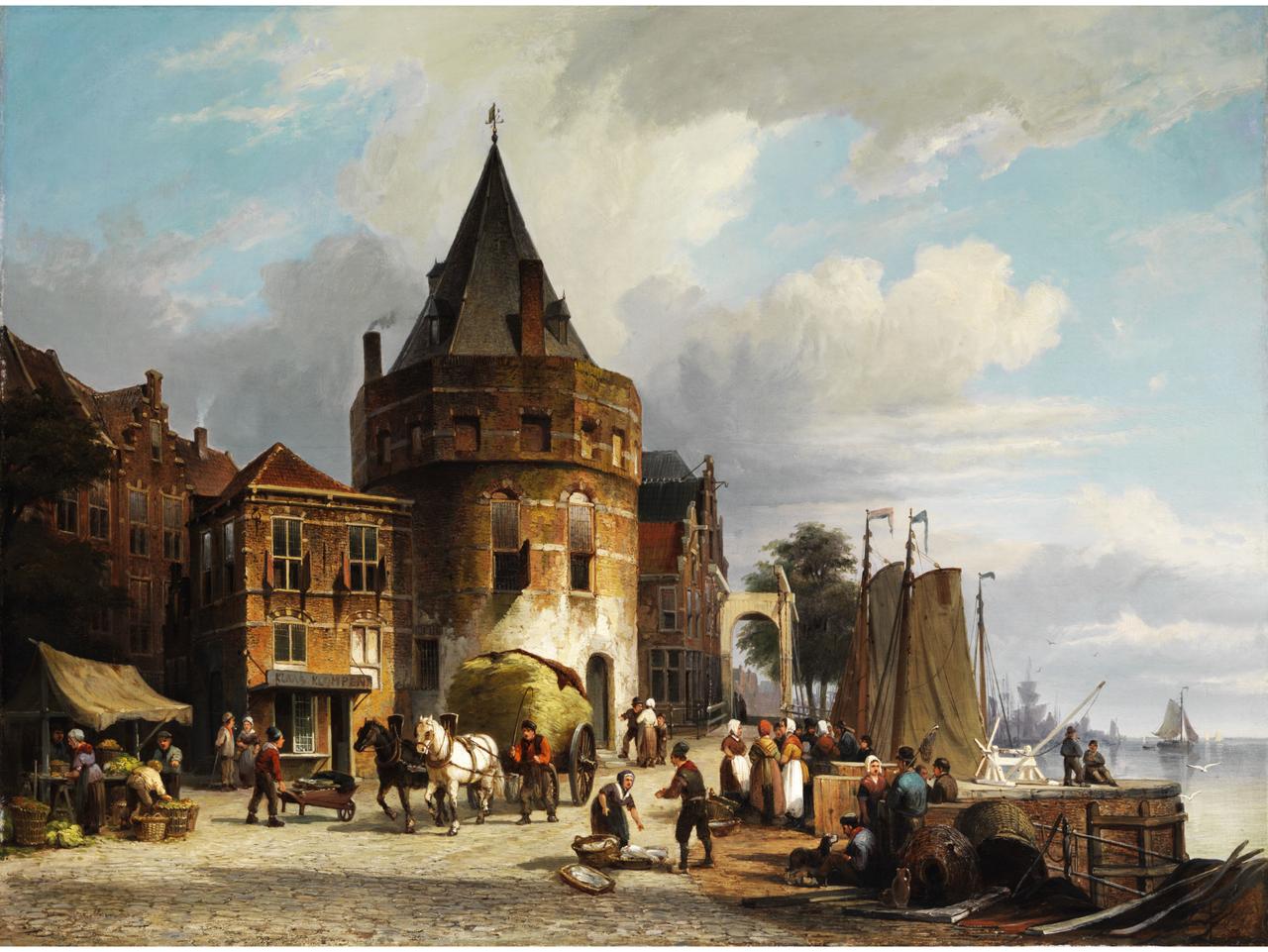
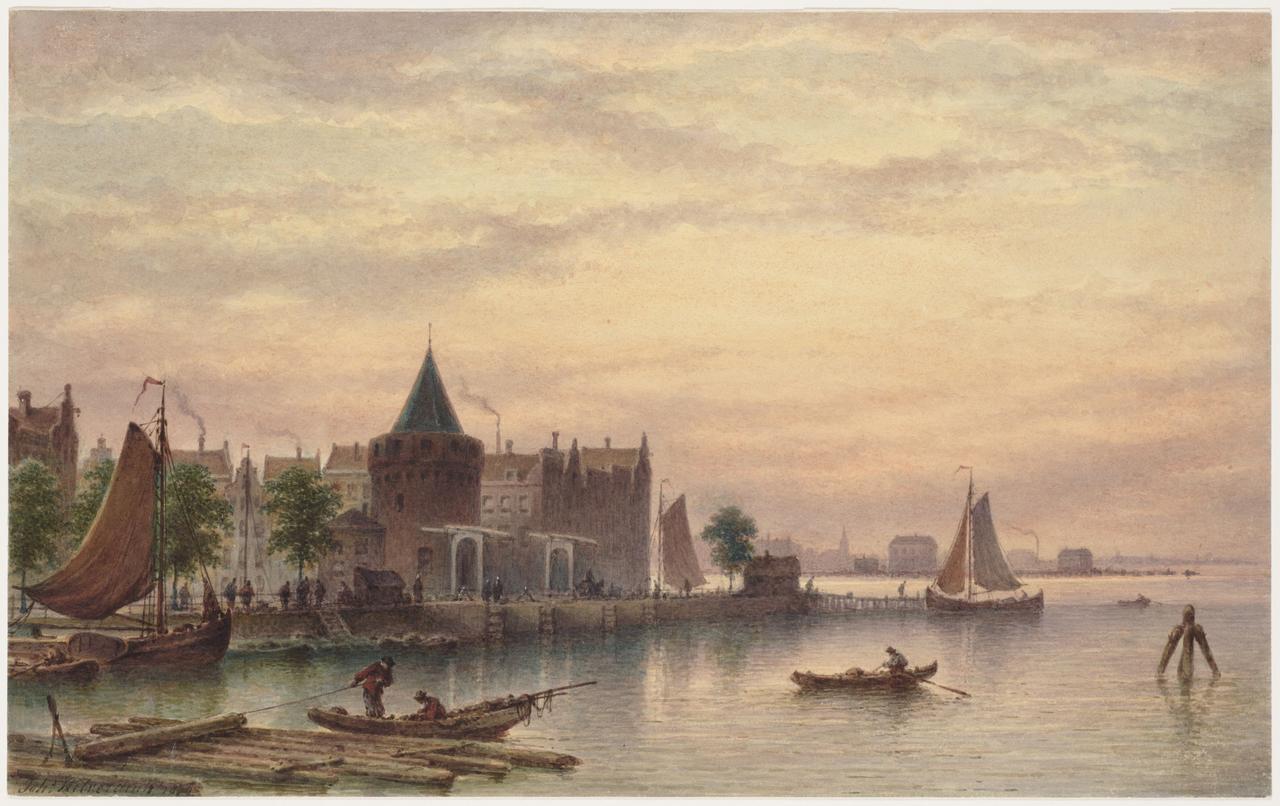
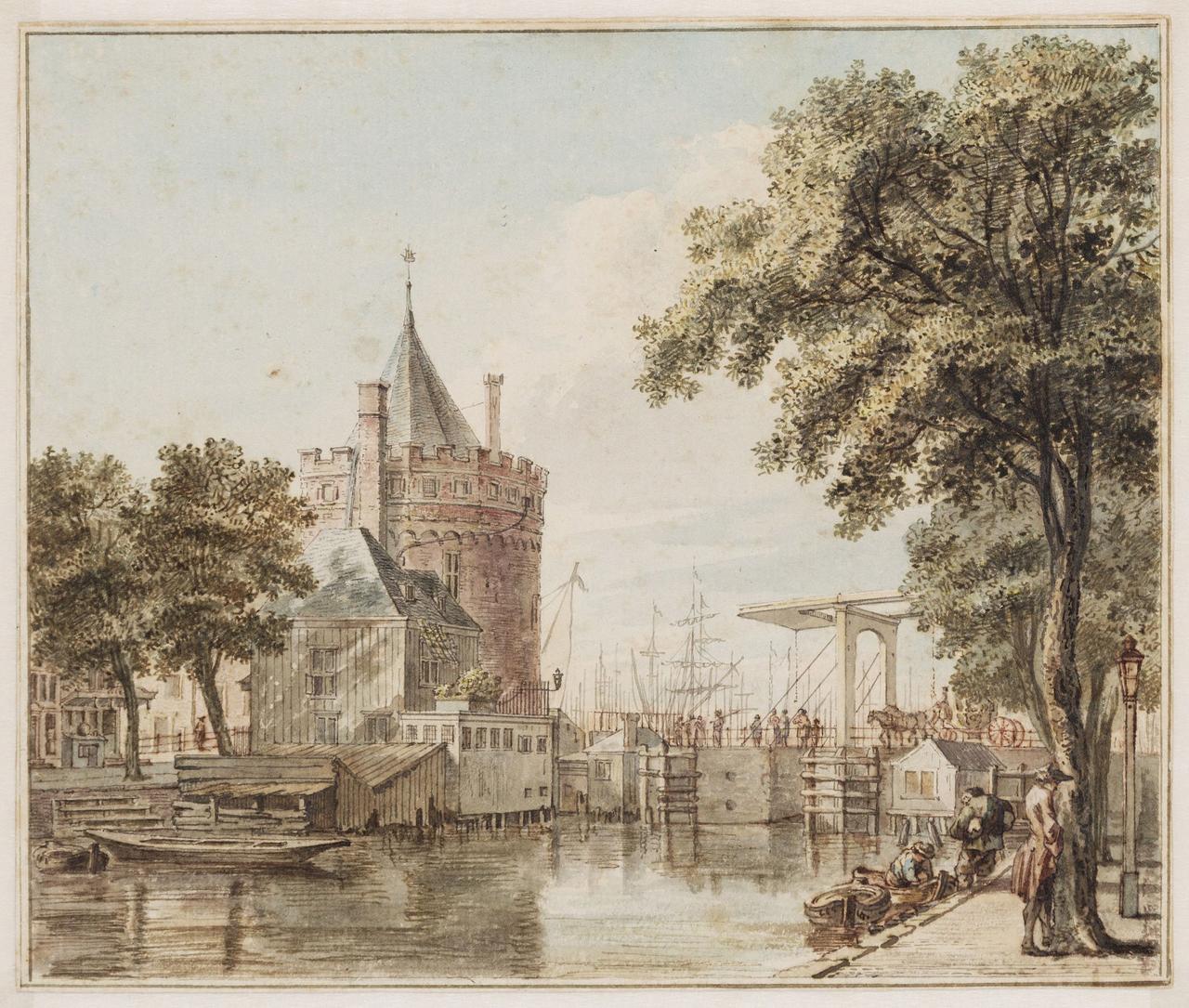
The Schreiers Tower
Here along the water stands the Schreierstoren, one of the oldest surviving structures in Amsterdam, built around 1487 as part of the city wall. You’re standing at the spot where the city ended and the open water began—the point from which ships set sail on voyages that could last for years.
The name has been misunderstood for centuries. The story goes that it means “weeping tower,” referring to the women who stood here wailing and weeping as their husbands set sail, perhaps never to return. It’s a beautiful image—and not entirely made up—but linguistically, it’s probably incorrect. The name almost certainly comes from “schraye hoek,” an old word for a sharp corner, because the tower stood at a bend in the city wall. The romantic misunderstanding simply stuck better than the dull truth.
What really did happen here was departure on a massive scale. From this quay, ships sailed to the Baltic Sea, to Asia, to the entire known world. And a ship that was at sea for months had to carry food that wouldn’t spoil. Hard Dutch cheese was ideal for this purpose—round, compact, and long-lasting—and was carried in the ship’s hold both as provisions and as merchandise. Cheese from the villages of North Holland often began its journey around the world right here.
From here, with the water at our backs, we walk a short distance further and turn right onto Zeedijk. After just a few steps, you’ll see our next stop appear on your left: a chapel named after a Norwegian king.
Any feedback for this story?