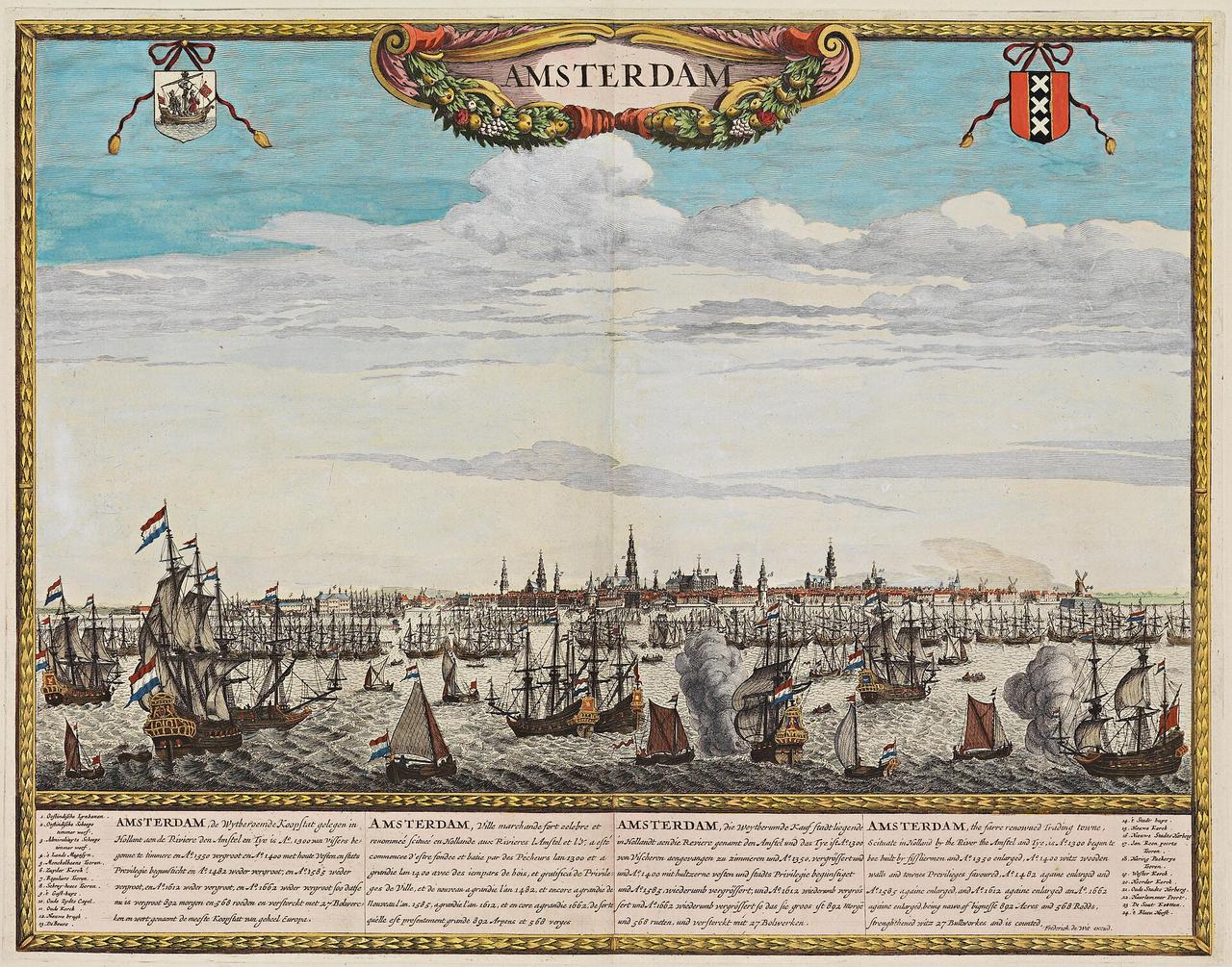
Back at the Beginning
You are a few steps from Warmoesstraat again, the dike where you started an hour and a half ago. In between you have watched a village on a dam turn into a city with a canal ring, a mint of its own and a trading company whose ships reached Tasmania.
Most visitors know this quarter as de Wallen, the youngest layer laid over the oldest. The windows have been here since the seventeenth century, when the city decided that regulating something that happened anyway worked better than banning it, as long as it stayed within these few streets.
Around the corner the Zeedijk begins. At number 1 stands In 't Aepjen, one of the two wooden houses that survived the city fires and a pub for centuries. Step inside and you are already in De Bruine Kroegen, our walk along the cafés where Amsterdam tells its history across the bar. Further along the same street sits Café 't Mandje, where Bet van Beeren opened a bar in the nineteen thirties that welcomed everyone, and that story carries on in our Pride walk.
This is the end of The Small History of Amsterdam. Centraal Station lies five minutes north, Dam Square five minutes the other way. Enjoy the rest of your day in this city!
Any feedback for this story?