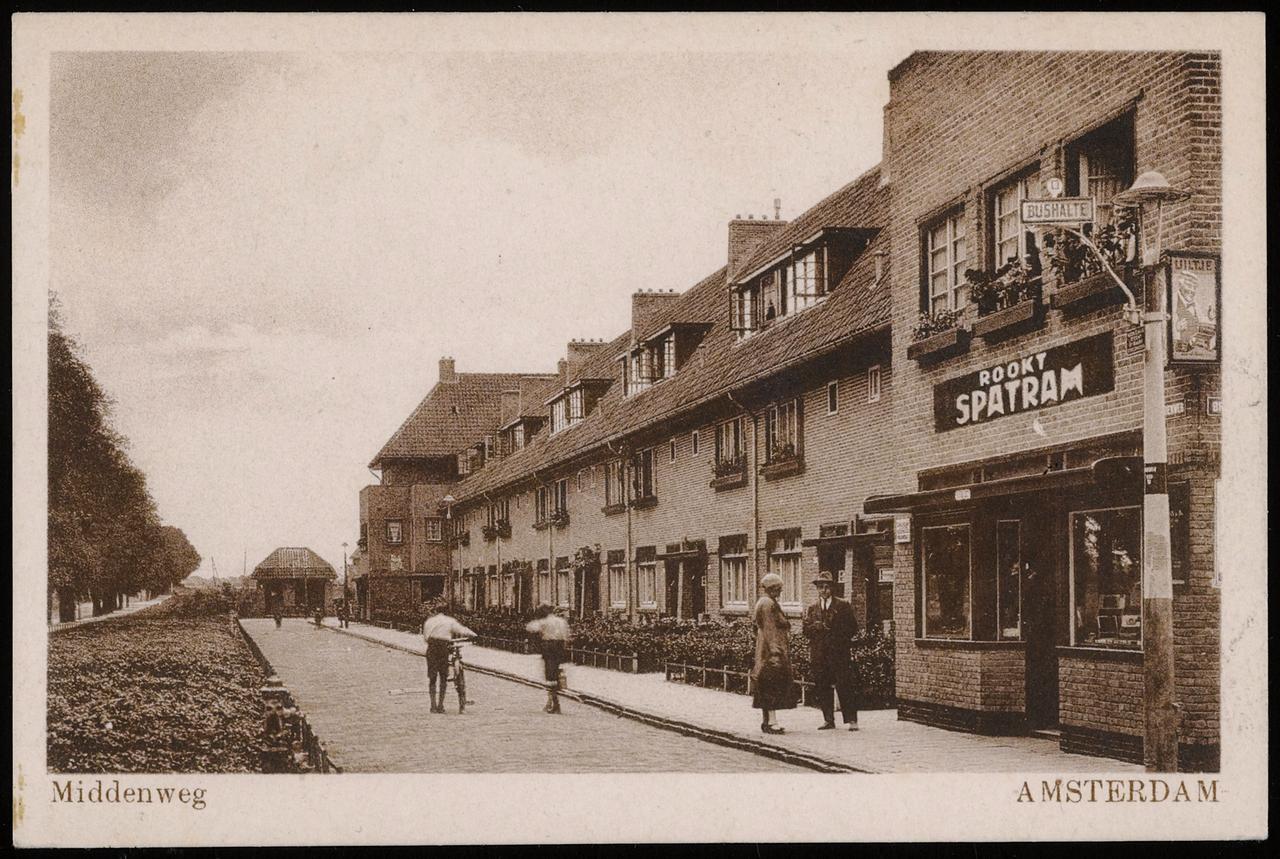
Betondorp
On the south-eastern edge of Amsterdam lies a neighbourhood where the streets are named after farming and the houses are low and white: Betondorp, officially Tuindorp Watergraafsmeer. After the First World War the city faced a severe housing shortage, and bricks and bricklayers were both scarce and expensive. Concrete offered a way out.
Between 1920 and 1928 some nine hundred homes went up here, along with shops, a library and a community hall around the six-sided Brink. The remarkable part reveals itself once you walk from one street to the next: the city had nine different concrete building systems tried out side by side, from Korrelbeton and Kossel to Winget and Bims Beton. Each system came with its own architect, its own concrete mix and its own façade, which turned the neighbourhood into a full-scale open-air laboratory lived in by real families.
The experiment claimed its casualties too. One of the systems produced houses that cracked within the first year after completion, and the concrete obelisks the architect had placed on them were quietly removed later on.
On the corner of Akkerstraat and Tuinbouwstraat lived a boy who spent his first twelve years kicking a ball against these walls. Johan Cruyff grew up here, with the Ajax stadium De Meer within walking distance across the road. The windows of his parents' home now tell that story in stickers.
Any feedback for this story?