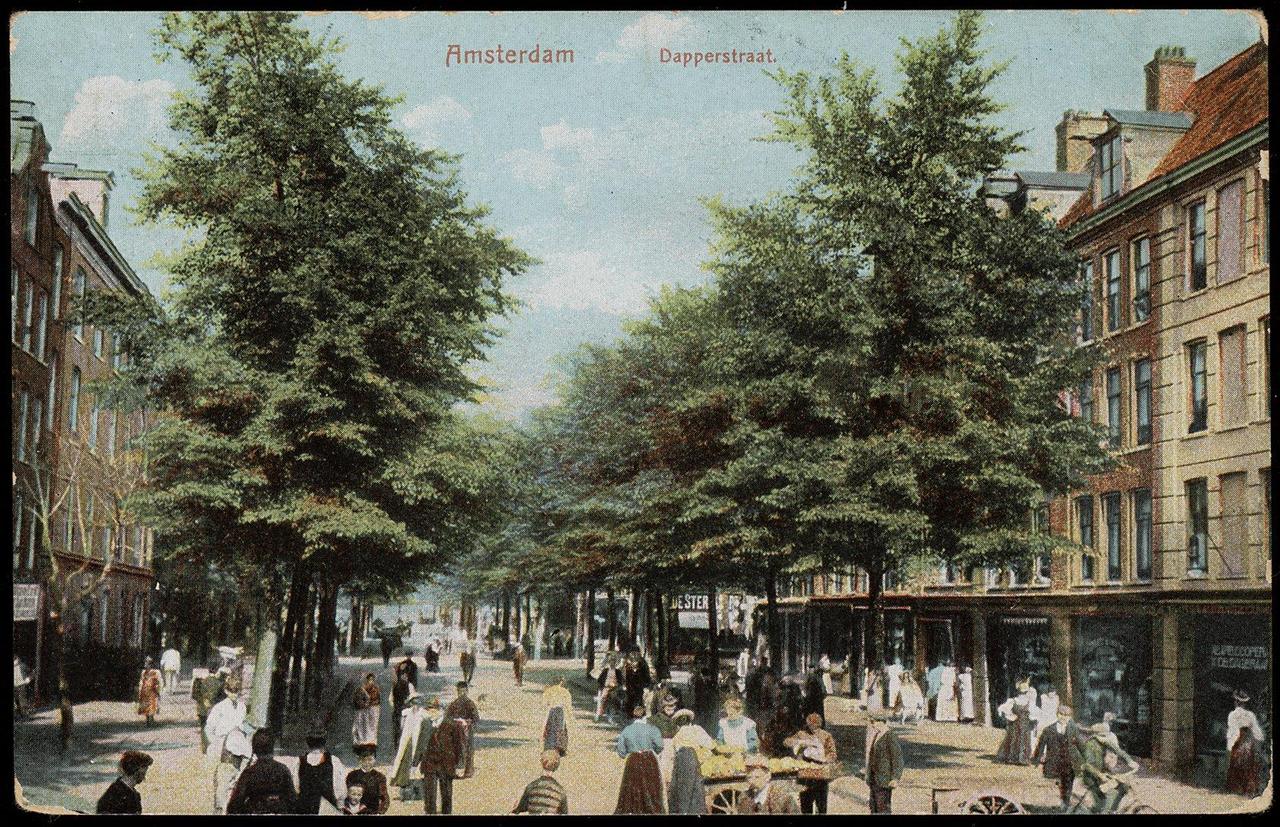
The building of the Dapperbuurt
The first street here, the Wagenaarstraat, went up in 1873, and after that things moved fast. Amsterdam was growing quicker than houses could be built, so developers bought up the plots and crammed in as many homes as they could in as little time as possible. For the first time, people were building for an anonymous market rather than on commission from someone who would actually live there.
You can see the results of that. Quality couldn't keep up with the pace, and in 1899 an entire block of houses collapsed on the corner of the Pieter Nieuwlandstraat and the Dapperstraat, less than twenty years after it was finished. The streets carried the names of writers and scholars, while the houses themselves could barely live up to their own.
Almost a century later, the bill came due again. In the 1970s there were plans to demolish whole blocks, and for a lot of residents that meant leaving the neighbourhood where they had grown up. The action group De Sterke Arm demanded affordable rents and managed to get the renewal carried out so that tenants could move straight from their old block into a new one.
That turned this neighbourhood into the example the rest of the Netherlands looked to. So everything around you was built twice, and the second time the city actually listened to the people who already lived here.
Any feedback for this story?