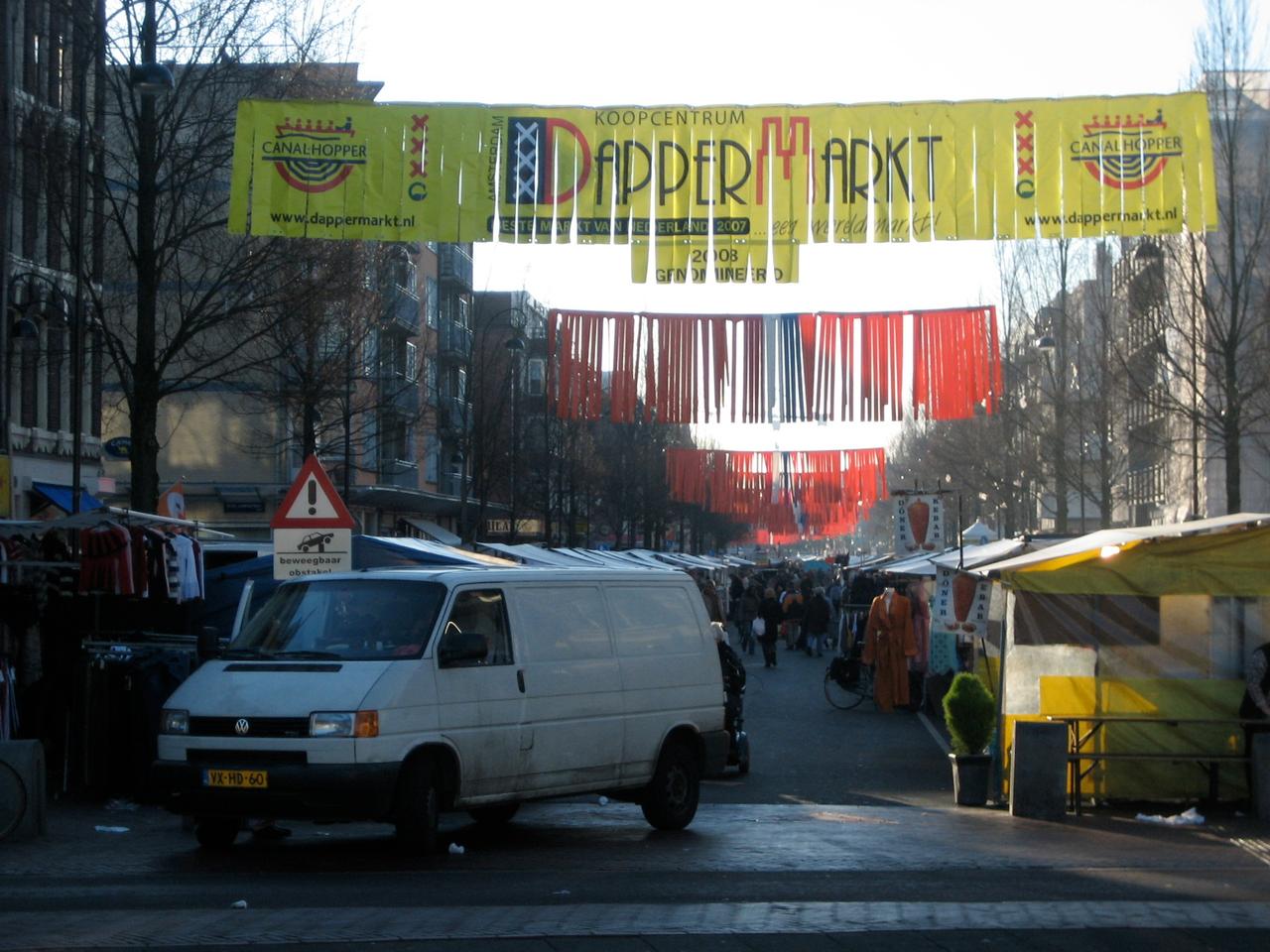
De Dappermarkt
This street was a market long before anyone decided it should be one. In the late nineteenth century, peddlers pushed handcarts through the neighbourhood selling eggs, fruit, fish and meat, and by the early twentieth century there were so many of them that fights broke out over the best spots. The city stepped in to bring some order, and in 1911 it designated Dapperplein and part of Dapperstraat as an open market.
At first it was only allowed on Saturday evenings, lit by oil lamps that kept hissing away until midnight. A year later the weekdays were added, and in 1922 the market came under official management and the traders started paying market fees. It grew alongside the neighbourhood around it.
The war left a hole that never fully closed, because the vast majority of the Jewish traders who carried the trade here never came back. Around 1980 the city thought the market was finished, and once again the Dappermarkt proved it could adapt to whoever came to live in the area, without losing its own voice.
Today there are more than two hundred stalls, and on busy days some fifteen thousand people pass through, from the neighbourhood and from far beyond it. Karel Appel, one of the Netherlands' best known postwar painters, lived here too, and had local girls pose for him before his work travelled the world. Walk along the stalls and within a few minutes you'll hear the whole city.
Any feedback for this story?