The Glaziers' Riot
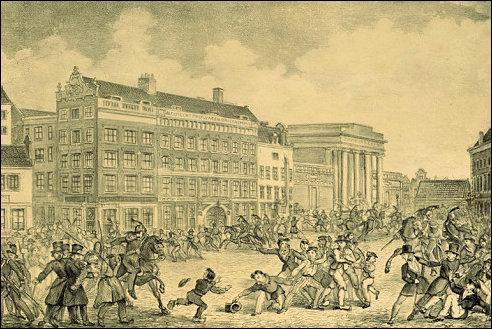
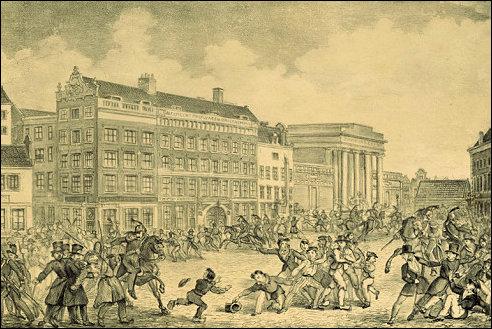
On 24 March 1848, a few thousand workers gathered right here on Dam Square, called together by pamphlets that had gone up around the city the day before. It was the year half of Europe stirred into motion. In Paris, liberals were demanding a wider right to vote, in Berlin an uprising broke out that same month, and monarchs gave ground in a hurry to keep things from getting worse.
The workers here had little to lose. Ever since the crisis of 1843 the harvests had failed, potato blight had taken hold, and the taxes piled onto bread and meat kept food expensive even as the work dried up. What started as a gathering turned into a march through the shopping streets that open onto this square, where windows shattered while the police kept conspicuously to the background. Later that evening the windows of the grand houses on the Herengracht and the Keizersgracht went too. A satirical chronicle from that same year noted that the rioters had mostly given work to the glaziers, and under that name the night went down in history.
King Willem II had already made his turn by then. A week earlier he had appointed a commission led by Johan Rudolph Thorbecke to draft a new constitution, and on 3 November of that same year it came into force. From that moment on, power lay largely with parliament, and the Netherlands became the parliamentary democracy it is today.
Any feedback for this story?