The Homomonument
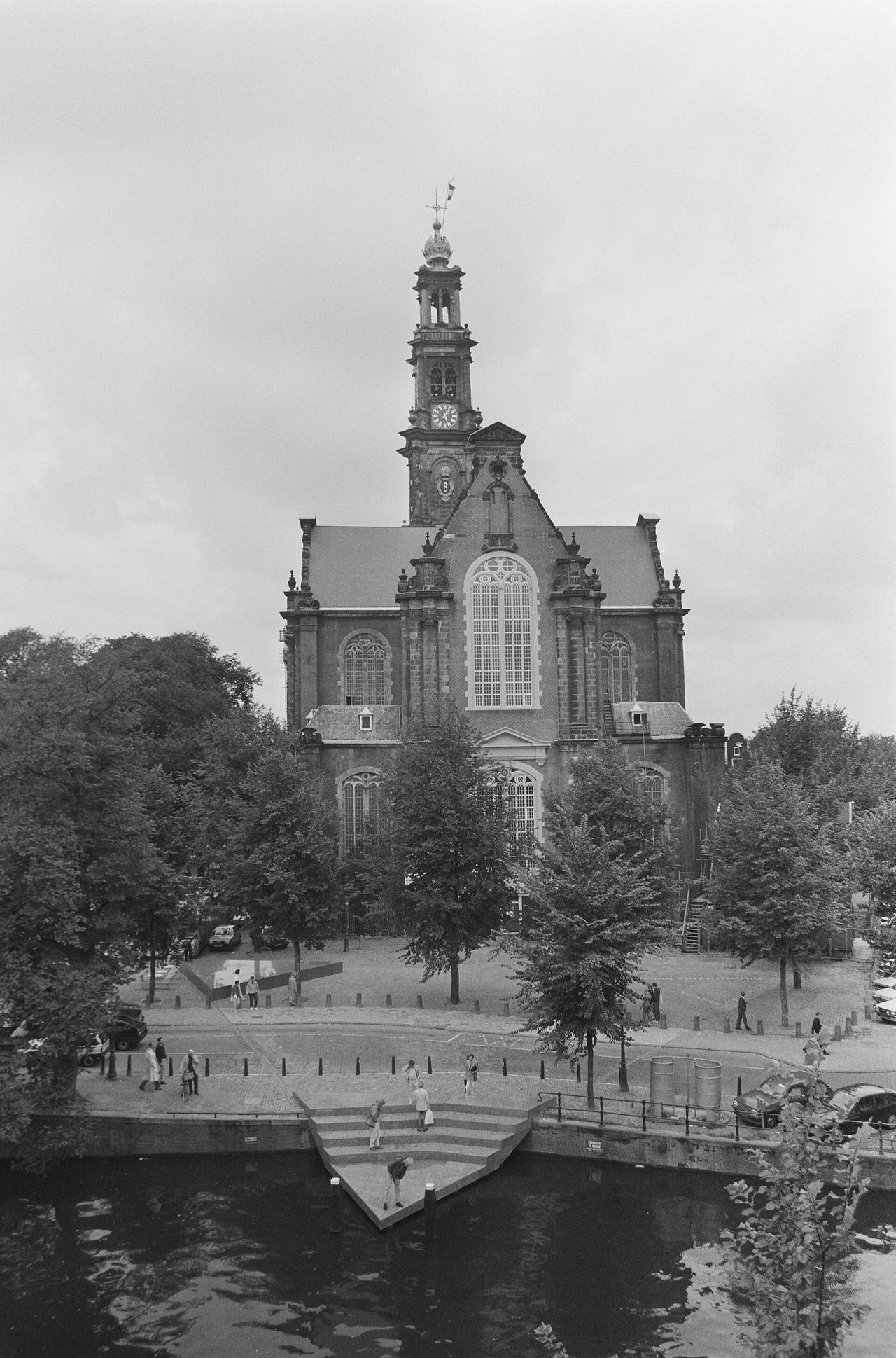
Karin Daan sketched it on a beer mat in Saarein, her local in the Jordaan: a pink triangle running from the Westermarkt into the quay of the Keizersgracht. Her design won the competition out of a hundred and thirty-seven entries, and on 5 September 1987 the monument lay here, the first anywhere in the world for persecuted homosexuals.
The triangle refers to the mark homosexual men wore on their clothes in the concentration camps. That mark was two to three centimetres larger than the one worn by other prisoners, so it could be read from a distance. In the eighties the movement claimed the symbol back and wore it as a badge on the lapel.
Three triangles of pink granite stand for past, present and future, joined into a single triangle thirty-six metres across. The one in the water is the place of remembrance where the flowers are laid, carrying a line by the Jewish, homosexual poet Jacob Israël de Haan about a boundless longing for friendship.
This is where the walk ends. The Jordaan begins behind the Westerkerk, the district our walk through those streets covers with its courtyards and its local lore, and a hundred metres along the canal stands the queue for the Secret Annex, where our Anne Frank walk begins.
Back to the Nieuwmarkt is a walk of half an hour by way of the Raadhuisstraat and Dam Square, or you can take tram 13 or 17 to Centraal Station. Enjoy the rest of your day in Amsterdam.
Any feedback for this story?