The scaffold on Dam Square
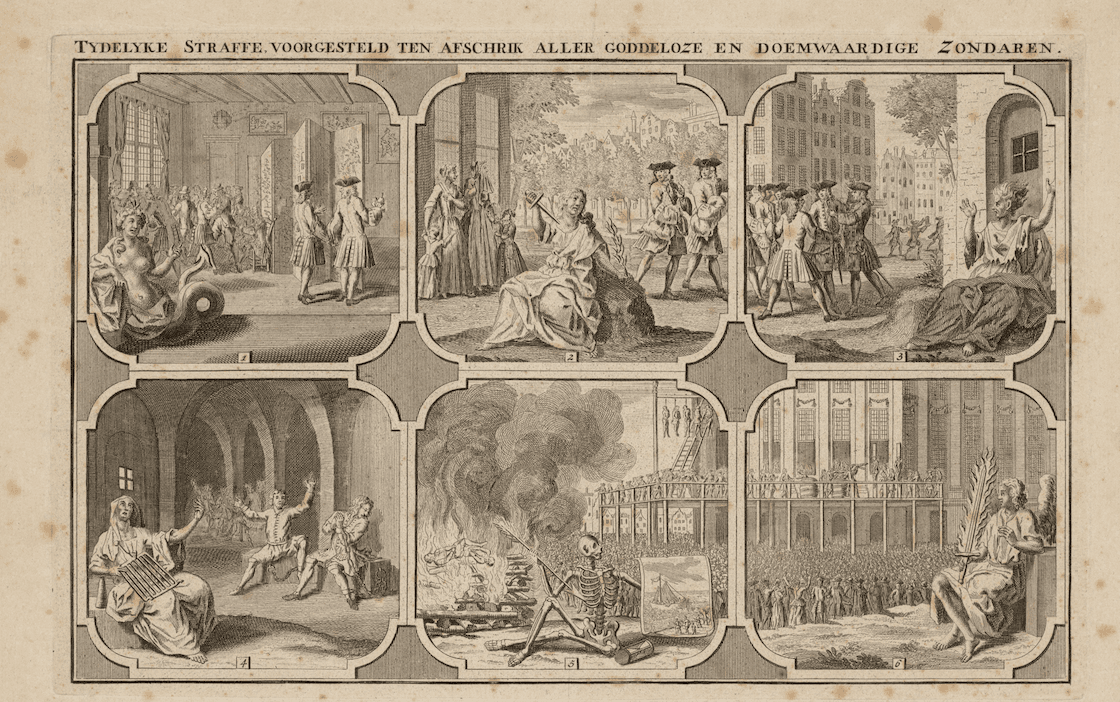
On 18 September 1764 Dam Square filled with people. In front of the town hall, the building you now know as the Royal Palace, stood a scaffold with four men on it. One of them was Willem Leske, thirty-one years old, a poultry dealer from the Lombardsteeg, married and the father of two children, the youngest baptised a month before. Beside him stood a wigmaker's assistant, a water carrier and a grain sifter. All four were strangled, convicted of sodomy, the word used in that century for sex between men.
The bitterness lies in the place. The public rooms of that same town hall were known as one of the spots where men looked for each other, and from that year the chief officer Isaac Sweers had his men wait at the public urinals of the city. The diarist Jacob Bicker Raye noted that summer that ten men had been arrested and that several hundred others had left Amsterdam.
Nothing of the scaffold survives. The stones under your feet lie where four men were killed for who they were, in front of the façade with which the city showed how large it believed itself to be.
From here we cross the square towards the Nes, the narrow street beside the Rokin, where we stop at number 17.
Any feedback for this story?