Demolition and Preservation
From the nineties onwards, the knife went into the neighbourhood. The plan was clear: most of the high-rise had to go, replaced by rows of houses with a front and back garden. In the years that followed, thousands of homes disappeared.
Not everyone saw that as the answer. Tearing down what stood here also meant erasing an idea, and the communities that had grown up inside it.
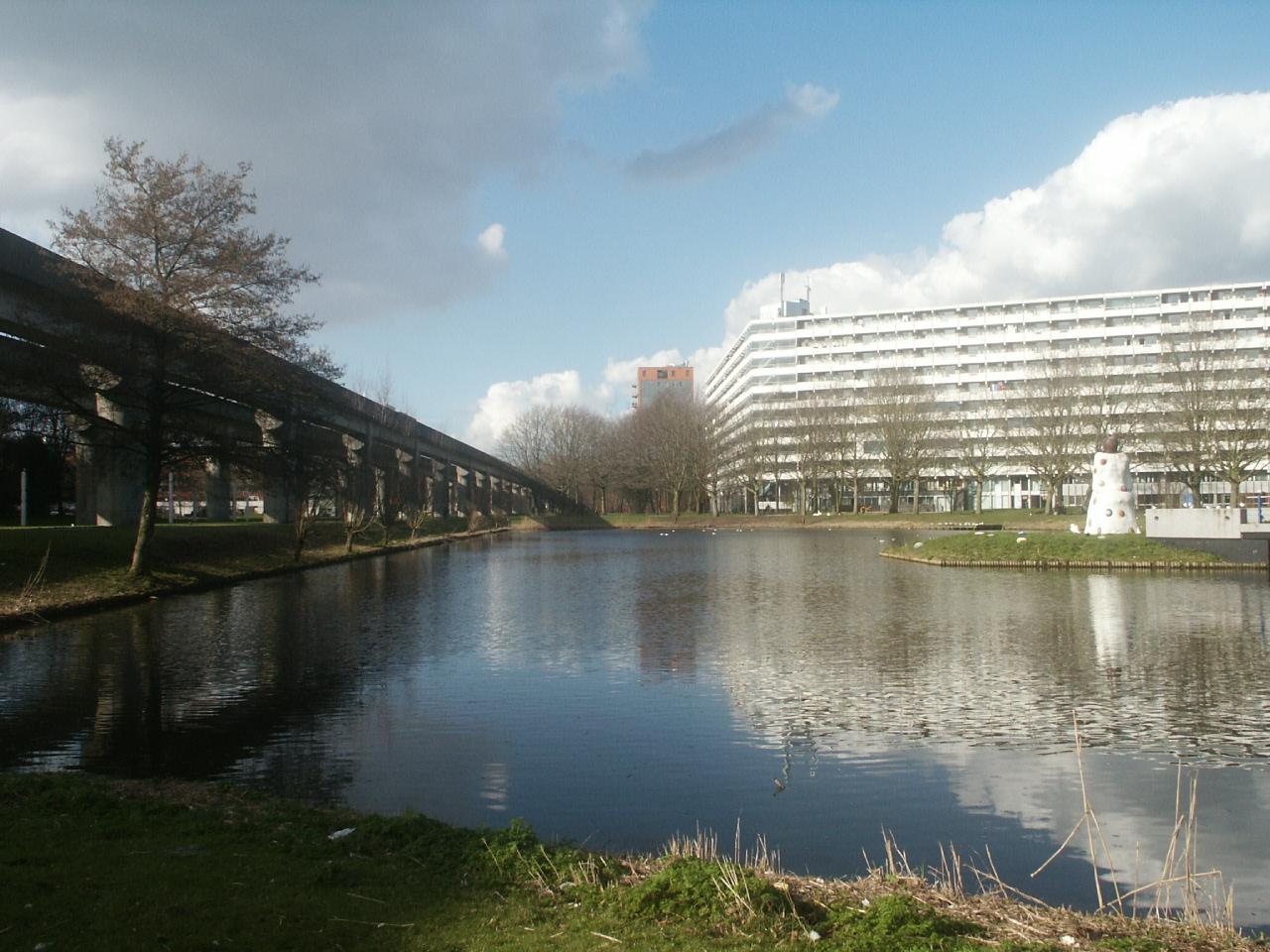
What you walk into here is the response to that debate. Part of the original design was kept, with the honeycomb-shaped flats, the park-like greenery and the memorial for the disaster, and ever since, that part has been called the Bijlmermuseum.
Six flats remained, thoroughly refurbished, with the car-free space between them that the whole thing once revolved around. So from here you're not walking past a reconstruction, but through the real thing.
We head into the museum, starting at a place where a community made room for itself.
Any feedback for this story?