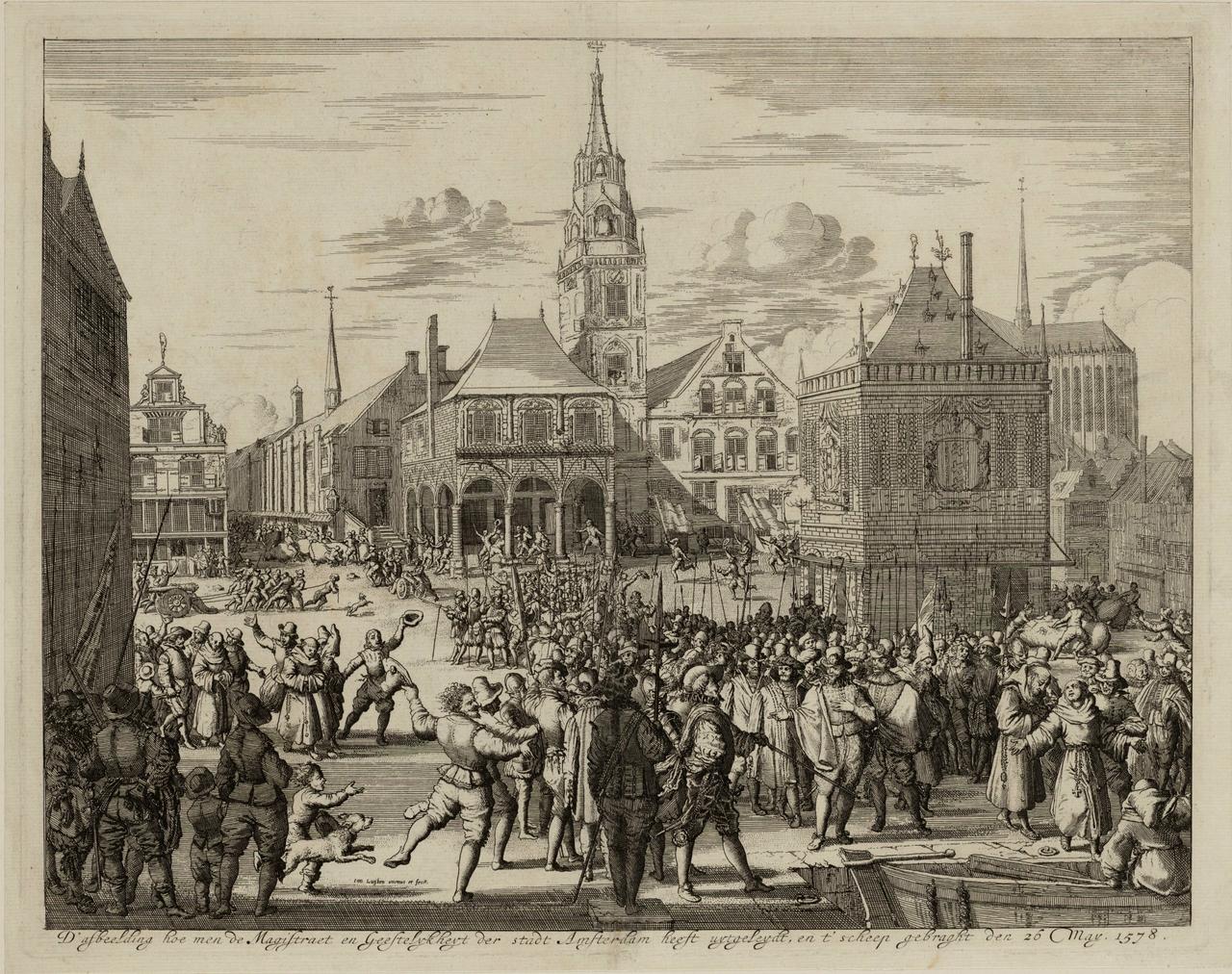
The Alteration of Amsterdam
Amsterdam sided with the king of Spain for a long time, even as the rest of Holland rose against him. Its merchants had their trade bolted to that empire and wanted to keep it, and the city paid for the choice with years of blockades and a harbour running empty. In 1578 the account turned, because the revolt was gaining ground and the money moved with it. This square, beside the church that was the heart of Catholic Amsterdam, is where that became visible.
On 26 May the Catholic city council was collected here, walked to the Damrak and put on barges out of the city. The gentlemen were set ashore beyond the walls and left to work out where to go next. A new council took office the same day, thirty Calvinists against ten Catholics. It took one morning, and everyone walked away unharmed.
That change is called the Alteration, and the consequences ran deep. The Old Church behind you turned Protestant, monasteries became orphanages and prisons, and the Catholic mass went underground. More than twenty hidden churches appeared in attics and back rooms, and everybody knew where they were. As long as the façade looked ordinary, the council looked the other way. Open worship returned two centuries later, with the arrival of the French.
From here we follow Warmoesstraat west, until the streets open onto the square that gave the city its name.
Any feedback for this story?