The Plague House
You are standing in a residential district that was nowhere near here in the seventeenth century. This was open land outside the city then, and on it stood the Pesthuis, the plague house, because anyone who caught the infection was taken away from everyone else.
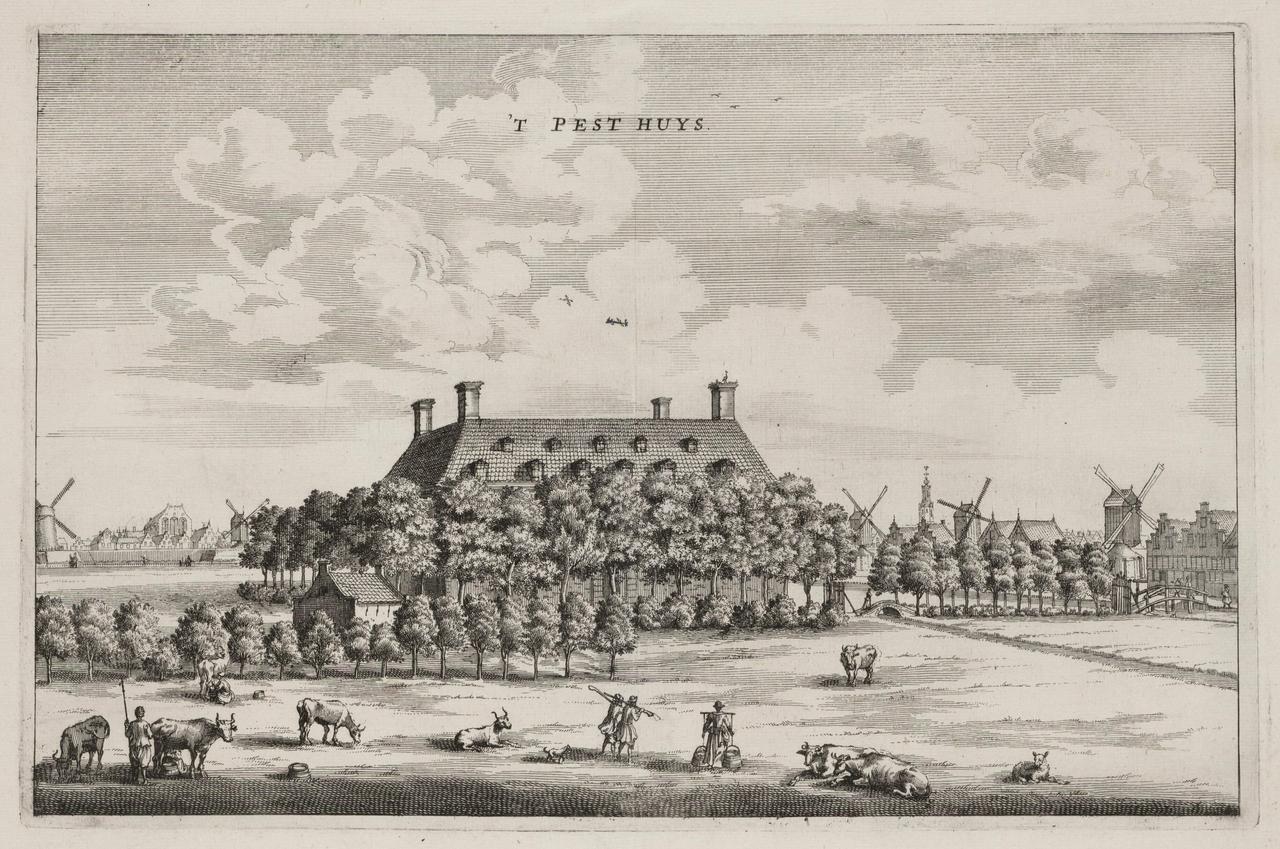
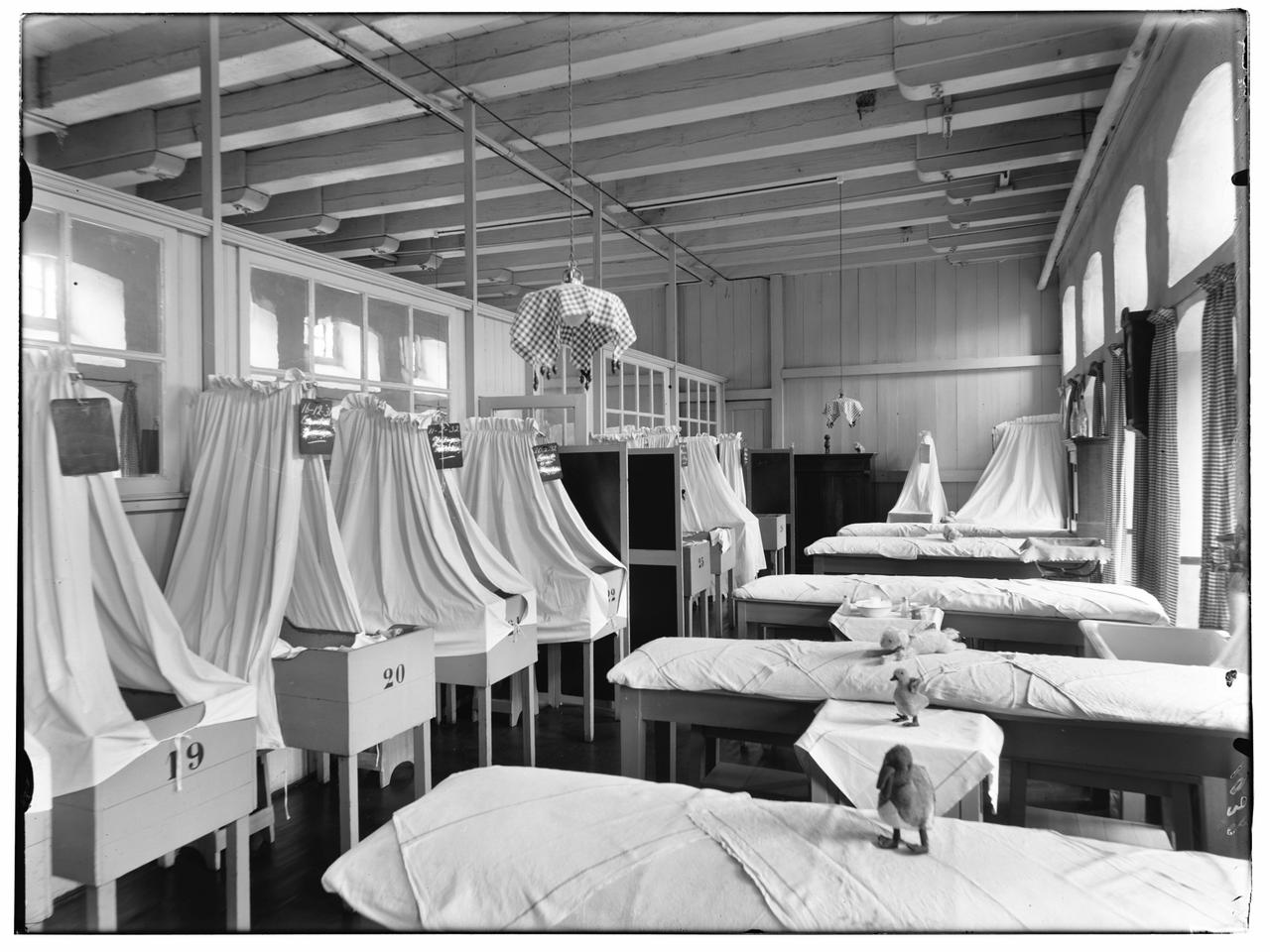
Plague struck Amsterdam again and again throughout that century, a disease that began with high fever and swollen glands and could empty whole streets. In 1630 a new plague house went up along the Overtoomsevaart, a rectangular building around a courtyard with room for three hundred and forty bedsteads on legs, which counted as progress in a city where people slept in box beds, cupboards in the wall where the sick and the healthy lay side by side.
The patients arrived by water. From the Binnengasthuis in the city they were rowed out along the Pestsloot, the plague ditch, so that they met nobody on the way. That ditch still runs here, with street where the water used to be: today it is called the Bosboom Toussaintstraat.
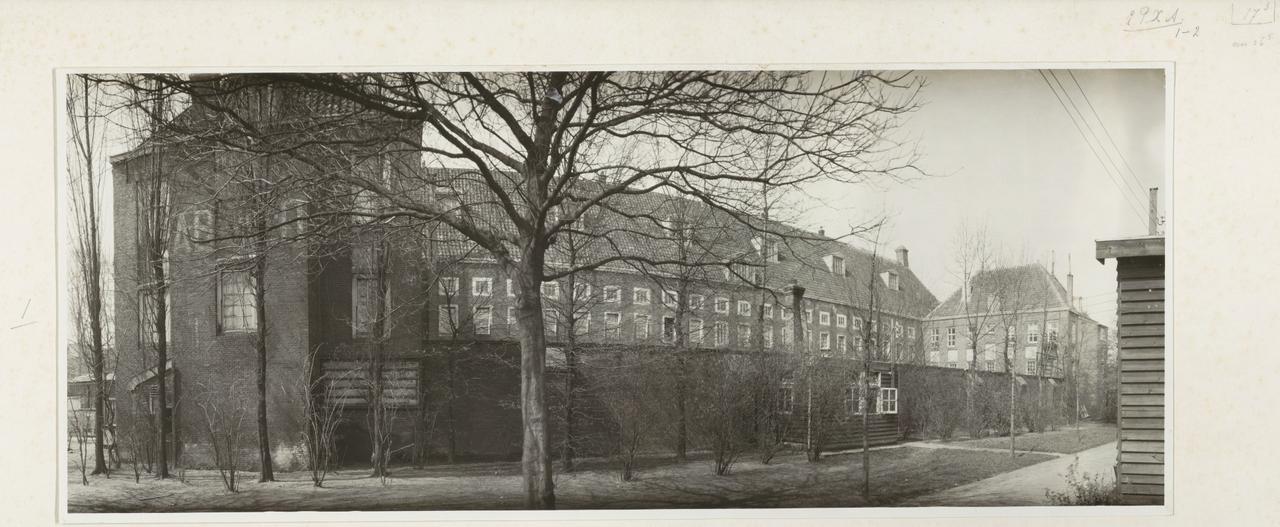
What the building looked like is known from a drawing by Reinier Nooms, with the Overtoom running prominently alongside it. Once plague left Europe the house remained, and the city used it for whatever it preferred to keep outside its walls, including people declared insane.
Any feedback for this story?