The Rijksmuseum
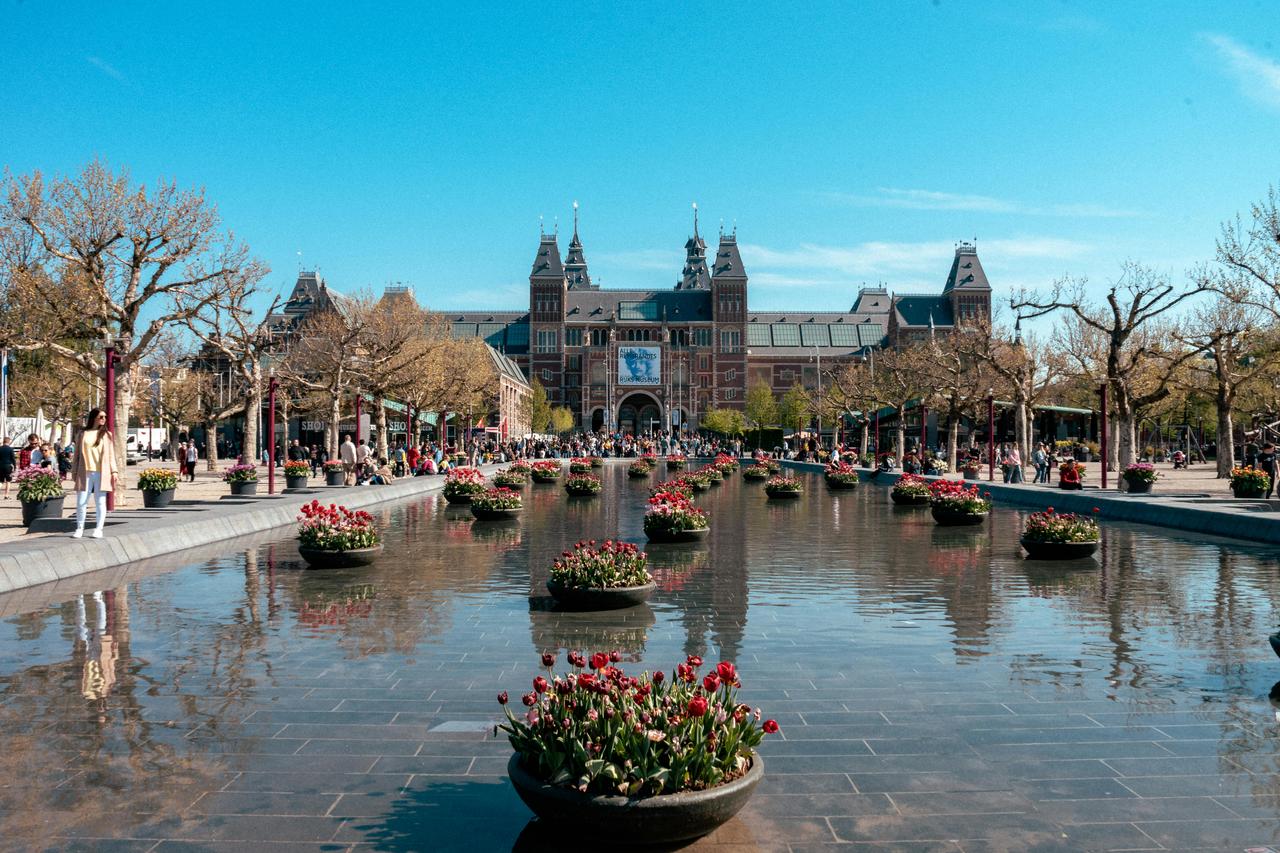
The museum in front of you started life as a house move, because in 1808 the Kingdom of Holland was ruled by Louis Napoleon, a younger brother of the French emperor Napoleon Bonaparte, who had put him on the Dutch throne two years earlier. He brought the national art collection to his new capital and gave it a home on the upper floor of the palace on Dam Square. It wasn't until 1885 that the collection moved into the building you see here, designed by Pierre Cuypers, who also laid out a garden behind the museum and filled it with fragments of demolished Dutch buildings: gates, facades and pillars that he managed to save from the wrecking ball. That garden is still free to enter.
Running straight through the building there's a passage that cyclists ride through. When the museum was renovated between 2003 and 2013, the city council insisted this passage stay open, much to the frustration of the architects, who had wanted to turn it into the main entrance. That standoff is part of why the renovation dragged on for ten years.
In the tunnel, on the Museumplein side, high up in the vault there's a black hatch. Directly above it hangs The Night Watch, Rembrandt's most famous painting. The hatch was installed in 1934, when Hitler came to power in Germany, because the canvas is too big to carry out through the corridors. In 1939 it really was lowered down through it, and the painting then spent three years in the caves near Maastricht, after passing through a couple of hiding places.
We walk into the passage and come out the other side, then turn left into Hobbemastraat.
Any feedback for this story?