Huddesteen
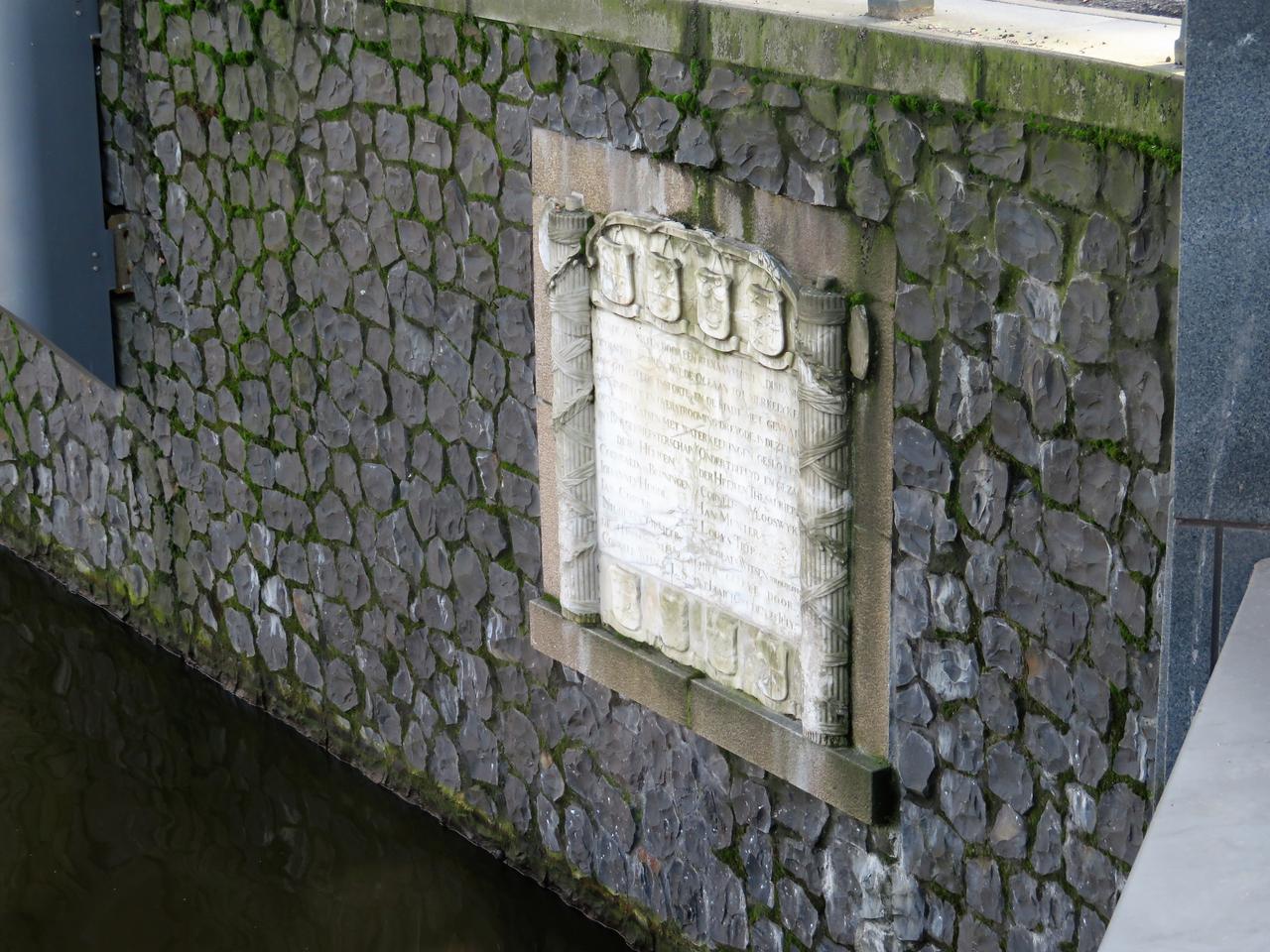
On the Korte Prinsengracht, where Haarlemmerstraat turns into Haarlemmerdijk, the Eenhoornsluis lock still carries a slab of white marble that centuries of weather have stained green. A horizontal groove runs across it, with capitals above reading ZEE DIJKS HOOGHTE ZIJNDE NEGEN VOET VYF DUYM BOVEN STADTSPEYL, the height of the sea dyke being nine feet and five inches above town level. The groove sits at exactly the height it was given in 1684, which makes it one of the oldest measuring points in the country.
Behind it stands Johannes Hudde, a mathematician who became mayor and who wanted the city to stay dry after a storm surge had pushed the sea over its dykes. For a full year he had the flood level of the IJ measured every day, and that average became the Amsterdams Peil, the town level. Sea dykes had to rise nine feet and five inches above it, a little over two and a half metres, and to make that height visible to every inspector Hudde had eight of these marble stones built into the locks along the IJ.
Of those eight, this is the only one still in its original place, and in 2005 the stone and the lock together were listed as a municipal monument. The level itself grew into the Normaal Amsterdams Peil, the zero that much of Europe measures height from. The lowest point in the Netherlands lies almost seven metres below it.
Any feedback for this story?