De Oude Beurs
In the fifteenth century, the merchants of Antwerp gathered on this courtyard every day, beneath a wooden gallery that was replaced in 1515 by the stone arcade you now walk under. This was the city's first exchange, and one of the first in all of Europe.
They did business here in wool, spices, grain, and above all in debt. The trade was entirely a matter of paper: a cargo still out at sea, a bill of exchange due in three months, a loan to some ruler who never had enough.
That idea, a fixed place with fixed hours where promises change hands, was new, and the principle that the price is set by what the people present that morning are willing to pay still runs through every trading floor in the world today.
You can measure how well things went by the complaints. In 1526 and the year after, the merchants asked the city magistrate for more space, because they could no longer offload everything they had to trade, and seven years later the old exchange closed and was partly demolished. One section of the gallery wasn't rebuilt until 1616, and in the spandrels above the slender columns you can still find the coats of arms of the merchant families who did their business here. In the southeast corner stands the narrow lookout tower you'll hear more about in our walk through the legends of Antwerp.
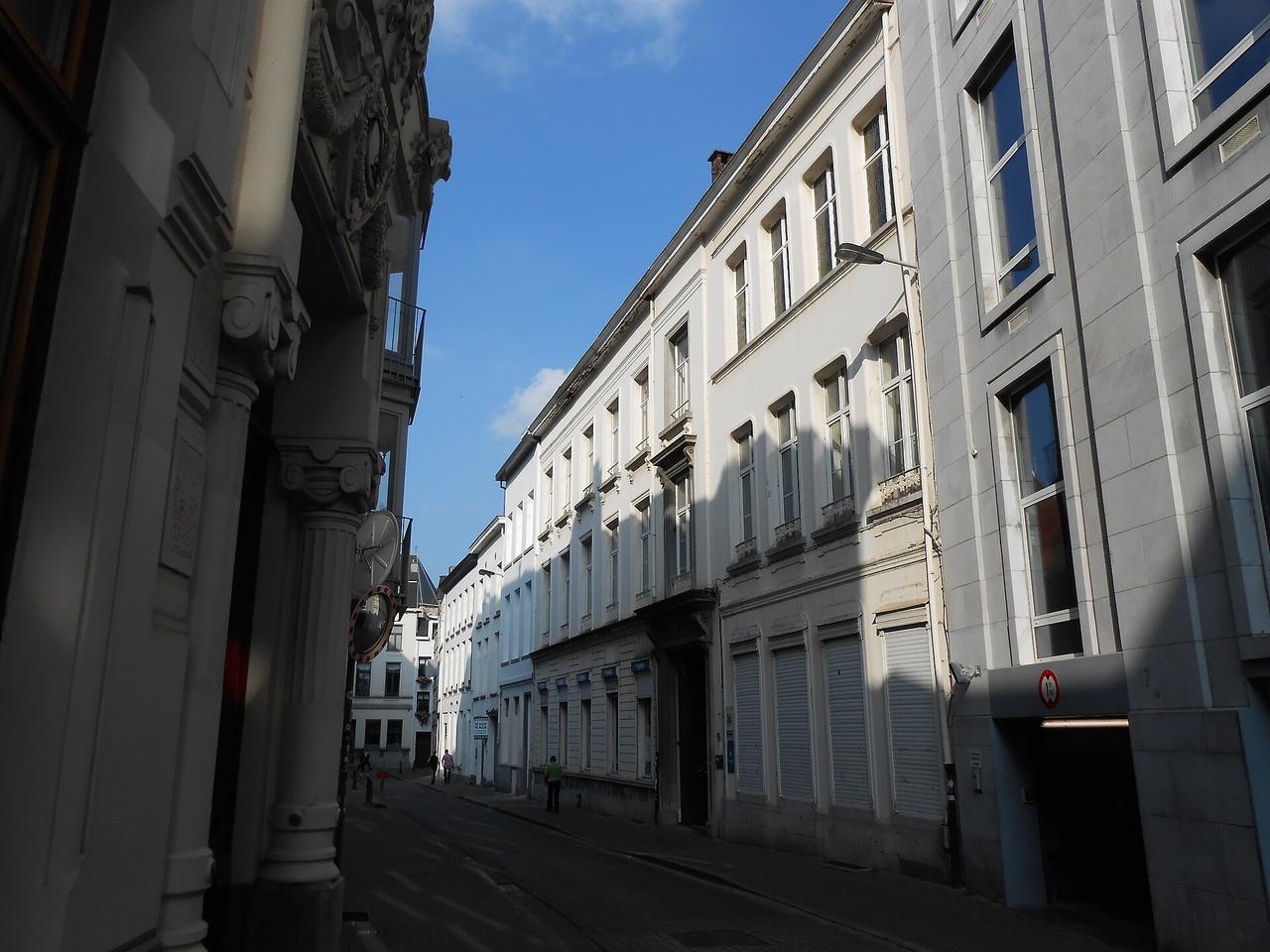
We head out of the Hofstraat towards the east, to the Twaalfmaandenstraat.
Any feedback for this story?