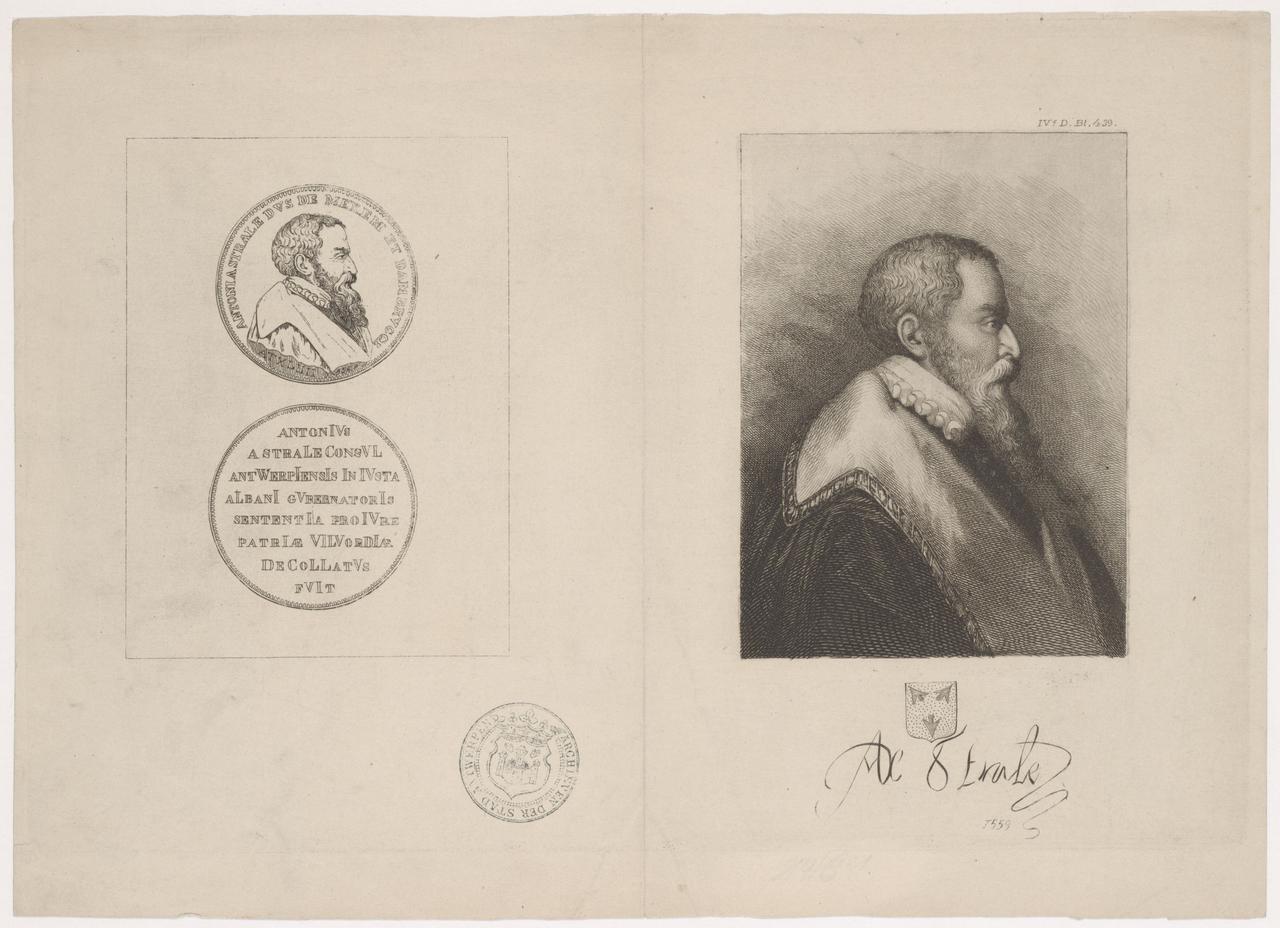
Alva and the burgomaster
Fernando Álvarez de Toledo, Duke of Alva, marched into the Low Countries in August 1567 with ten thousand Spanish soldiers, sent to restore order and to punish those responsible for the unrest of the year before. He set up a tribunal officially called the Council of Troubles, though people quickly started calling it the Council of Blood. More than twelve thousand people were charged, and over a thousand of them were sentenced to death.
One of those thousand was Antoon van Stralen, outer burgomaster of Antwerp, a Catholic, and for years the man who oversaw war budgets and taxes as commissioner-general of the States General. What doomed him was his friendship with William of Orange, the leader of the Dutch revolt against Spain. In 1568 Alva invited him to what looked like a friendly dinner and turned out to be a trap. He was tortured and beheaded in Vilvoorde on 24 September 1568. His property passed to the crown, right down to his stately home De Groote Robijn in Merksem.
A year before his arrest, the sculptor Jacques Jonghelinck had made a portrait medal of him, showing his face and his coat of arms. Shortly afterwards that same Jonghelinck took on a far bigger commission, and you're about to see what came of it.
You're standing here on the southern edge of the old city. Everything behind you lay inside the walls of the Antwerp of 1567, and everything ahead of you, towards the Kloosterstraat, became the ground where Alva had something built that the city could never wait to be rid of.
We follow the Kloosterstraat south to about halfway along, where the street widens.
Any feedback for this story?