17 August 1585
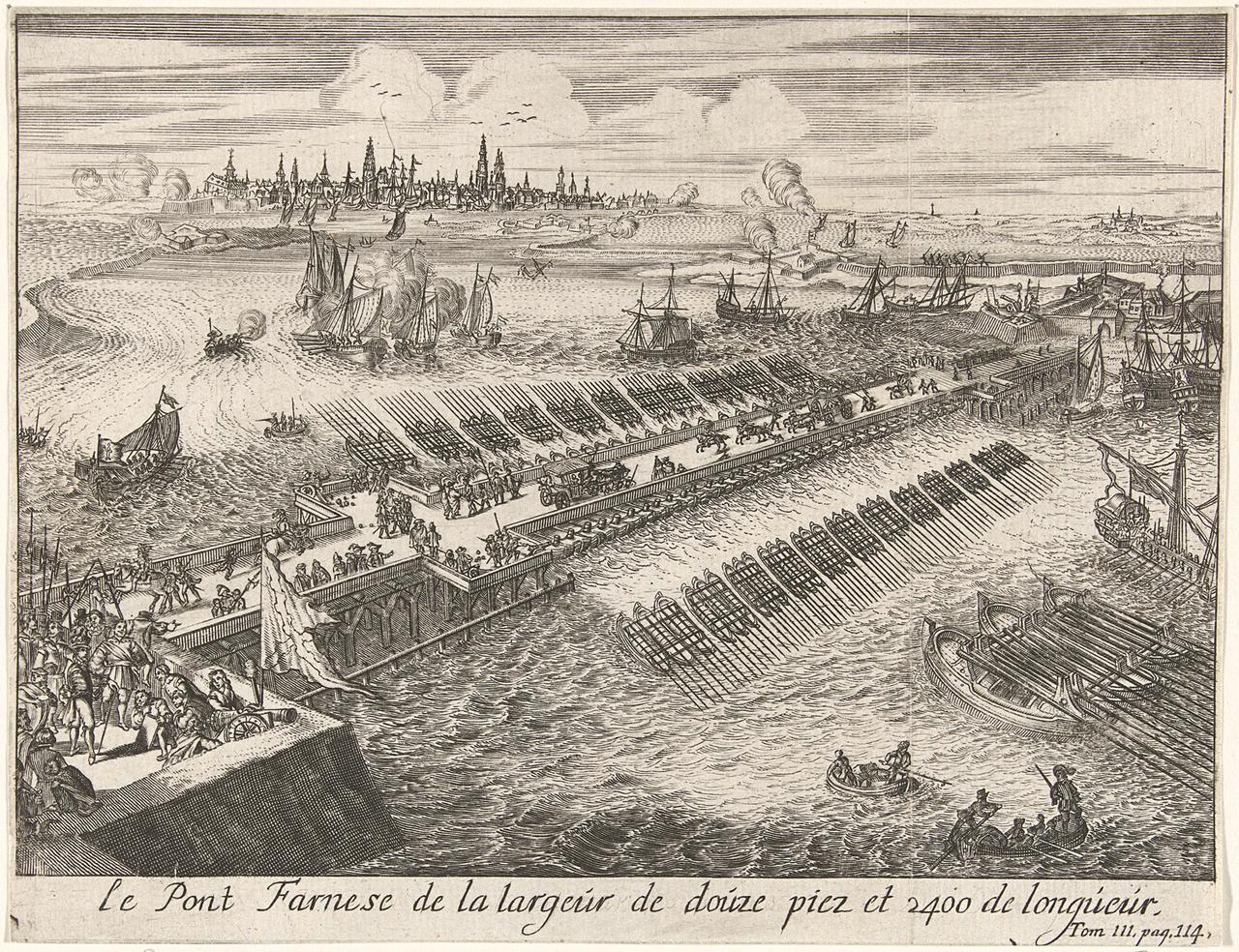
On 17 August 1585, Marnix van Sint-Aldegonde, the city's defender, signed the surrender. Antwerp had endured fourteen months of siege, the bread had run out, and of all the terms negotiated, one shaped everything that followed: anyone who wanted to stay Protestant was given four years to wind up their affairs and go.
From this spot, beside the oldest stone in the city, you looked out for those four years on a river crowded with departing ships. Around forty thousand people chose to leave. Printers, mapmakers, merchants, weavers and money changers made for Amsterdam, Middelburg, London, Hamburg and Frankfurt, carrying their knowledge and their networks with them. Before the siege, Antwerp had more than a hundred thousand inhabitants, and by 1589 only about forty-two thousand remained.
Farnese, the Spanish commander, kept his troops in check, so there was no sack like the one in 1576. The final blow came from the rebels themselves, who held Zeeland and the mouth of the Scheldt and closed the river to all shipping bound for Antwerp, a blockade that would last more than two centuries. A city that owed everything to its river now found itself cut off from it.
What vanished here resurfaced in Amsterdam. The city Antwerp had been until that moment, with its exchange, its printers and its global trade, is the subject of our walk The Richest Century in Europe, which ends at exactly this point.
From the Steen, the medieval castle on the waterfront, we head inland along the Suikerrui and turn right into the Oude Koornmarkt.
Any feedback for this story?