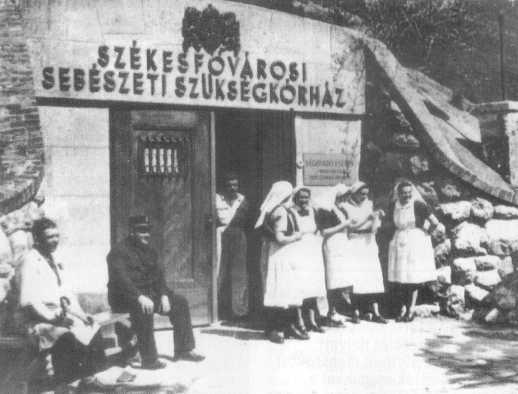
The Sziklakórház
The hill you're standing on is hollow inside, with kilometres of passages carved out of the limestone by warm spring water, and behind this door lies the strangest thing it holds.
In the late 1930s part of it was fitted out as an emergency hospital, built for sixty or seventy patients. During the siege of the winter of 1944 more than six hundred lay here, three to a bed, and when the food ran out they brought horses inside and slaughtered them. Twelve years later, during the 1956 uprising against Soviet rule, it opened again, and the same surgeon who had worked here during the war operated on Hungarians and Russians side by side. A child was born here that autumn too. Her photo hangs by the entrance now.
After that it vanished from the record. Between 1958 and 1962 it was rebuilt as a nuclear bunker with nerve gas filters and supplies for two hundred doctors, and it was ready for use just as the Cuban Missile Crisis broke out. Nobody ever lived in it except the family next door, who kept the machinery running year after year, under secrecy, until 2004.
It wasn't until 2002 that the state admitted it existed at all.
We follow the western promenade north, towards a tower that stands alone.
Any feedback for this story?