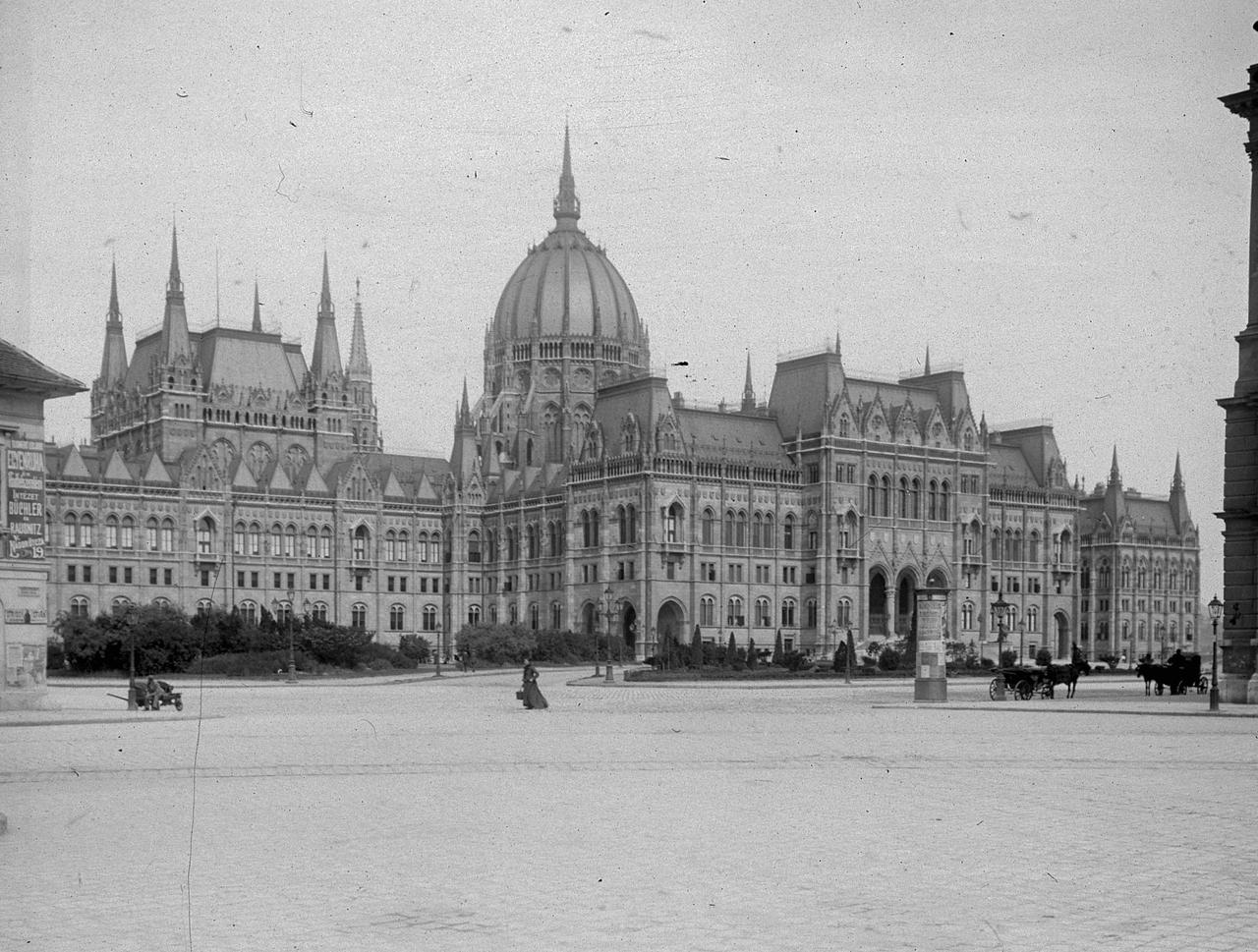
The Parliament Up Close
The facade runs two hundred and sixty-eight metres, and the dome rises to exactly ninety-six metres, the same number as the year 896, when the Hungarians say they founded this land. Every measurement here carries a message. The building had to prove that Hungary, which had run its own affairs within the Habsburg empire since the compromise of 1867, was a real country with a real parliament.
The design came out of a competition that drew nineteen architects. In 1883 Imre Steindl won with a plan he had titled Constitution. Two years later construction began, with a rule that everything had to come from within the country: forty million bricks, the timber, the glass, forty kilos of gold for the decoration. One exception was allowed, because the eight columns by the ceremonial staircase, each six metres tall and cut from a single piece of stone, could not be found here and came from Sweden instead.
Steindl lost his sight during construction. He died at the end of August 1902, five weeks before his building was formally handed over, and the finishing work carried on until 1904.
Inside, in the corridor outside the old Upper House, you'll find numbered brass cigar holders. Smoking in the chamber was forbidden, and nobody wanted to throw away half a cigar, so each delegate would rest his in his own number before heading in to vote.
We keep the facade on our left and make our way back to the embankment, heading downstream.
Any feedback for this story?