The embankment below Parliament
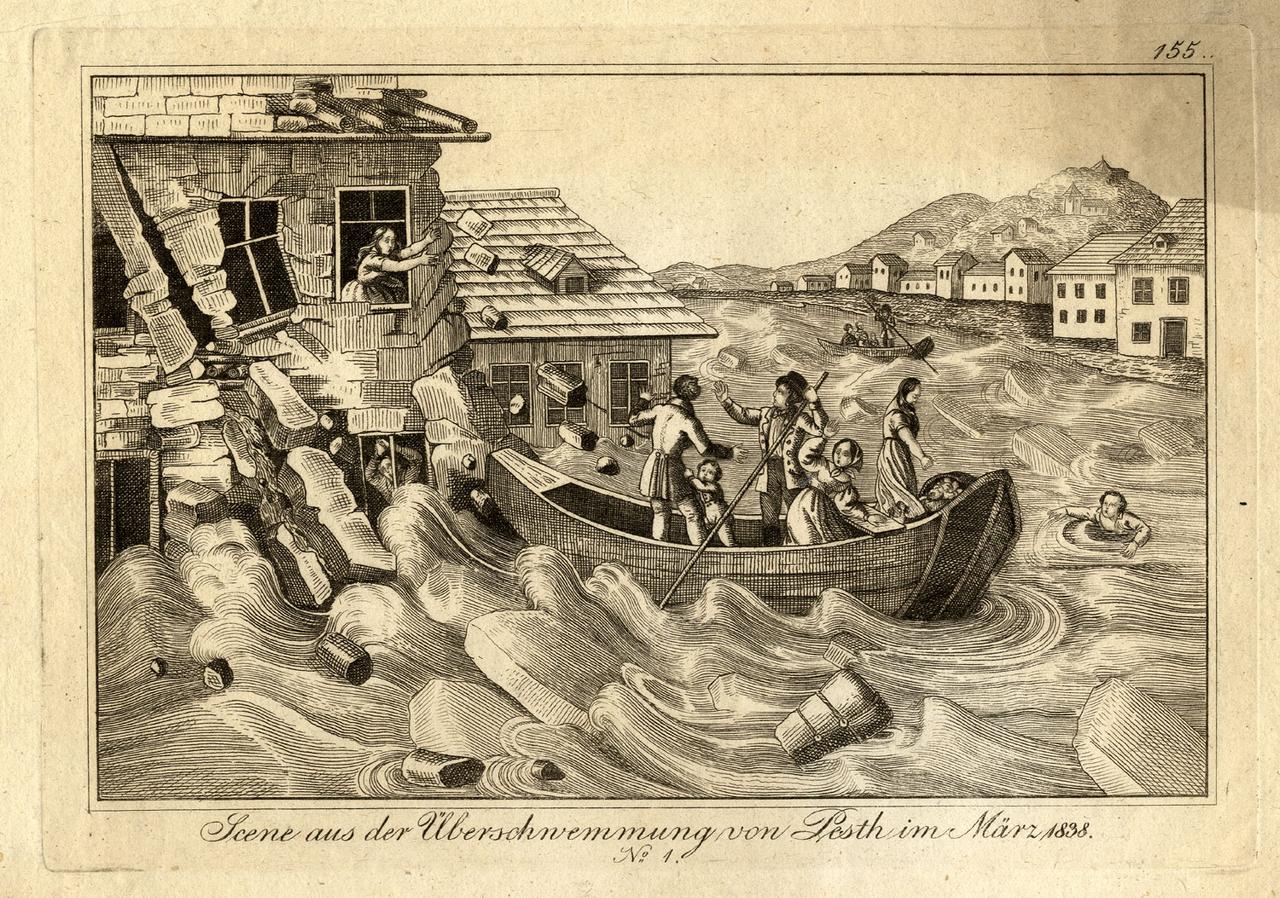
On the thirteenth of March 1838 the ice on the Danube began to shift, piled up near Csepel Island south of the city, and pushed the water back into the streets. Pest sat flat, low and densely built, and most of its houses were made of clay without foundations. Within a day they started to sink.
Of the more than four thousand houses the city counted, over twenty-two hundred collapsed, and fewer than twelve hundred were left standing. Somewhere between fifty and sixty thousand people lost their homes, and a hundred and fifty-three died.
That first evening Baron Miklós Wesselényi, a Hungarian reformer and politician, was sitting in the theatre. Halfway through the performance he heard what was happening, called for a boat, and spent days rowing between the collapsing blocks of houses to pull people off attics and rooftops. Hungary has called him the boatman of the flood ever since.
After that, the city built differently. Clay was banned in the inner city, and no stone could go up without an approved drawing. On facades in the old inner city you can still find small tiles marking how high the water rose that week, often well above your head.
We follow the water south. Two hundred metres on, there are shoes standing on the edge of the embankment.
Any feedback for this story?