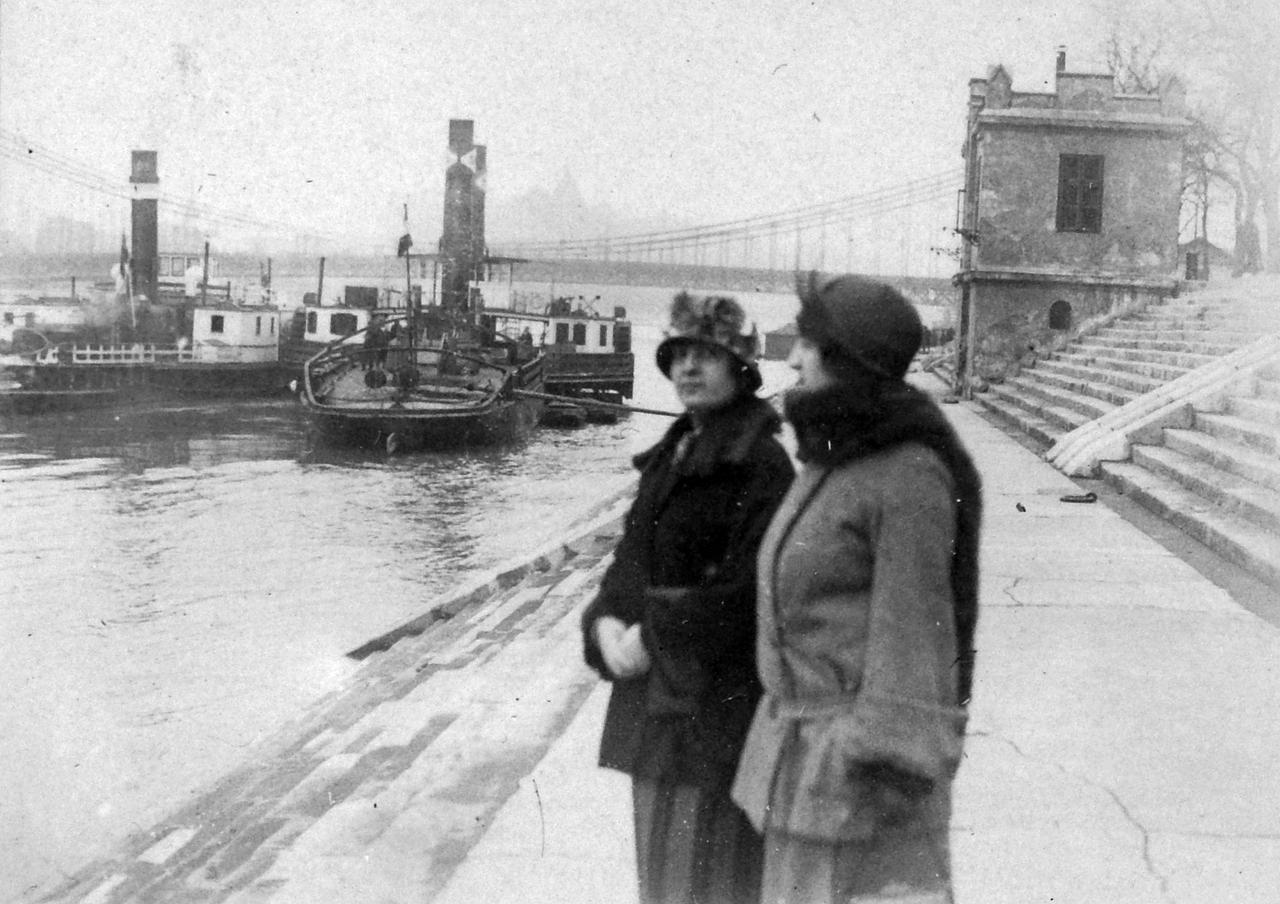
The loading quay on Belgrád rakpart
The stones you're walking over right now are the structure itself. This quay was built in steps, with a lower level just above the water and ramps leading down, because this is where ships were loaded and unloaded. The Danube Steamship Company started the work in 1853, laying three hundred and forty-five metres of quay wall on either side of the Chain Bridge for its own fleet. The engineer Ferenc Reitter extended it in the 1860s, and between 1871 and 1875 the state finished the job along the whole city stretch.
Two purposes came together here. The quay had to make loading possible while also holding back the water, and how high it needed to be for that had been settled ever since the ice flood of March 1838.
The lowest stone of this loading quay became famous in Hungary thanks to a 1936 poem by Attila József, in which he sits here and watches a melon rind drift by.
We follow the quay further south, until it opens onto the square with the green bridge and the big brick building.
Any feedback for this story?