The Dohány Street Synagogue
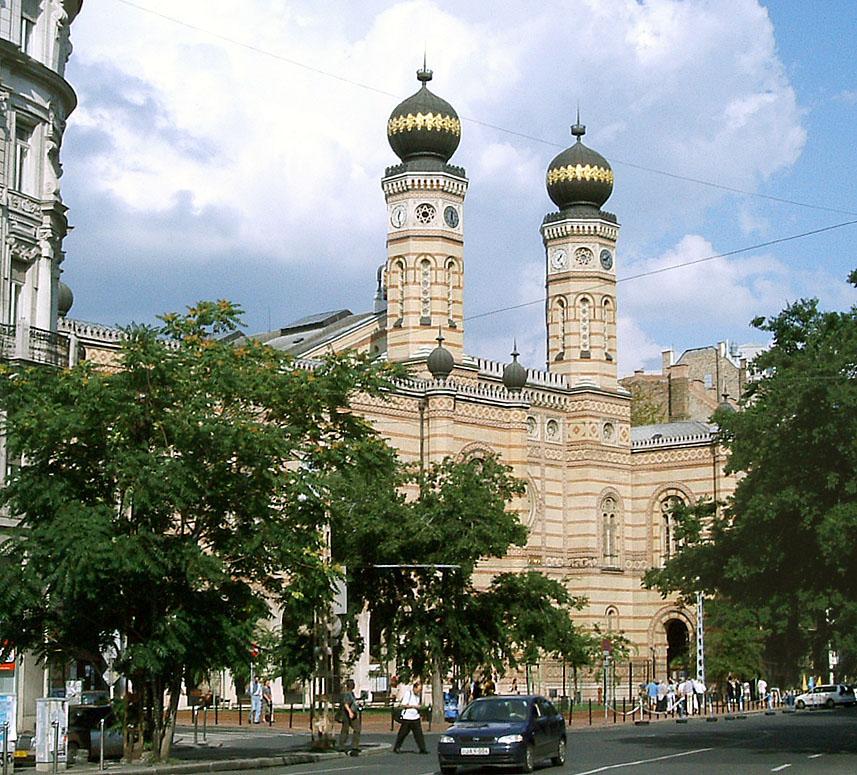
The synagogue in front of you is the biggest in Europe, and everything about it is designed to be seen. It went up between 1854 and 1859 to a design by Ludwig Förster, a Viennese architect who wasn't Jewish himself and who felt there was no historical Jewish building style for him to fall back on. So he borrowed from Moorish, Byzantine and Turkish architecture, crowned it with two towers topped by onion domes almost forty-four metres high, and faced the whole thing in red and yellow brick. If you look along the facade, you'll notice it doesn't run quite parallel to the street, because inside the holy ark has to point towards Jerusalem.
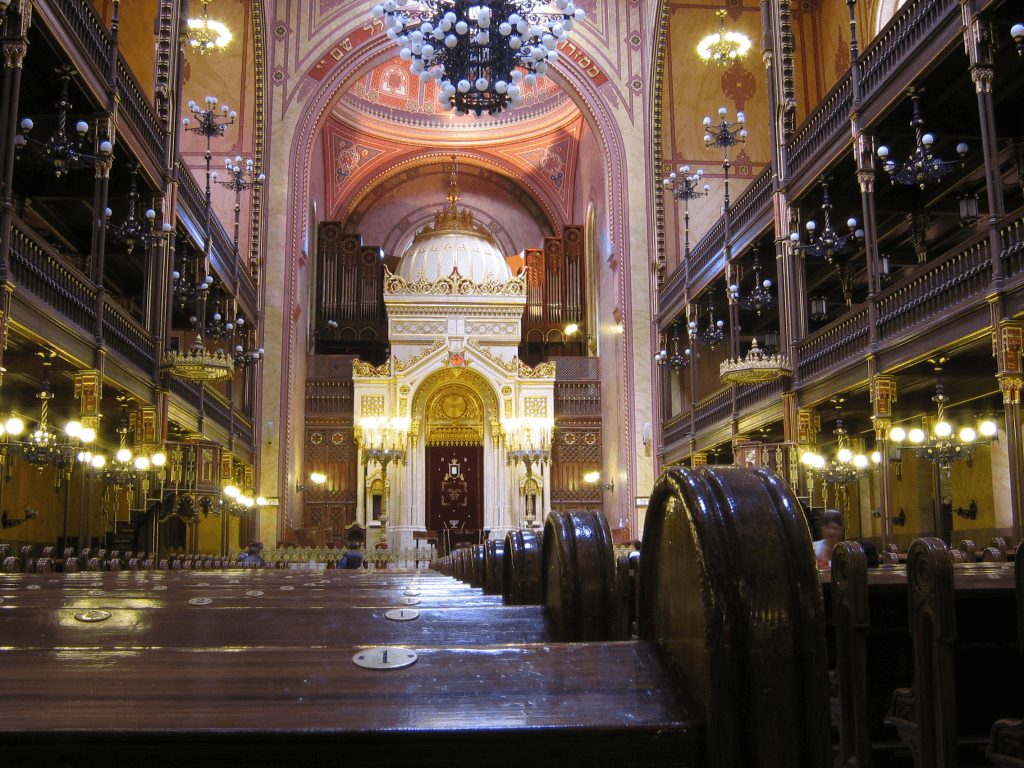
It holds nearly three thousand people, the men downstairs and the women up in the galleries, and there's an organ with around five thousand pipes. At the opening in September 1859 Liszt sat in the front row, and his own music was the first thing heard on that organ; Saint-Saëns played it later too. An organ and a choir in a synagogue were a statement in themselves, and for the Orthodox community, who built their own synagogue a few streets away, that was exactly where the line lay.
Above the main entrance there's a line from Exodus in Hebrew: make me a sanctuary, that I may dwell among them. The building was attacked in 1919 and again in 1931, and in February 1939 members of the Arrow Cross, the Hungarian fascist movement, threw a hand grenade at visitors. In November 1944 one of the gates of the ghetto stood under the arcade on the Wesselényi side.
We walk under that arcade through to the garden behind the synagogue.
Any feedback for this story?