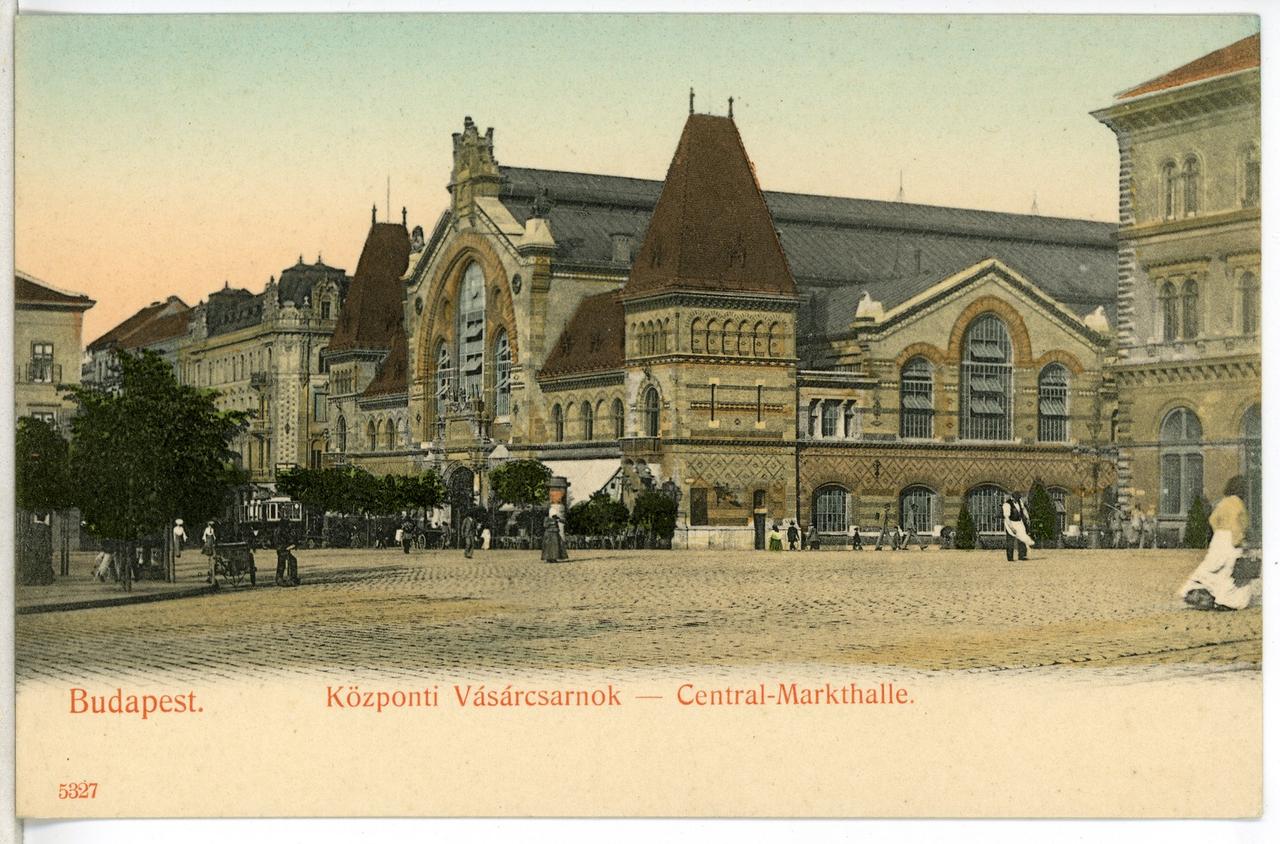
The Great Market Hall
When this hall first opened, barges loaded with vegetables sailed right in beneath the floor, through a tunnel that runs under the building from the loading quay you just passed. Károly Kamermayer, the first mayor of a unified Budapest, had pushed for covered markets for years, because nobody could inspect food that was sold out on the street, and this one became the centrepiece of his plan.
Construction started in June 1894 to a design by Samu Pecz, a professor at the technical university, who turned it into something closer to a cathedral than a market: a steel frame from the Schlick iron foundry, walls of red and yellow brick, and a roof of coloured ceramics from the Zsolnay factory in Pécs. It cost nineteen hundred thousand forint, almost as much as the city's four other market halls put together.
Ten days before the opening in 1896, a fire broke out and destroyed almost the entire roof. The repairs took seven months, and on the fifteenth of February 1897 the hall finally opened its doors, on the same day as those four other halls. By then Kamermayer had retired, and he stood among the crowd as an ordinary citizen.
In 1991 the building was closed as unsafe, and it reopened three years later. The tunnel to the quay is still there, though these days it carries rubbish out rather than paprika in.
We walk back to the river and head up onto the bridge.
Any feedback for this story?