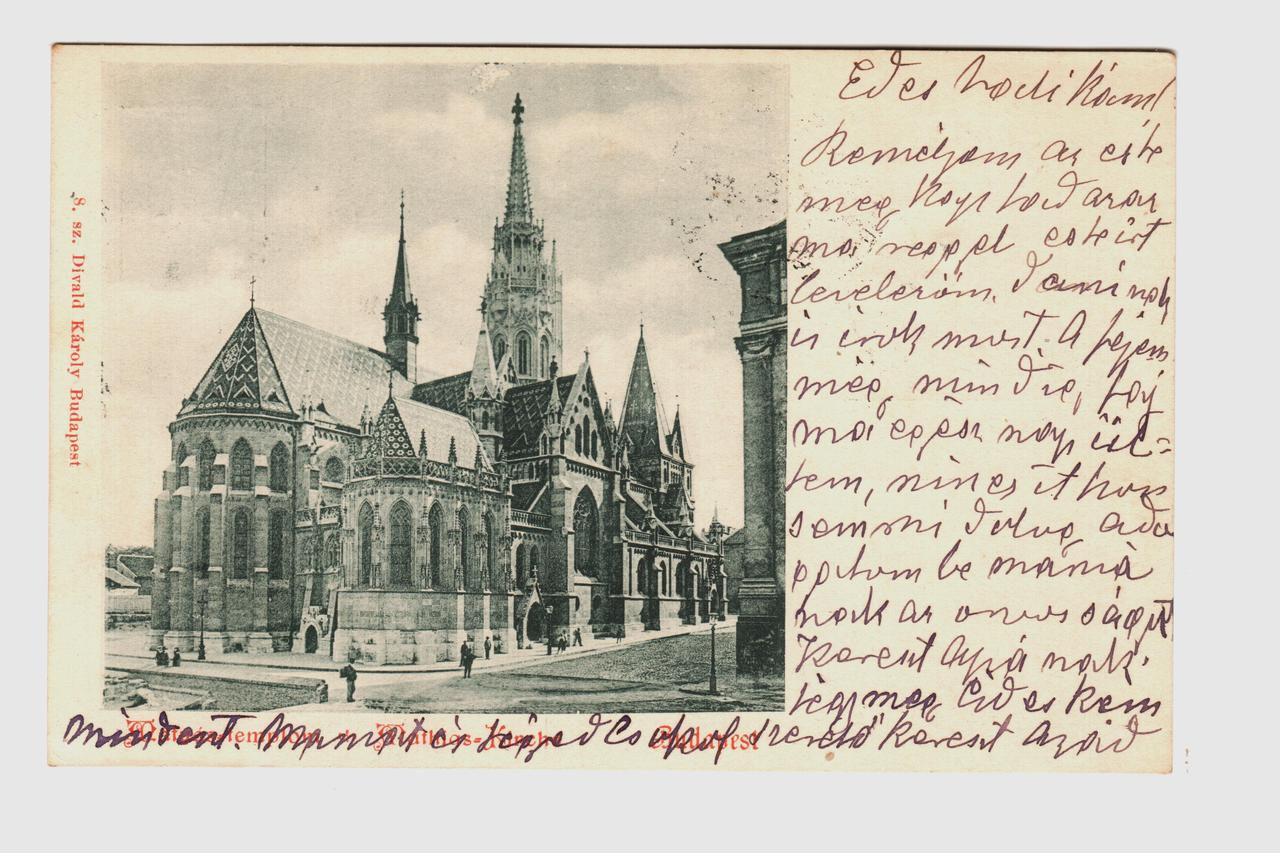
The Mátyás Church
For a hundred and forty-five years this building held no altar, only a prayer niche facing Mecca.
It was the main mosque of Ottoman Buda, whitewashed inside, the statues gone and the paintings covered over. The most famous story on the hill is about how that ended. During the bombardment of 1686, so the tale goes, a wall broke open and revealed a statue of the Virgin Mary that had been bricked up when the Ottomans arrived, and the men standing at prayer in the mosque took it as an omen.
What happened here on 8 June 1867 is better documented and at least as strange. The emperor from Vienna was crowned king of Hungary, the gesture that gave the country its own government back, with a mass that Liszt had written for the occasion. His wife Elisabeth was crowned the same day rather than days later, because the Hungarians wanted her there beside him, and she afterwards gave her coronation gown away to a diocese, which had it turned into vestments.
After the mass the emperor rode up an artificial hill on the far side of the water, built from bags of earth brought in from every Hungarian region, and slashed his sword toward the four points of the compass, a promise to defend the land on all sides.
We walk to the terrace with the white towers beside it.
Any feedback for this story?