Táncsics Mihály utca
For centuries this was called Jewish Street, and what sits under it has still never been excavated.
The community lived here, right next to the palace, because the king offered them protection and needed their money, and under Ottoman rule they stayed and grew. In 1461 the Jewish prefect of Buda had a synagogue built here that had few equals anywhere in Europe. On the 2nd of September 1686, the day the city fell, the people who had sheltered inside were killed and the building burned.
In 1964 an archaeologist found the walls again under the garden of the house at number 23, still in good condition. He wasn't given permission to keep digging. The ruin was filled back in with sand and sealed under a concrete slab, and that's where it lies to this day.
Across the way, during those same years, a renovation uncovered painted vaults covered in Hebrew text inside an ordinary home. From the shape of those letters, researchers could tell who had prayed here: a Sephardic group that had arrived with the Ottomans. Since 2018 people have been praying there again, for the first time in nearly four hundred years.
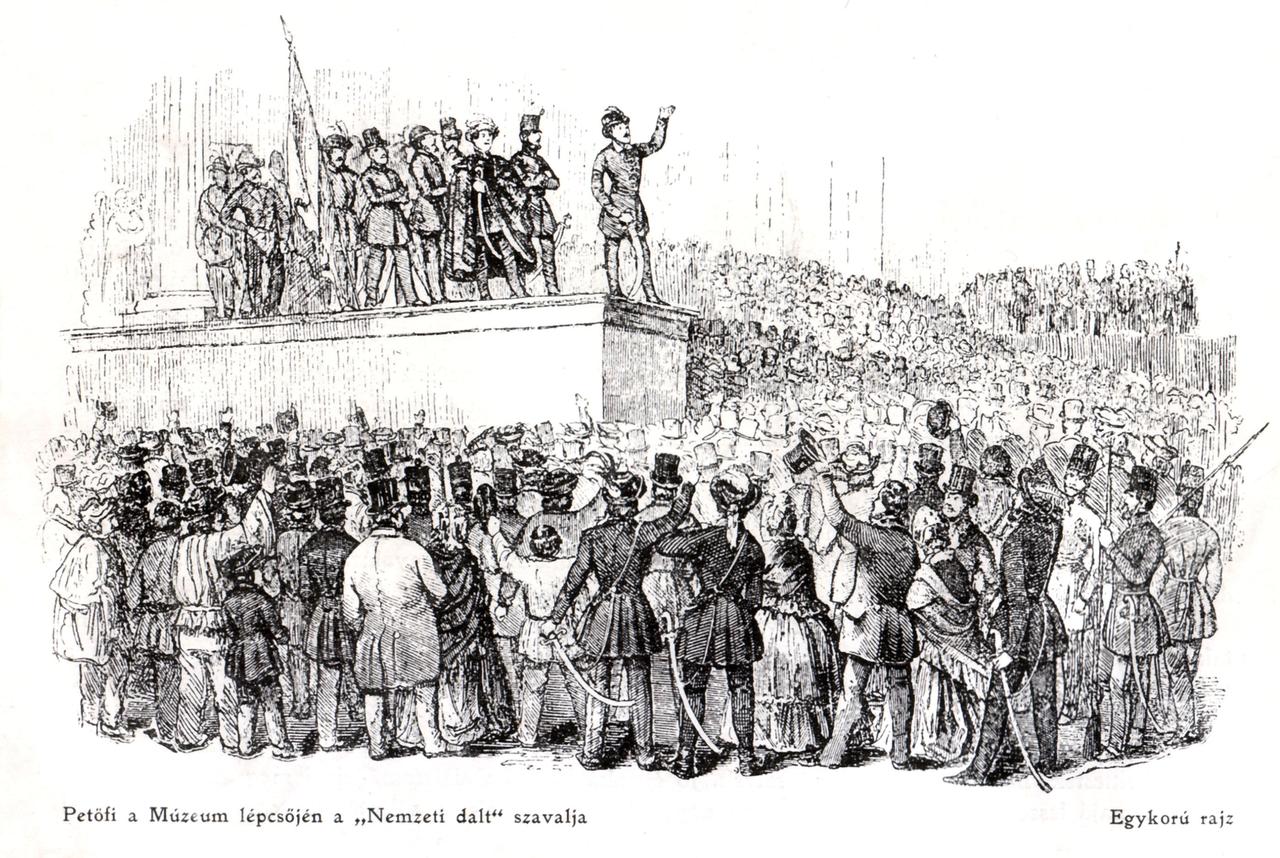
Further along this street stood the prison that held the writer Mihály Táncsics, jailed for what the censors wouldn't allow. On the 15th of March 1848 a crowd pulled him out and carried him across the bridge. That date is still the national holiday.
We walk on toward the church with the coloured roof.
Any feedback for this story?