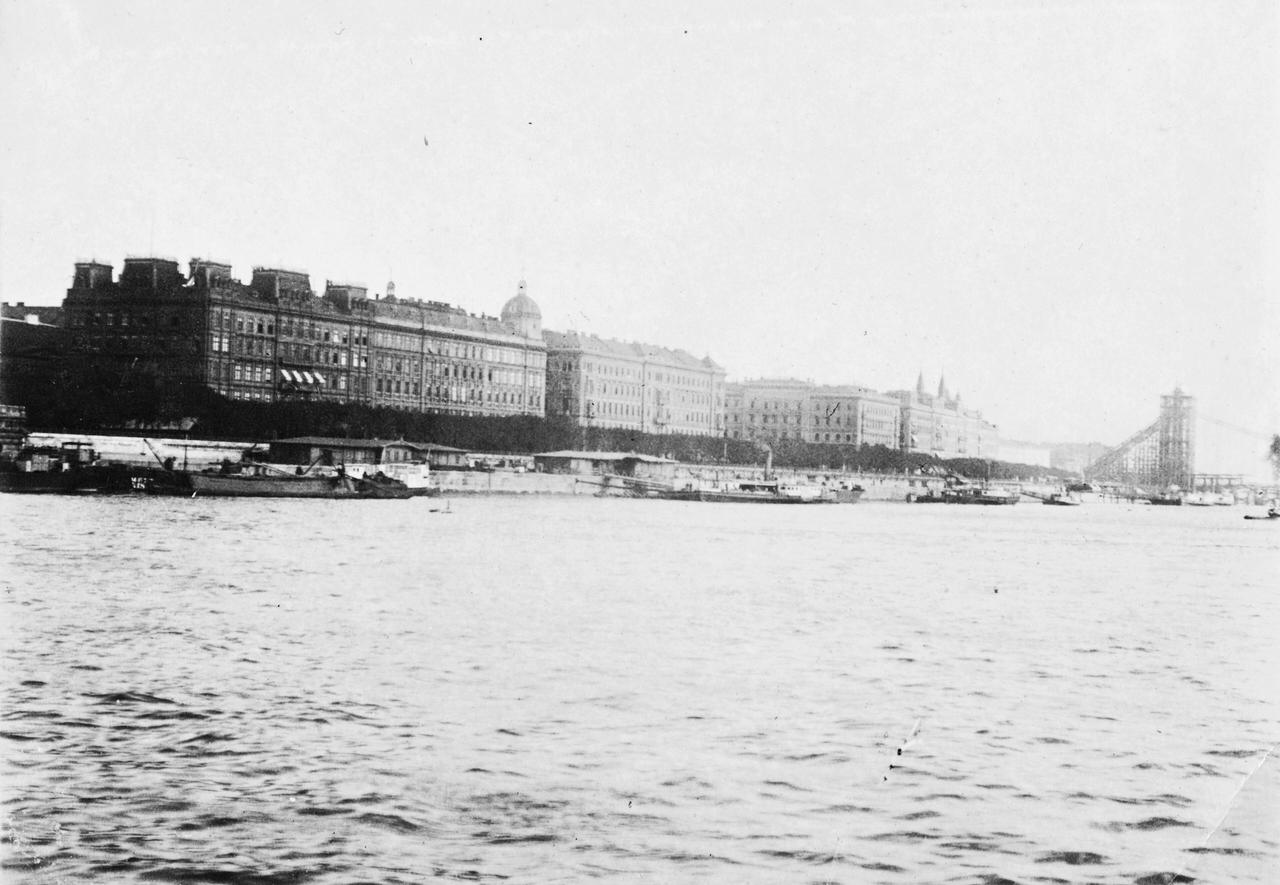
The Vigadó and the korzo
The building with its colourful arches and the dancing figures along the facade is the second to stand here. The first was called the Redoute, a clean-lined ballroom from 1833, and it was more than a dance hall from the very start. In 1848, when Hungary rose up against Habsburg rule, the people's parliament gathered in this room and Lajos Kossuth, the lawyer and politician who led the revolution, delivered his great speeches here. That turned out to be the building's undoing. When the Hungarians besieged the castle across the river in May 1849, the Austrian commander Hentzi ordered the whole Pest embankment shelled from the hill, and all that remained of the Redoute was a ruin.
Ten years later Frigyes Feszl was commissioned to build a new house on the old foundations. He delivered something quite unlike anything else, with Moorish arches, Byzantine colours and motifs from Hungarian folk art all mixed together. It opened in January 1865 with a ball, and the first concert was Beethoven's Ninth conducted by Ferenc Erkel, the composer of the Hungarian national anthem.
After that pretty much everyone came to play here: Liszt, Wagner, Brahms, Debussy, Bartók. Louis Blériot parked the aircraft here in which he became the first to fly across the Channel.
In the winter of 1944 into 1945 it was shot to pieces again, and this time it took until March 1980 before the doors opened once more. The row of grand hotels that once stood beside it along the embankment never came back.
We keep following the embankment until we find ourselves standing under the cables of the next bridge.
Any feedback for this story?