Fischer Rézi on Kristóf tér
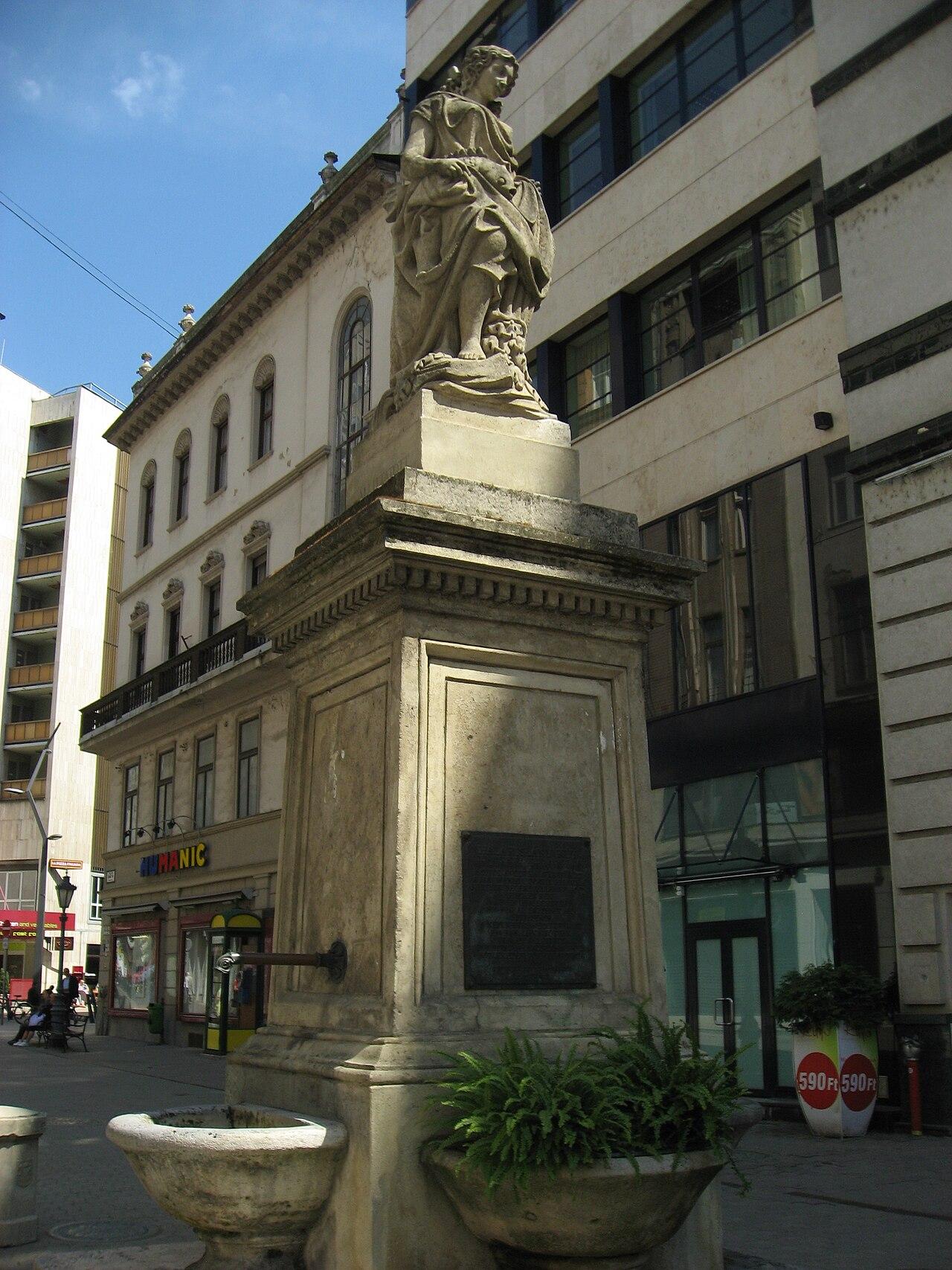
This is one of the smallest squares in the old town, and in the middle of it stands a stone fountain with a girl on top. At the back sits the wheel that used to pump the water up.
The guild of Pest fishermen had her made in 1862 by László Dunaiszky, for Hal tér, the fish market that lay a little further south along the embankment. The water from this tap was considered the cleanest in Pest, and the city nicknamed the girl Fischer Rézi. When the Erzsébet bridge was built, Hal tér vanished from the map and the fountain moved to the People's Park in 1899. There it was torn down in the 1960s to make way for a road and struck from the list of monuments. György Rajna tracked down the broken pieces in a warehouse, Sándor Lovas put them back together, and since 1985 Rézi has stood here, a few hundred metres from where she started.
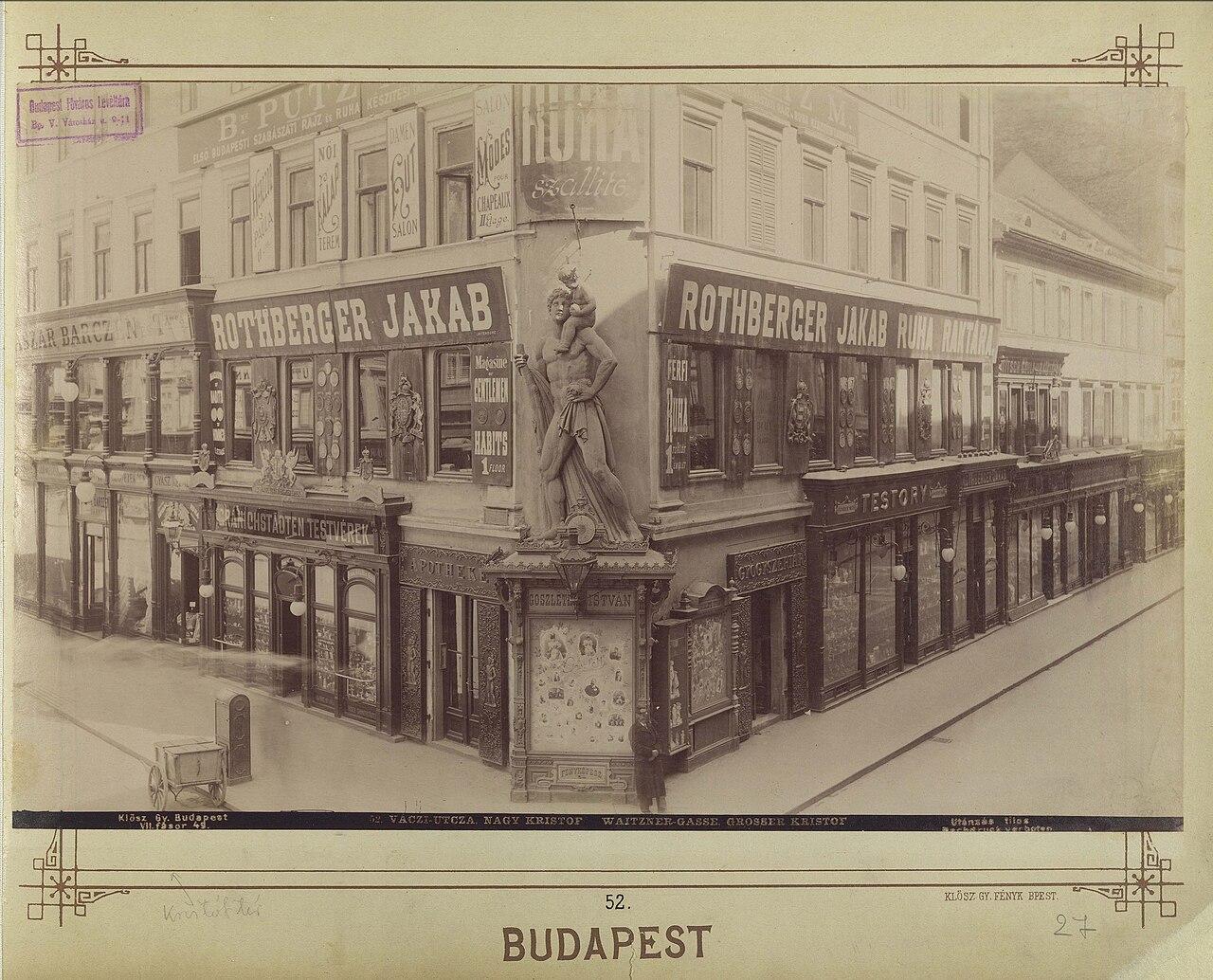
The square owes its name to something that now survives only in that name. On the corner with Váci utca, a pharmacy from 1791 had a giant Saint Christopher of more than three metres, carved from a single block of stone and transported upright because the sculptor was afraid it would break lying down. The people of Pest named tall men after him. In 1909 the house was levelled and the statue was sawn into three.
Two walks begin within a short stroll of this fountain. One block to the west lies the embankment, where the Danube Bank runs past the bridges and the baths. A few streets to the north-east stands the largest synagogue in Europe, and from there the Jewish quarter of Erzsébetváros runs past the last piece of ghetto wall.
This is where the walk ends. We head into Váci utca, and after a minute or two we are back on Vörösmarty tér, where you started this morning or this afternoon.
Any feedback for this story?