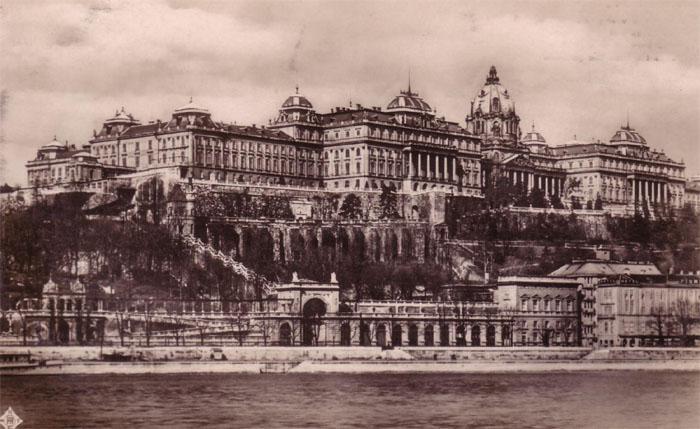
The Royal Palace
Of the four palaces that have stood on this spot, not a single one fell to old age.
The first fortress went up in the thirteenth century, after Mongol riders had burned the country to the ground and the king decided he would be safer living on a rock from then on. Two hundred years later there was a Renaissance court here with a library that drew scholars from all over Europe, one of the largest collections on the continent. When the Ottomans entered Buda in 1526, the sultan took the books with him, and over the century and a half of rule that followed, his successors mostly found the palace useful as a gunpowder store.
That gunpowder blew sky high in 1686, at the end of a siege that lasted almost three months, and it took the tower and the surrounding houses with it. What the Habsburgs built afterwards burned down in 1849 during the uprising against that same Vienna. The largest version was only finished in 1904, by which time Hungary had become an equal half of the empire after the compromise of 1867 and wanted to show it in stone. She lasted forty years, until German troops dug themselves into the cellars in the winter of 1944.
While that rubble was being cleared away in the late fifties, medieval halls came to light beneath the baroque terraces, rooms people had thought were lost back in 1686.
Under your feet the hill is hollow, and besides a hospital and a bunker, those tunnels once held the gold of the National Bank, and according to legend Vlad Tepes, the man who would later become Dracula.
We walk on to the eastern side of the terrace, where you look out over the river.
Any feedback for this story?