Szent Gellért tér
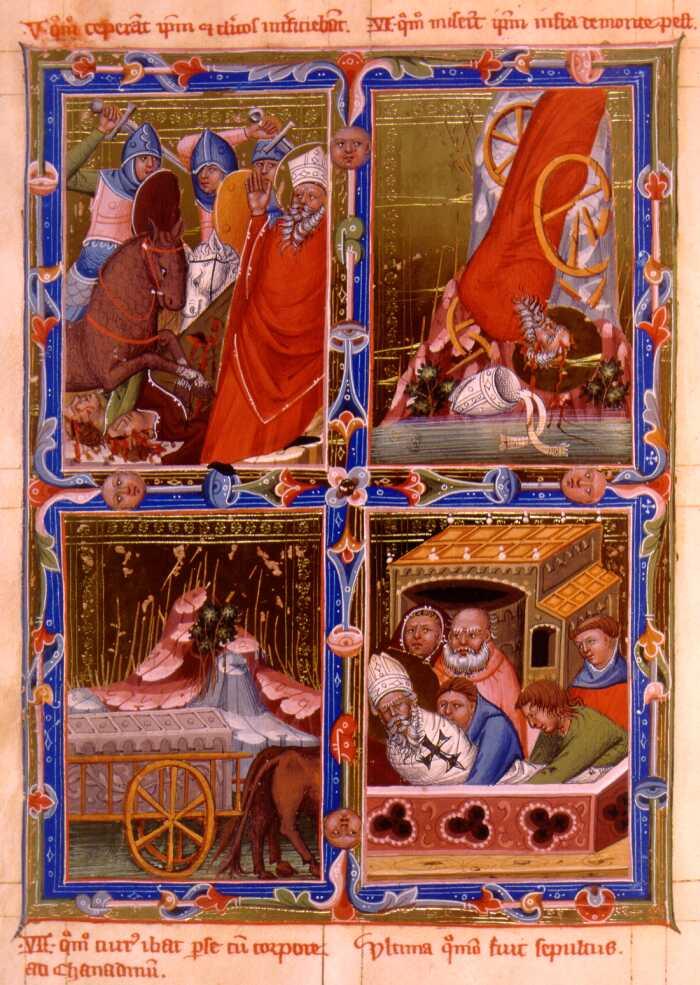
The hill rising above you used to be called simply Kelenberg, until a bishop was thrown off it in the year 1046. Gellért was a monk from Venice who had ended up staying in Hungary, became tutor to the son of King Stephen, and the first bishop of Csanád. When Stephen died the freshly Christianised country fell apart, and in the uprising named after its leader Vata, groups of Hungarians openly turned back to the old gods.
On the twenty-fourth of September 1046 Gellért was on his way to the ferry near Pest, roughly where you've just come from, when he was attacked. The medieval chronicle tells us they tied him into a two-wheeled cart and pushed it off this rock face. The version with the barrel full of nails that every Hungarian schoolchild grows up with was added centuries later. Since 1904 his statue has stood above you on the slope, lined up exactly with the axis of the Elisabeth Bridge.
The hill kept a reputation after all this. In witch trials well into the eighteenth century, the accused were asked whether they had ever been to the mountain of Saint Gellért, since that was supposedly where the witches gathered.
At the foot of that same rock, warm water rises to the surface, and that's what we're walking past now.
We keep the river on our right and follow the embankment north. This is the longest stretch without a stop.
Any feedback for this story?