Back at Hősök tere
The loop is complete, and you're standing again in front of the column where the walk began. What this square has seen since that jubilee year is perhaps the strangest thing about it, because an empty space of this size rarely stays empty for long in Budapest.
In May 1938, the city hosted the Eucharistic World Congress here, and nearly half a million worshippers were expected on this square for the closing mass. It turned out differently, because a storm broke out and the papal envoy Eugenio Pacelli ended up having to address the crowd over the radio. That same cardinal also celebrated mass that year in the small church in the castle quarter just up the road, and the following year he became pope himself.
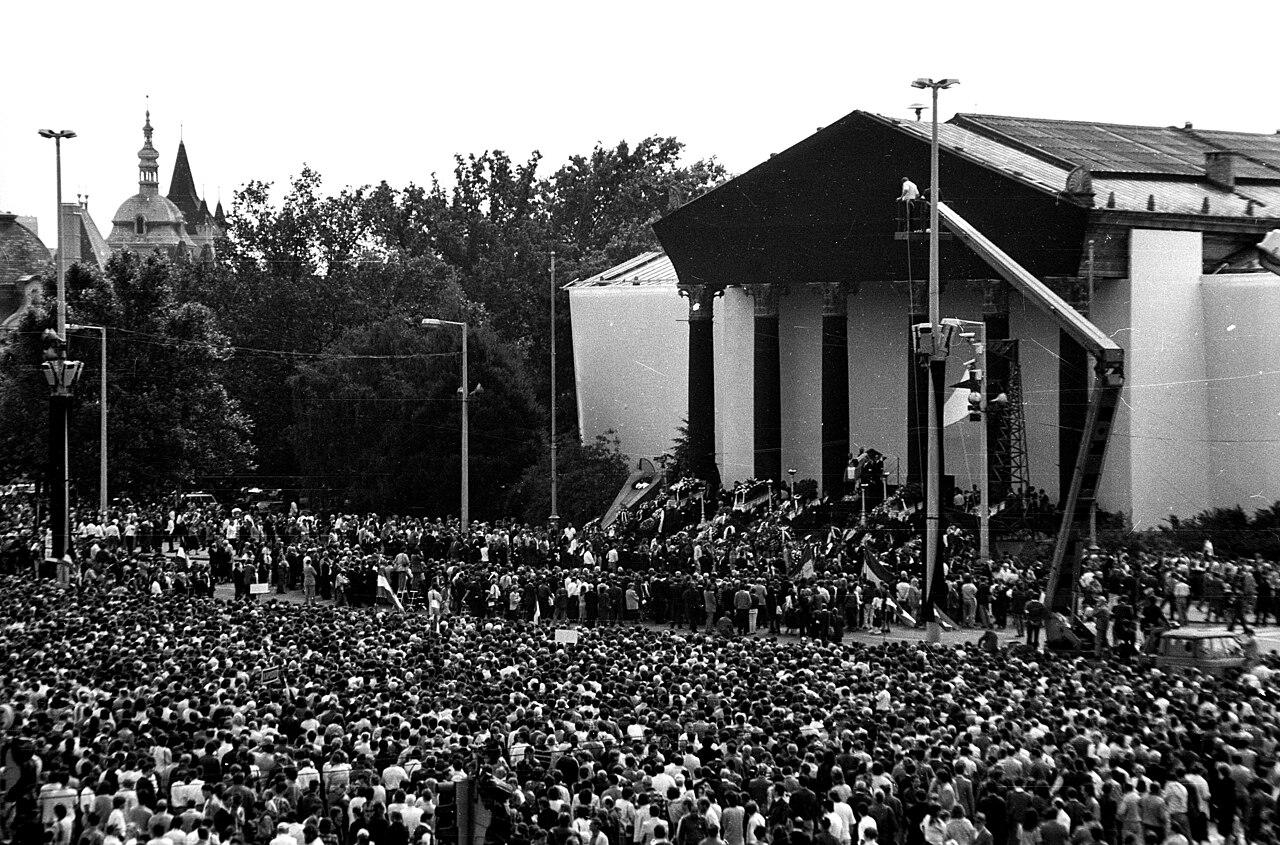
On 16 June 1989, a quarter of a million people stood here for the reburial of Imre Nagy, the prime minister who was hanged after the 1956 uprising and then left in an unmarked grave on the edge of the city. The date was chosen deliberately, because it was the day he had been executed thirty-one years earlier. Radio and television broadcast all of it live, and less than three weeks later, on the day Kádár János died, the supreme court quashed the sentences.
This is where the walk ends. Beneath the square lies the terminus of the Földalatti, the underground line from that jubilee year, which carries you back to the centre in a few minutes beneath the Andrássy út.
Any feedback for this story?