The Invalides House, too big for its own street
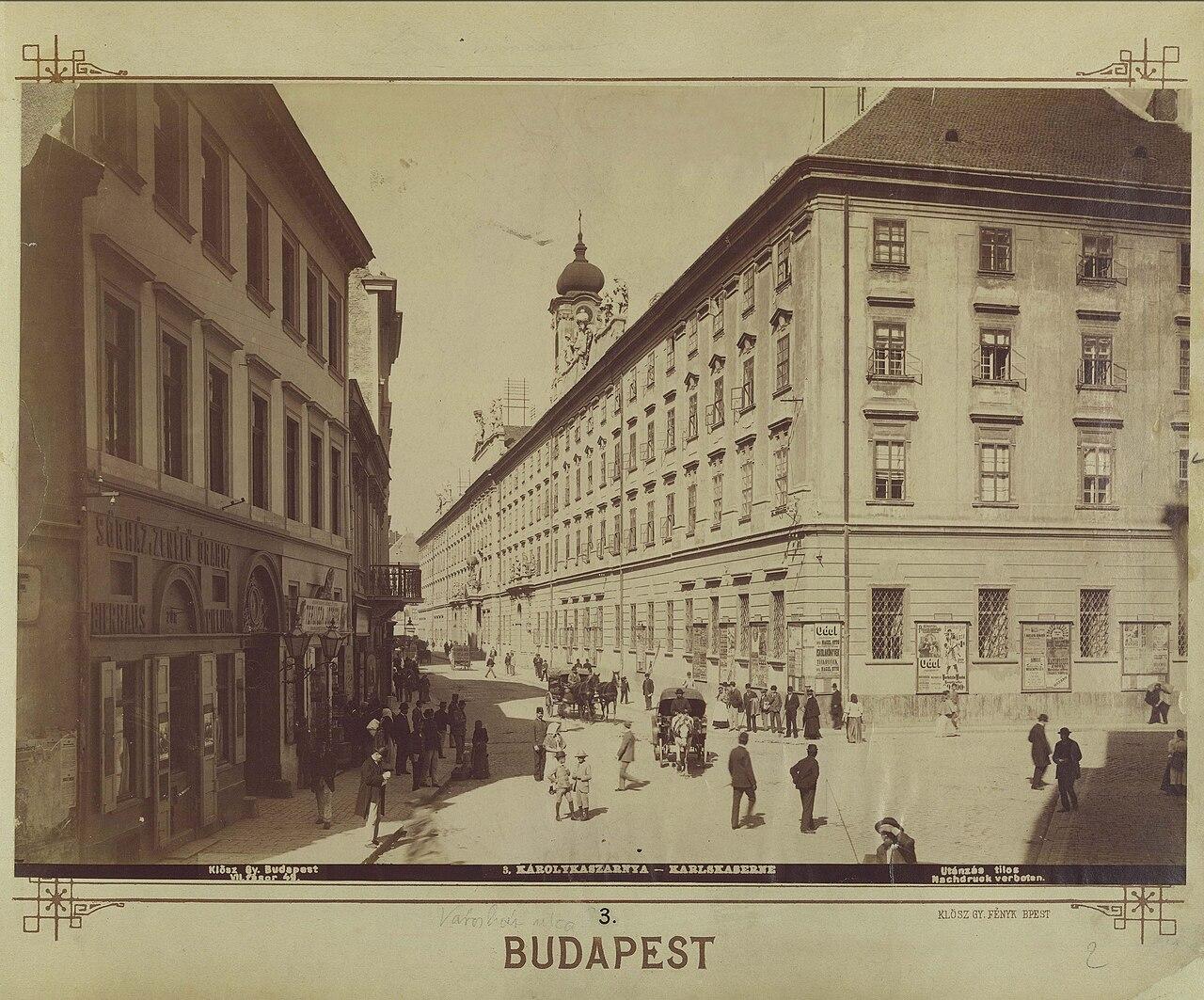
You're standing in a street that's too narrow for what runs along one side of it. The facade beside you stretches a hundred and ninety metres and has forty-seven window bays, and from nowhere in the street can you take it in all at once. Let's walk along it for a bit and look at the three gateways.
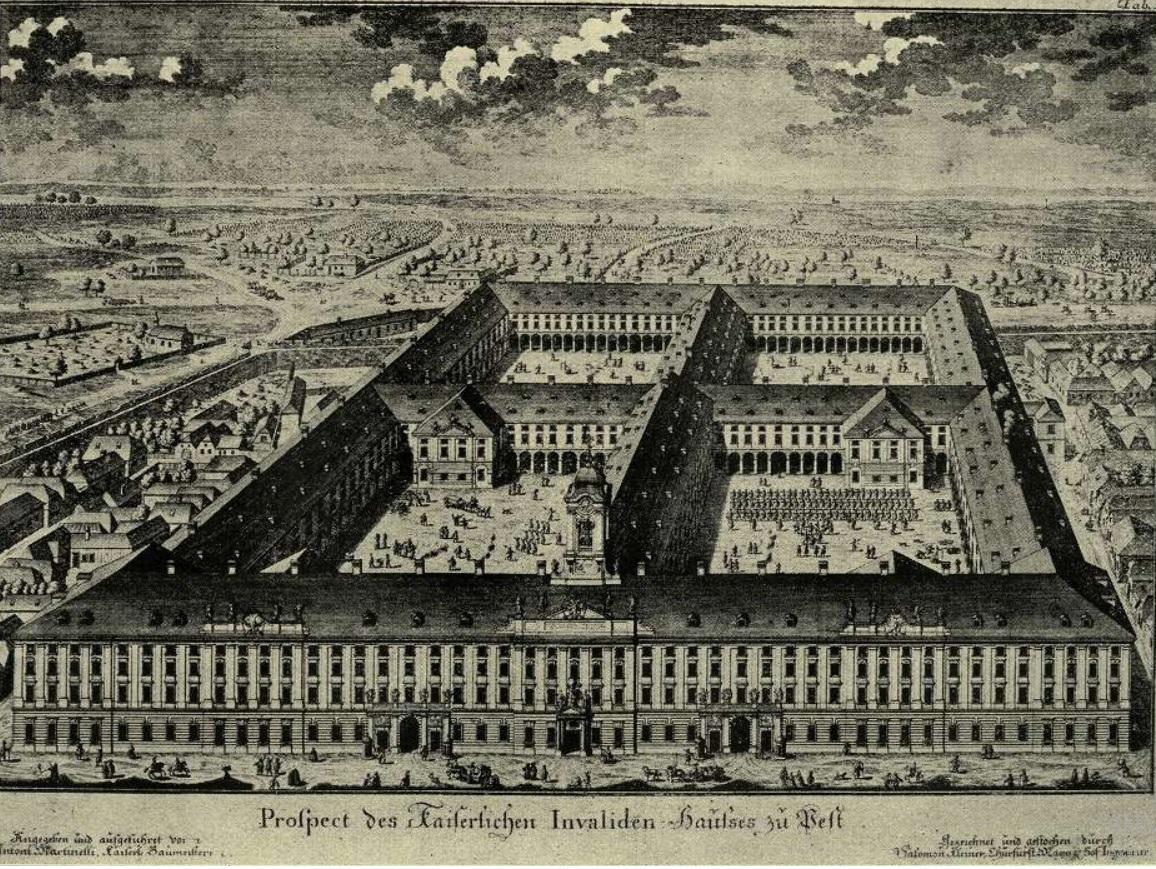
This was the Invalides House. In 1692, Archbishop György Széchényi set money aside for soldiers who came home disabled from the war against the Turks, and the first stone went into the ground just over twenty years later. From the late 1720s the Viennese master builder Anton Erhard Martinelli ran the work, taking the Hôtel des Invalides in Paris as his model: four wings of almost two hundred metres around a courtyard, with room for thousands of men and their families. Maria Theresa, the Habsburg empress, thought it finer than any palace in Vienna.
It never quite came together. The eastern wing ran straight into the medieval city wall, and the city of Pest refused to tear that down, so the building stayed as Martinelli left it when he died in 1747. In 1783 Joseph II moved the invalids out and turned it into a barracks, named after Emperor Charles. Since the end of the nineteenth century it has housed Budapest's city government.
We follow the facade to its end and cross over to Ferenciek tere, towards the church on the corner of Kossuth Lajos utca.
Any feedback for this story?