The Párisi udvar, an arcade under glass
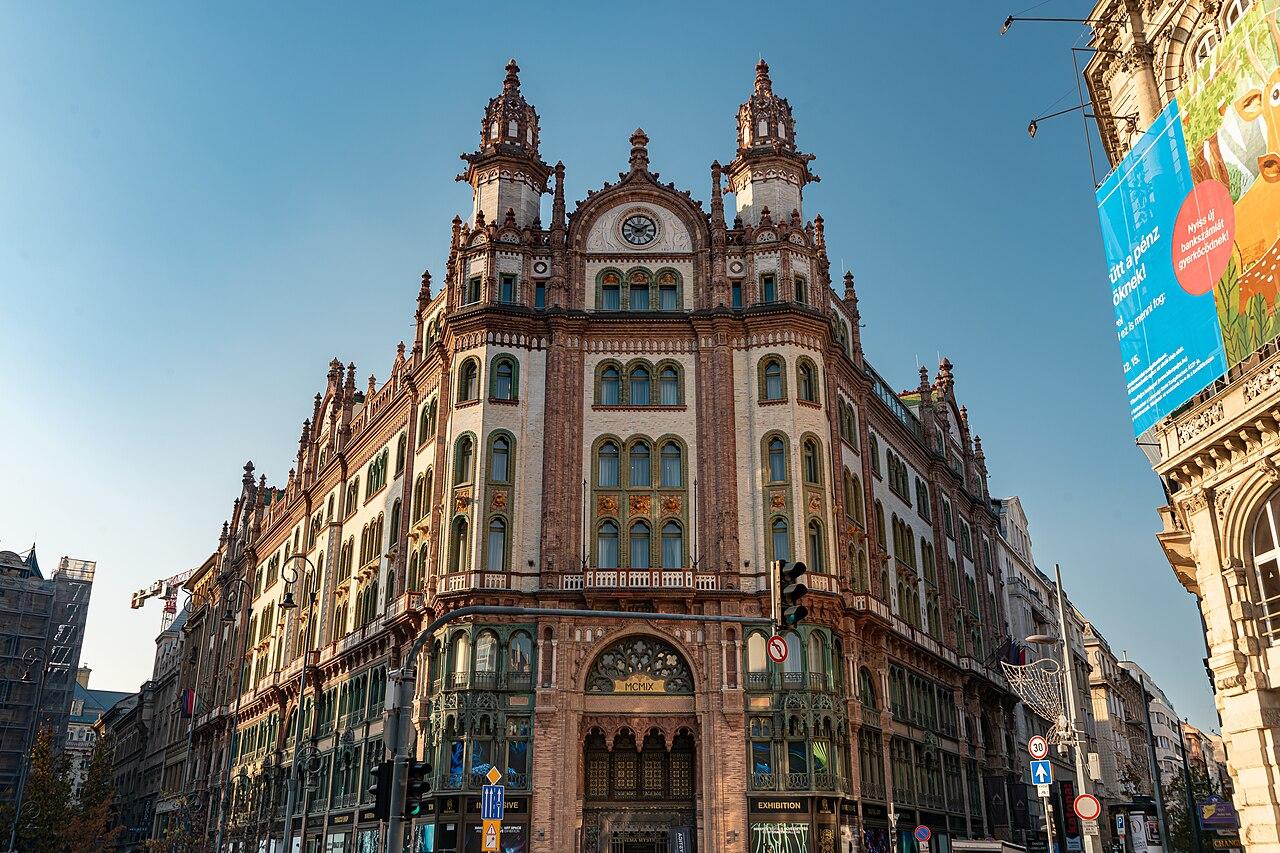
You're standing in front of a building that has lost its corner. Henrik Schmahl sliced it away and turned that angled surface into a fifth facade, with the main entrance to the counter hall of the savings bank set into it. Take a look at the cladding: hundreds of thousands of pieces of Zsolnay ceramic, pointed arches and Moorish motifs mixed together.
For ninety years the Párisi-ház stood here, the first modern shopping gallery in Hungary, built in 1817 for József Brudern to a design by Mihály Pollack. Pest named it after the Passage des Panoramas in Paris, which the covered walkway resembled. Around 1900 it was pulled down, and the Belvárosi Takarékpénztár, a local savings bank, bought the land and launched a competition that drew forty-three entries. The jury chose the plan by Korb and Giergl, the pair who had put up the Klotild palaces right next door, yet the board handed the commission to Schmahl, a German mason's apprentice who had become an architect without ever attending an academy. He didn't live to see it finished and died in 1912, a year before the building opened.
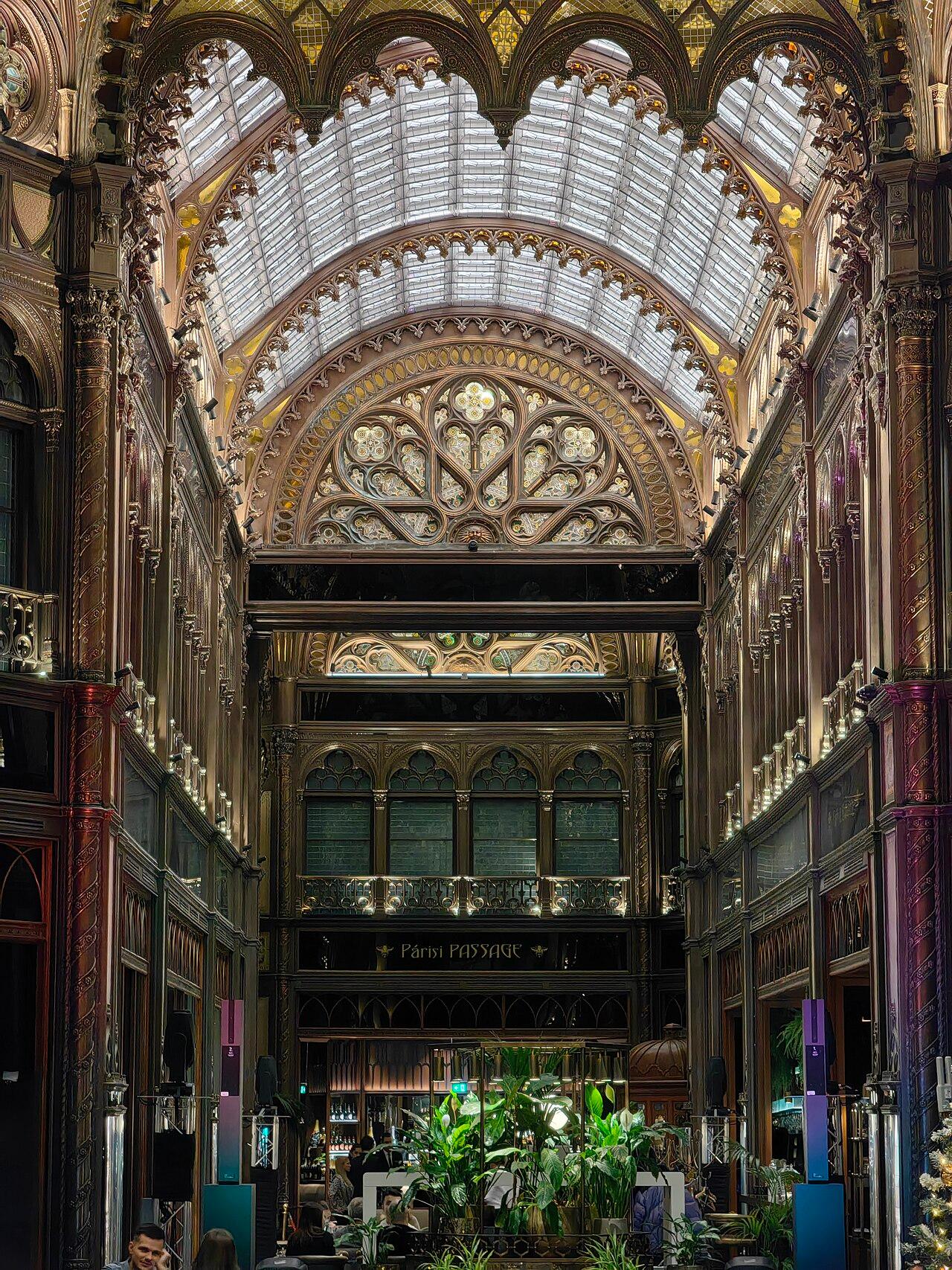
You're allowed to walk inside, even without a room here. The arcade holds the only early twentieth-century shopping gallery left in Budapest, under a vault of crystal glass. The stained-glass windows come from the same Miksa Róth workshop that made the mosaic on Szervita tér.
We come back out of the arcade on the Ferenciek tere side and head into Váci utca, towards the south.
Any feedback for this story?