The Square of the National Song
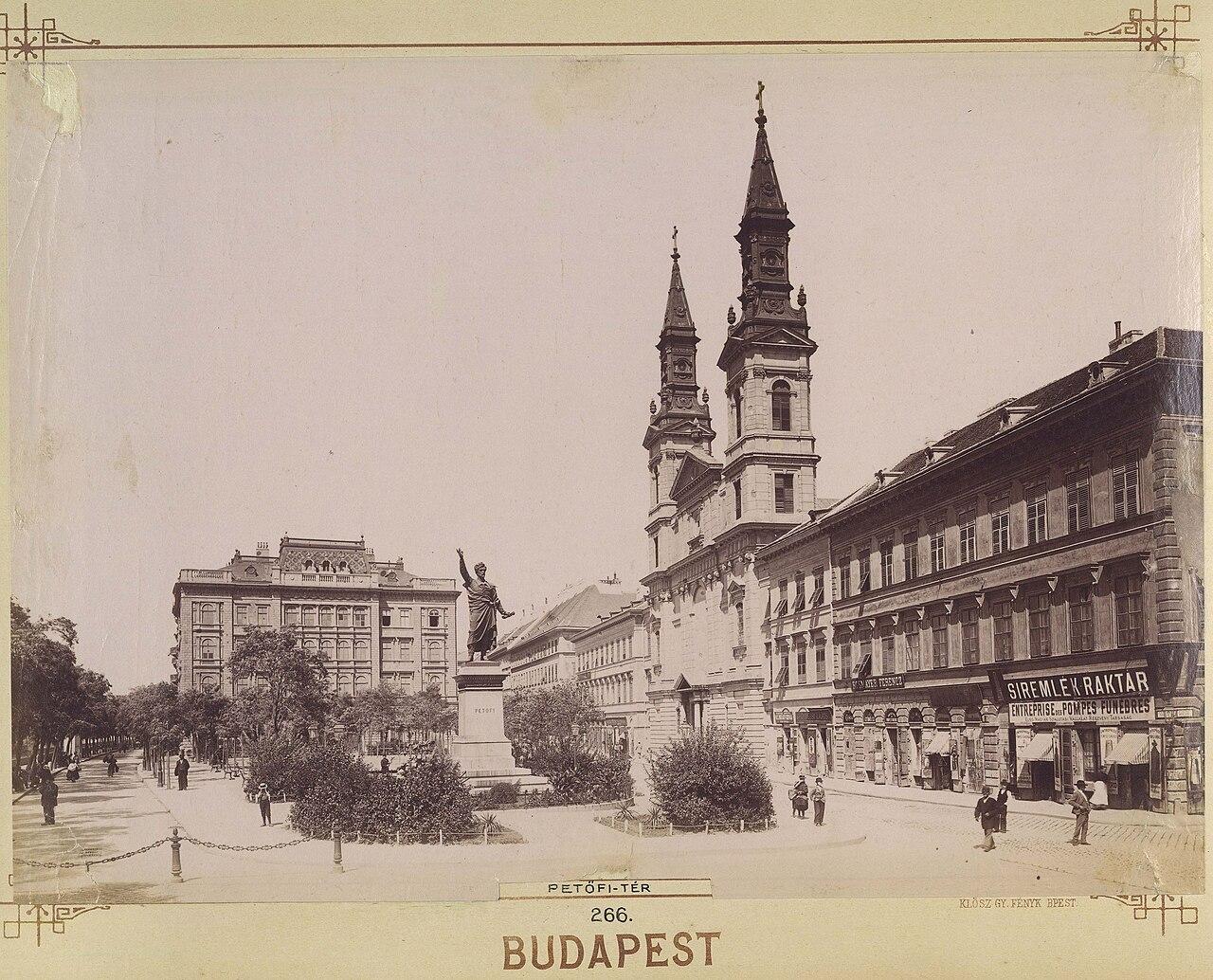
You're standing between a statue and a church with two towers, the river at your back. Step in front of the statue and look where the poet looks: his arm rises, and his gaze falls on the square you've just come from.
The statue of Sándor Petőfi, the poet and revolutionary who became the voice of Hungary's fight for freedom, has stood here since 1882. It was paid for by a nationwide collection, and you'll find that fact carved into the base. Miklós Izsó began the work, Adolf Huszár finished it, and Miklós Ybl designed the pedestal.
On 23 October 1956, at three in the afternoon, tens of thousands of people gathered here. The actor Imre Sinkovits recited the National Song and then read out the students' demands. It's the same poem that Petőfi had first performed more than a century earlier, in the café down the alley where this walk began, and that afternoon the gathering swelled into an uprising.
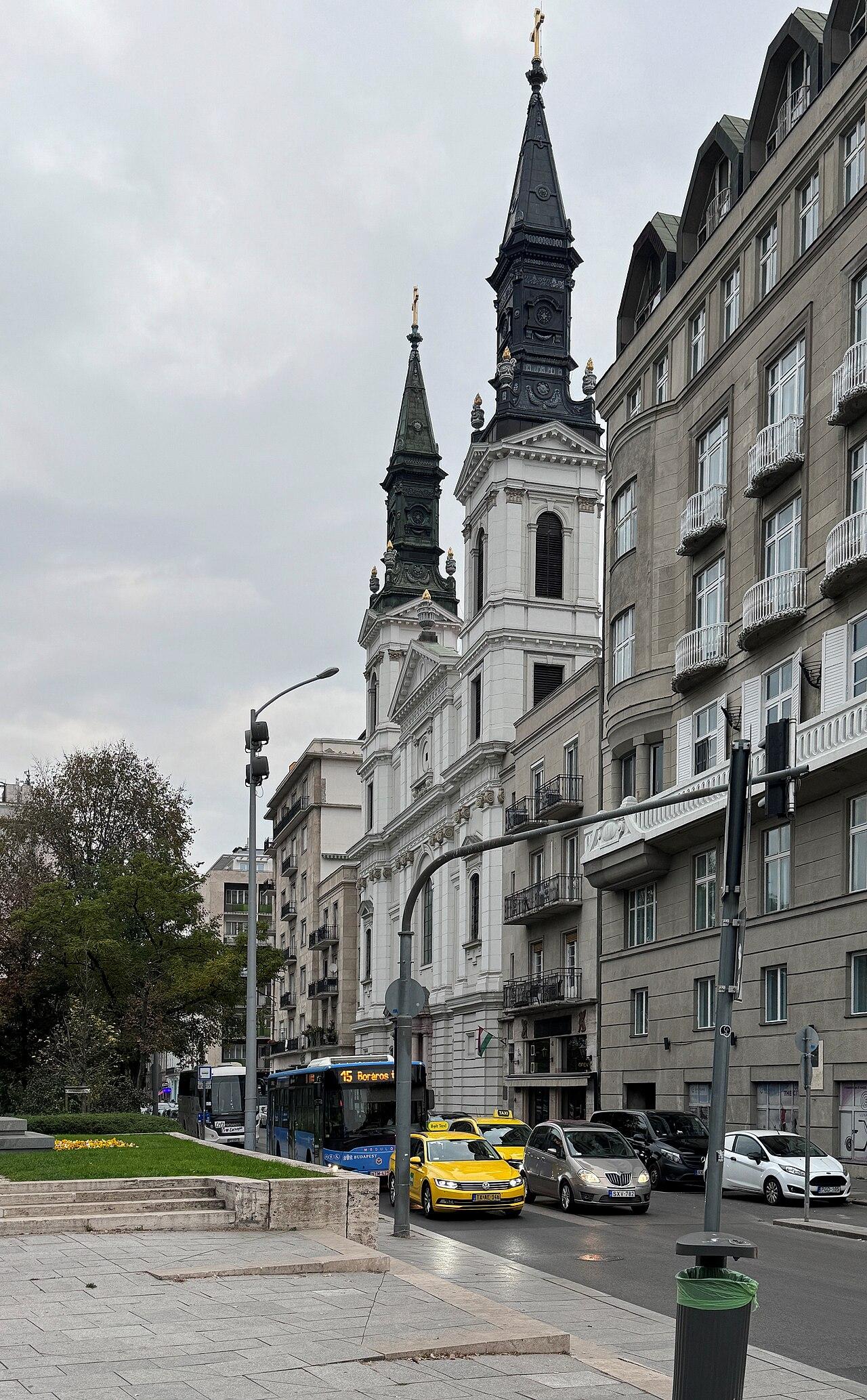
The church behind it belongs to the Greek and Macedo-Vlach merchants of Pest. At first they worshipped in the small Serbian church on Szerb utca, and in 1785 they decided to build a house of their own. It rose between 1791 and 1801 to a design by József Jung, and partway through, with the walls already half up, the community changed its mind and chose two towers instead of one. They only finished in the 1870s, when Ybl drew the spires. The southern tower was damaged in the war and has been back in place since 2010.
We cross to Váci utca and head north, until we reach Kristóf tér, a modest little square with a girl on a fountain.
Any feedback for this story?