The saints of the guilds
This square block without a tower or a façade was once the city's grain market, with an open hall on the ground floor and storage lofts above it. Inside the pillars you can still find the chutes that sent the grain down from above into the hall.
When a painted Madonna on one of the pillars began working miracles, devotion won out over trade and the warehouse turned into a church. The guilds that governed Florence were each given a niche on the outside, with instructions to place a statue of their patron saint in it.
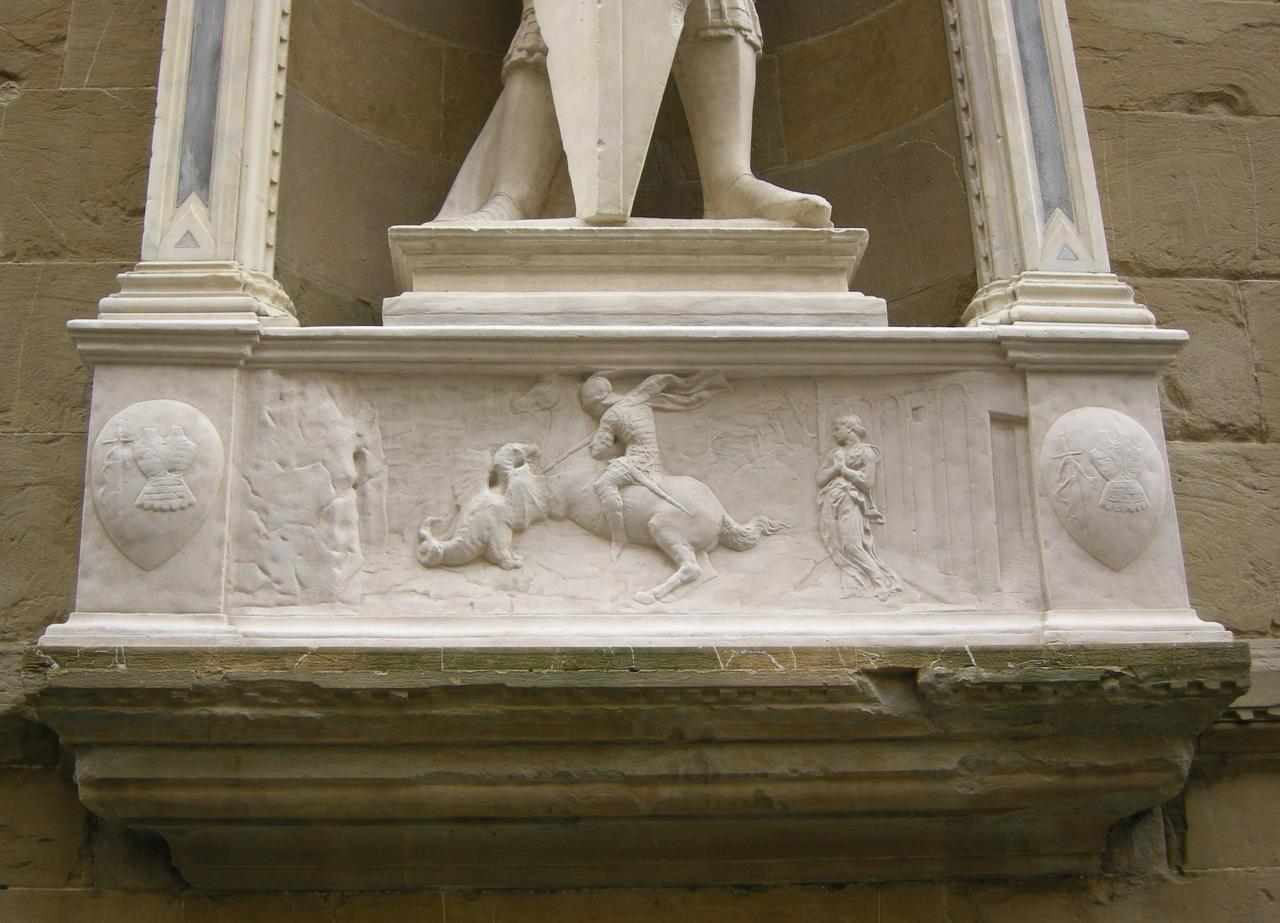
Walk a loop around it and the city's pecking order lies open before you. The wealthy cloth merchants and bankers chose bronze, which cost many times more than stone, while the smaller crafts made do with marble. The armourers' guild commissioned a Saint George from Donatello who looks as though he might spring into motion at any moment.
The statues you see now are copies, since the originals stand safe and dry in the halls above the church, reached through the entrance across the street.
Following that same street brings us to the square where the city made its decisions.
Any feedback for this story?