The crucifix that survived
The piece that filled front pages around the world in November 1966 hangs inside the museum next to the church, with its entrance on the right-hand side of the square.
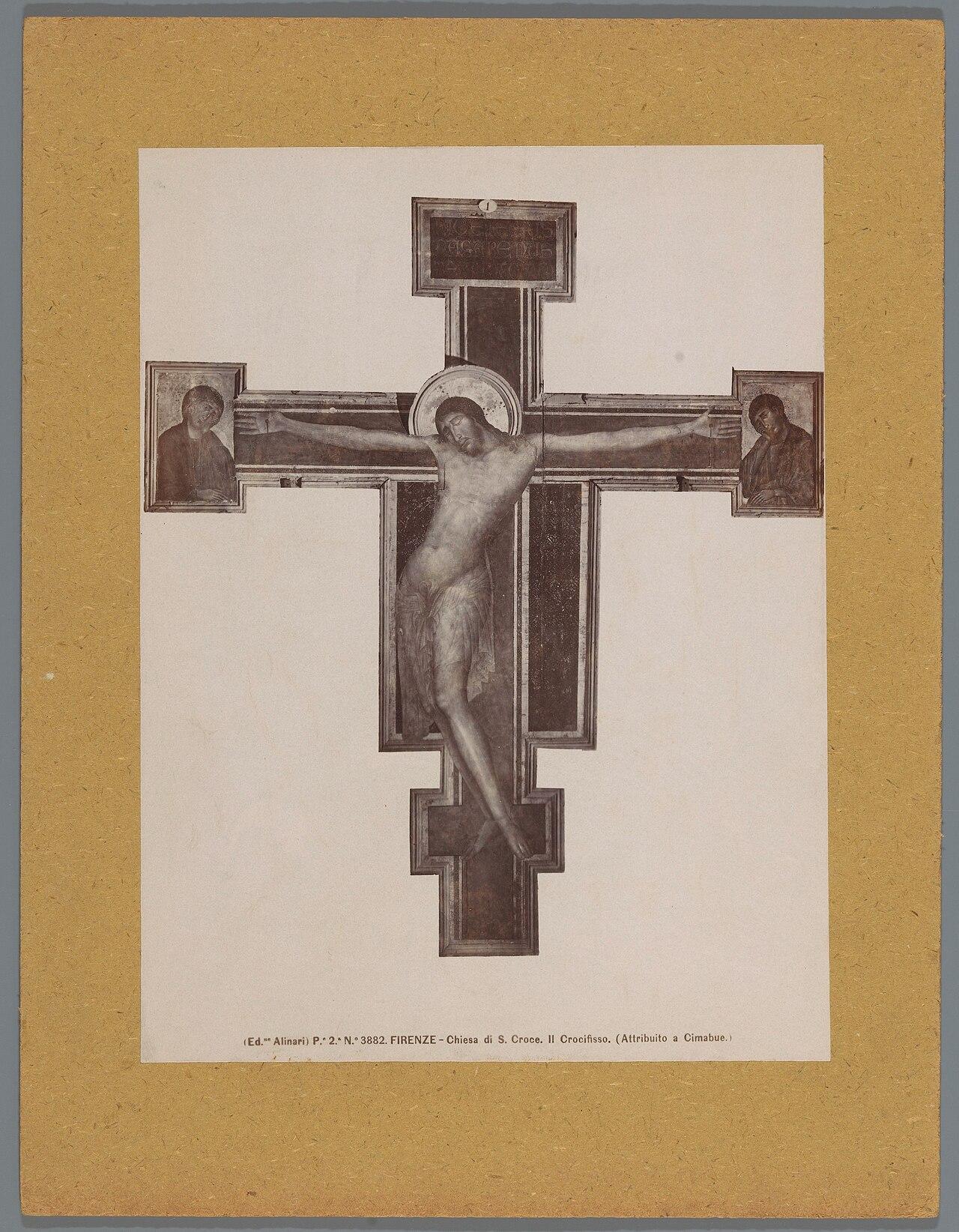
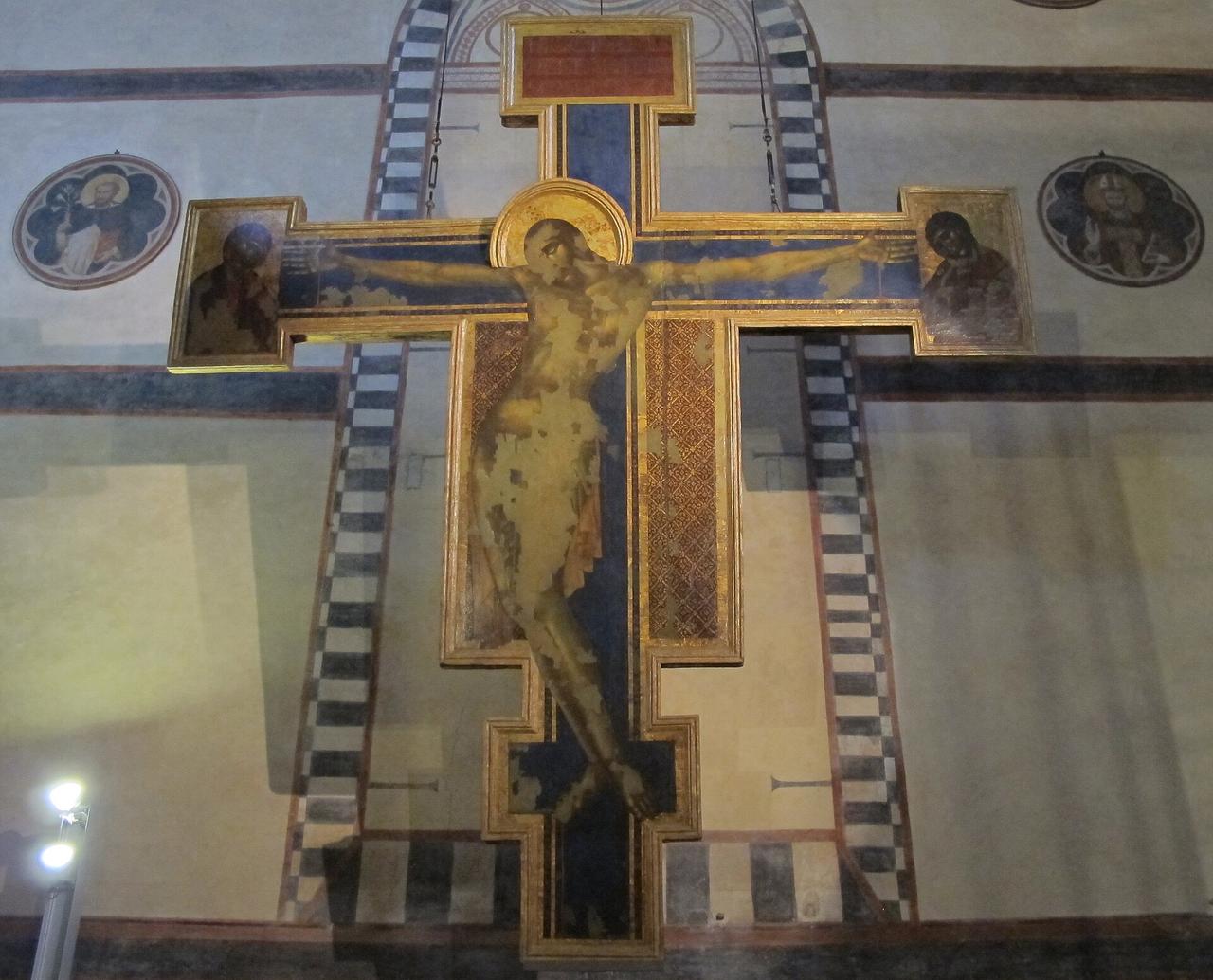
Cimabue painted this crucifix on wood around 1280, standing more than five metres tall, and it was hanging low in the refectory when the water came in. The wood soaked it up, the paint layer loosened and floated away, and by the time the water dropped, roughly sixty percent of the painting was gone.
You can see how great that loss is in the two photographs with this story. The first was taken around 1875, when the work was still complete, and the second shows the same crucifix as it hangs today.
What was done to it is the reason you can still look at it now. Restorers filled the missing areas with thin vertical strokes in a neutral colour, so that from a distance you see a whole and up close you immediately recognise what is original. Faking in the missing parts was never even on the table, and that approach has become the standard for badly damaged work ever since.
You need a ticket for the museum, which also gets you into the church, the cloister, and Brunelleschi's chapel.
From the entrance we walk south, towards the river, to the large building along the quay.
Any feedback for this story?