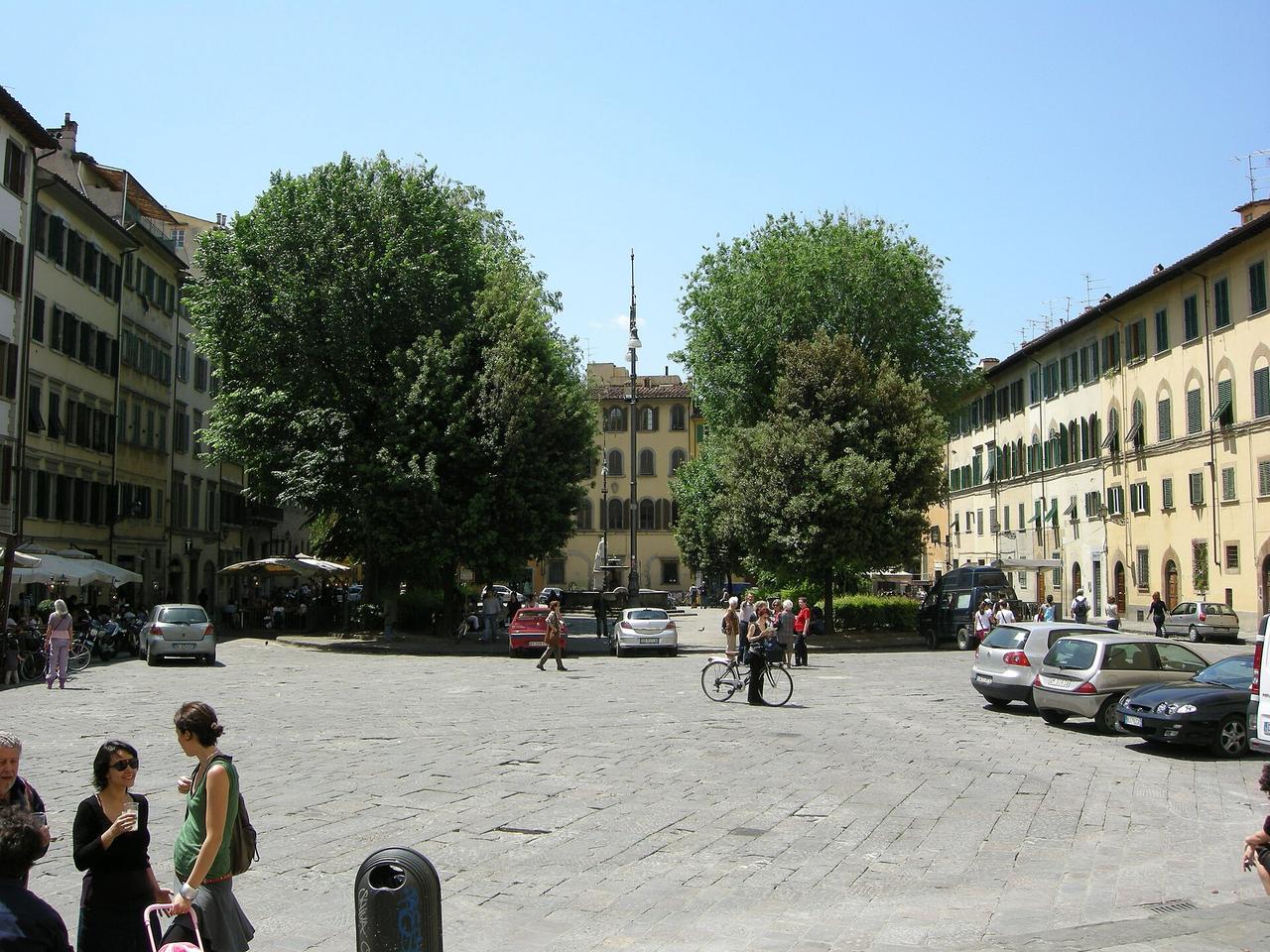
The neighbourhood's square
In the morning this square smells of vegetables and flowers, in the afternoon of coffee, and by evening the church steps fill with young people from all over the city.
That role was handed down from the monastery. The Augustinian friars taught here, and when Boccaccio, the writer behind the Decameron, died in 1375, he left his books to this monastery on the condition that anyone who wanted to study could consult them.
All around, the district holds together through small businesses where the workshop and the home share the same front door, and a quarter of an hour on the rim of the fountain shows you more of that than any facade could.
The blank yellow wall on the short side of the square belongs to the church, and that is where the next stop is waiting.
Any feedback for this story?