Inside the city museum
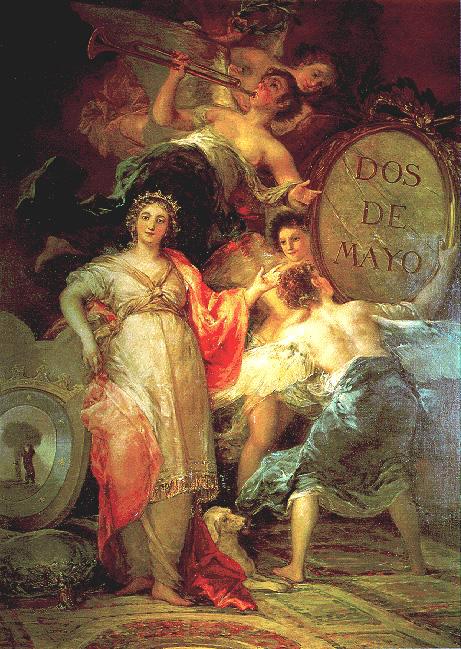
In the permanent collection you'll find an Allegory of the City of Madrid that Goya painted in 1810, and that has been painted over again and again ever since. The canvas shows a female figure pointing to an oval medallion, and that oval originally held the portrait of José Bonaparte, Napoleon's brother, who had been placed on the Spanish throne.
When the French were driven out his face came off and Ferdinand VII's went in, and when they came back, so did Bonaparte, and this happened so often that nobody could keep track any more. In the end they simply gave up: the oval is empty now, apart from the words Dos de Mayo, which means the painting changed its mind exactly as many times as the city around it.
One floor down stands the scale model of Madrid that León Gil de Palacio made in 1830, two decades after the uprising, where you can find the streets of this walk laid out just as they were back then, including the barracks grounds you're about to head towards, which have long since vanished.
Once we're back outside we follow Calle de Fuencarral south again and turn right onto Calle de Divino Pastor, which brings us out onto the Plaza del Dos de Mayo.
Any feedback for this story?