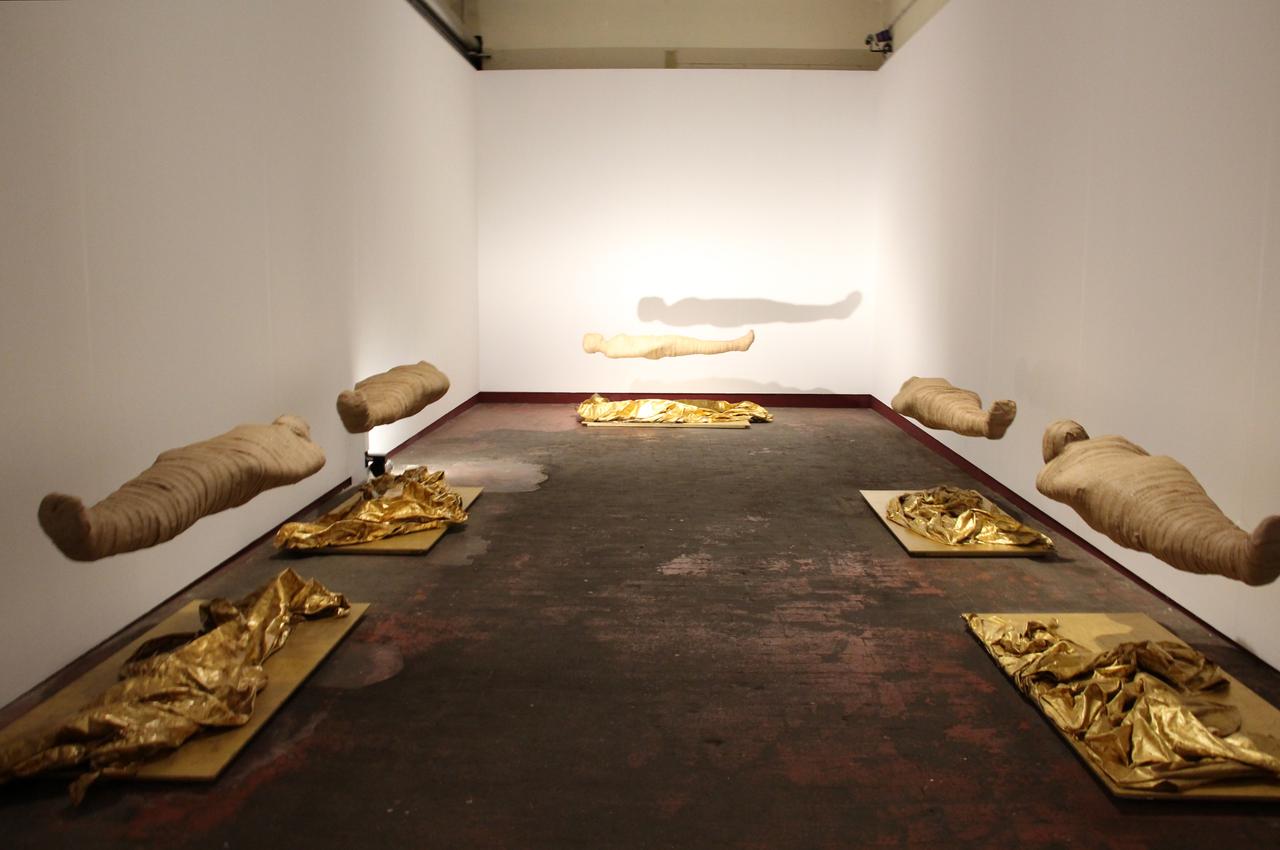
Inside the Tabacalera
Behind the gate lies a courtyard so spacious that you briefly forget you're standing in the most densely populated neighbourhood in Madrid, ringed by the halls where the tobacco was once sorted, cut and rolled, now stripped back to their cast-iron skeletons.
The factory closed at the end of the twentieth century and the building sat without a purpose for years, until the Ministry of Culture opened exhibition halls inside it and another part passed into the hands of the neighbourhood itself, which turned it into a centre of its own. The two have shared one roof ever since, which fits a district where everything has always belonged to several parties at once.
What catches your eye most are the walls. The courtyard and the corridors have been painted for years, layer upon layer, and the result shifts faster than any exhibition could.
Back outside, the Calle de Embajadores heads north again, and on the right the Ribera de Curtidores begins.
Any feedback for this story?