Plaza Mayor
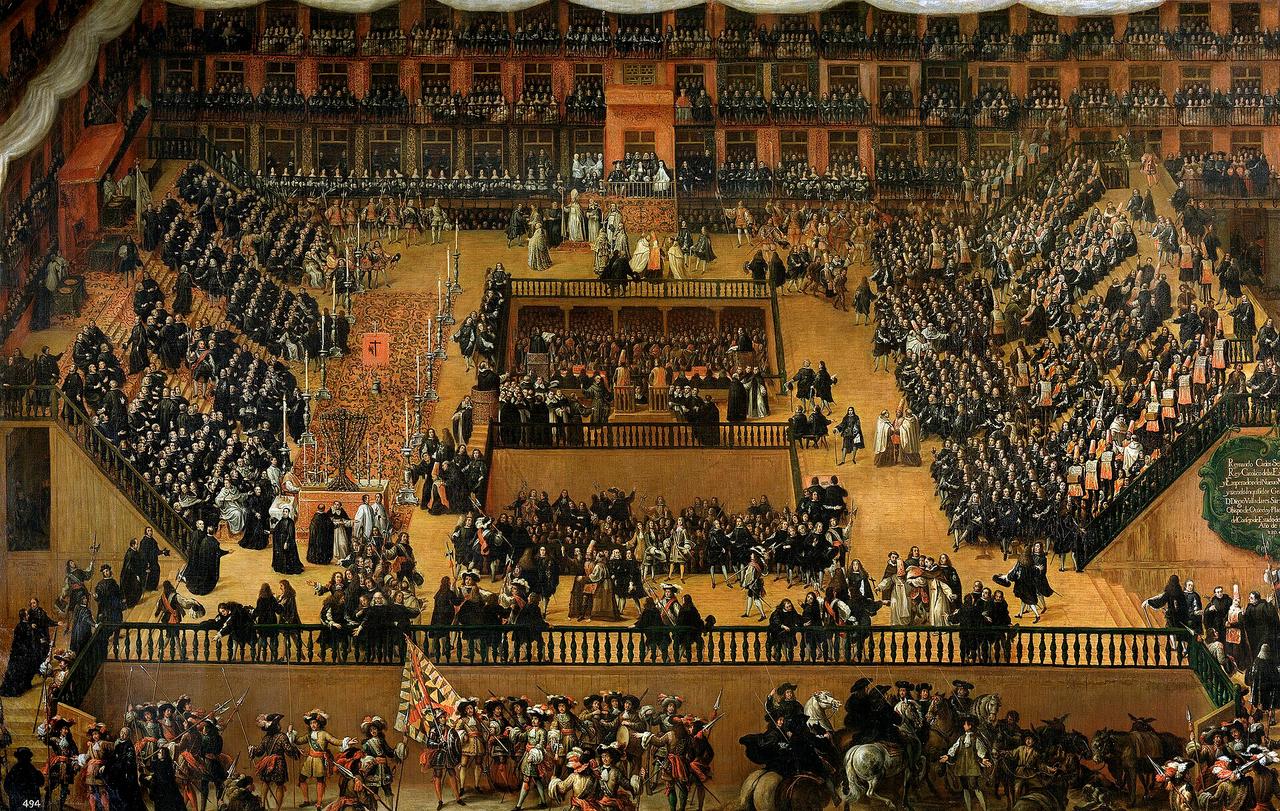
On 30 June 1680, King Carlos II sat on the balcony of the building you can see in front of you now, the Casa de la Panadería with its painted façade, and spent an entire day watching the Inquisition, the Catholic Church's tribunal against heresy, parade a hundred and seventeen condemned prisoners across this square. It was the last great auto de fe of the royal court, and it became so famous that the Prado museum still holds a painting of it, in which you can recognise the square exactly as it looks today.
That is the whole idea behind this space. The Plaza Mayor was completed in 1619 as a square where power could show itself to the city, with the royal box set into the bakery that once stood here and gave the square its name. Bullfights, processions, markets and executions followed one another here, and the surrounding balconies were rented out to anyone who could afford them.
Three times the square burned down, and three times it was rebuilt, each time more austere and more enclosed than before.
In the middle stands Felipe III on horseback, a gift from Florence that was only placed here in 1848. When the republic was proclaimed in April 1931, someone threw firecrackers into the horse's open mouth. During the repairs it turned out that the hollow bronze was full of tiny sparrow bones, from birds that had crept inside over three centuries without ever finding their way back out.
We leave the square at the southwest corner, where an archway leads down a flight of steps.
Any feedback for this story?