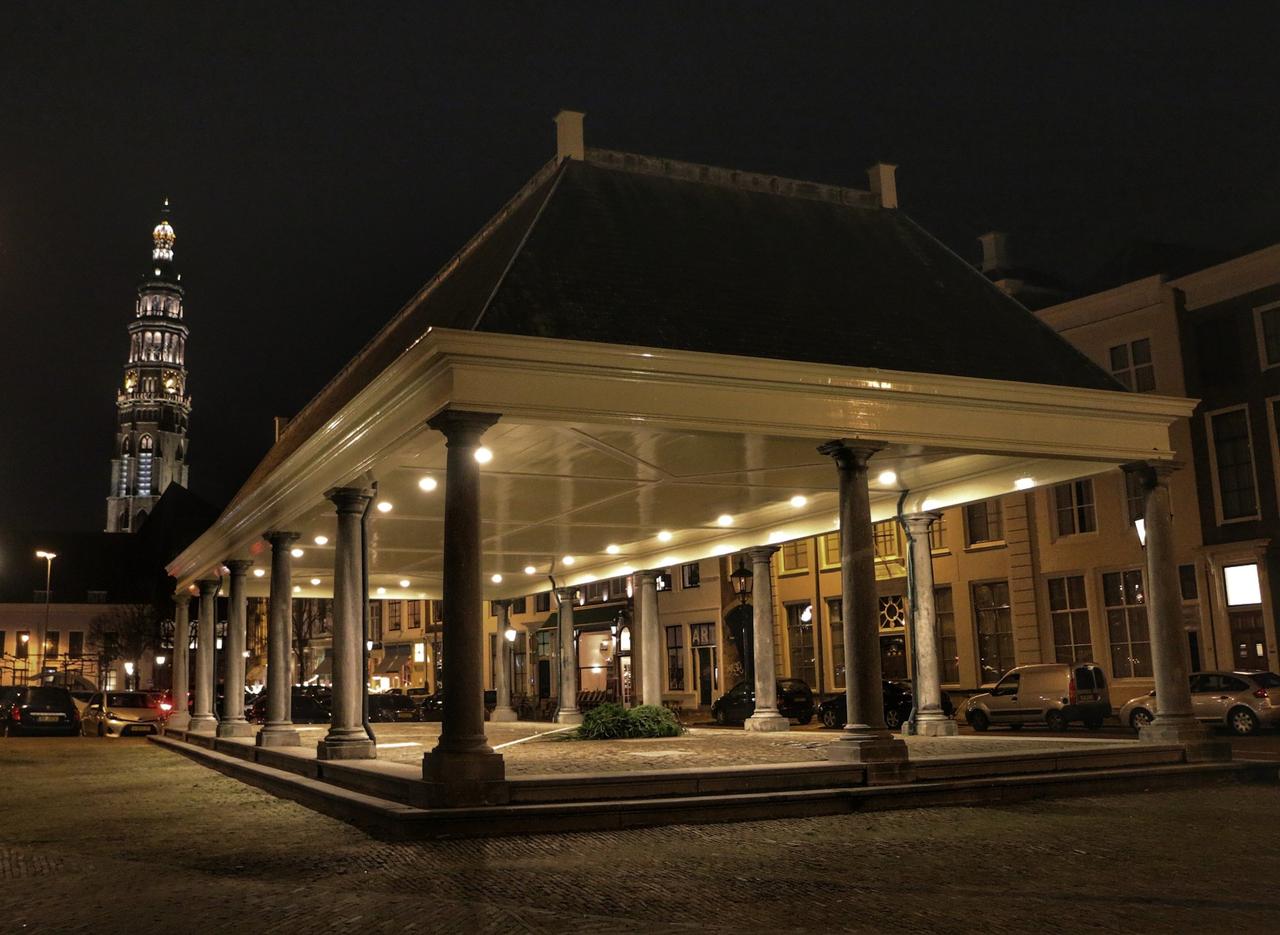
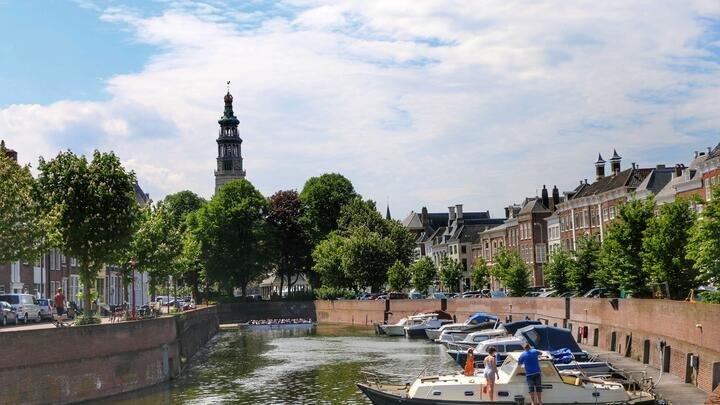
Dam
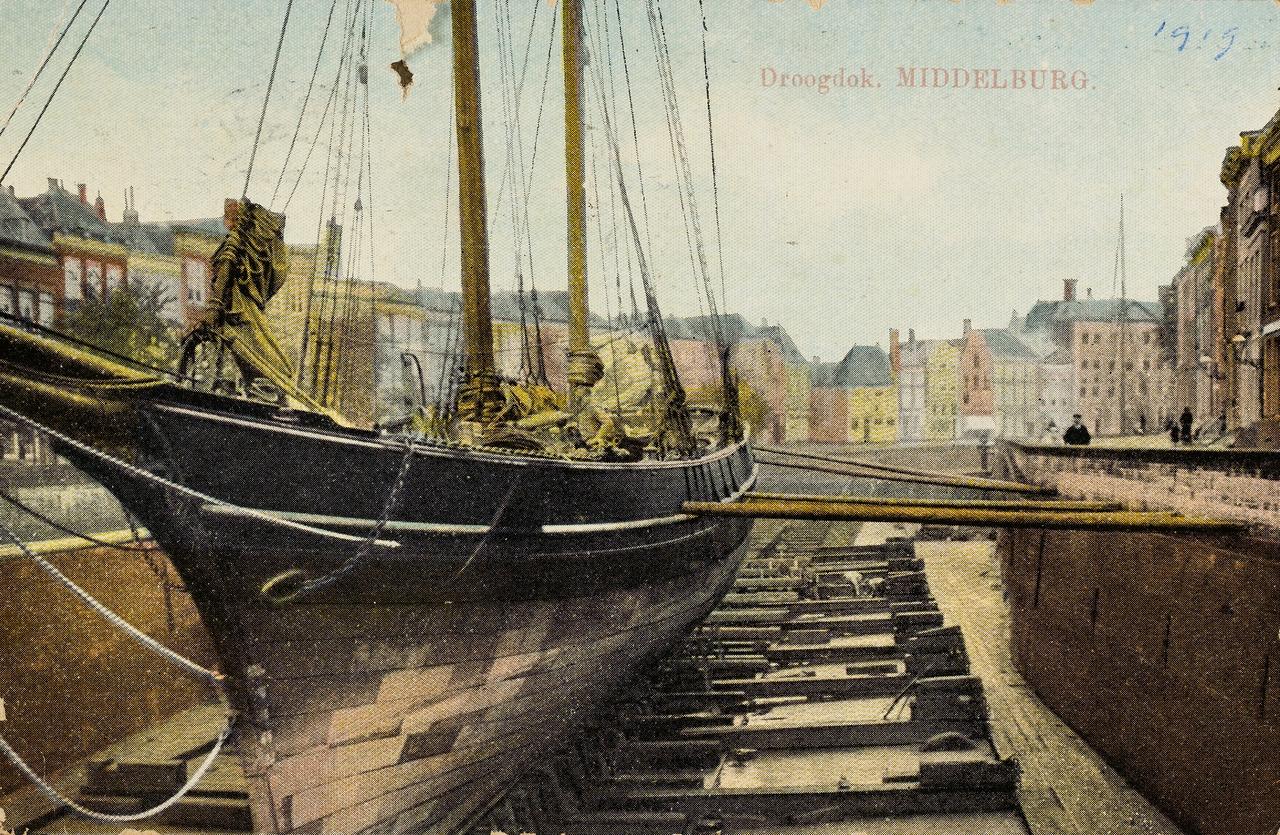
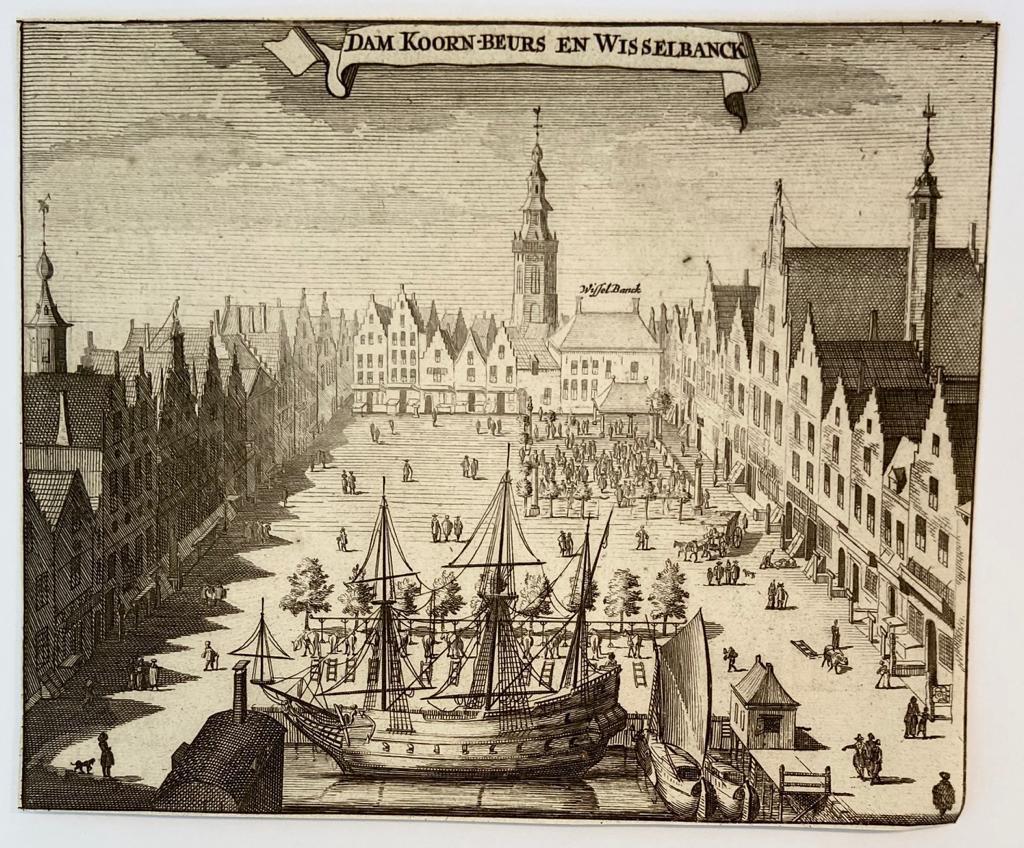
In the early Middle Ages a creek called the Arne ran through here, and at some point it was dammed off. Behind that dam the oldest harbour of Middelburg took shape, and the city literally grew up around it. That's why this spot is called the Dam.
For centuries this was the point where everything arrived. Even the harbour that was dug between 1532 and 1535 under Charles the Fifth, the Habsburg emperor who ruled these lands, ended exactly here.
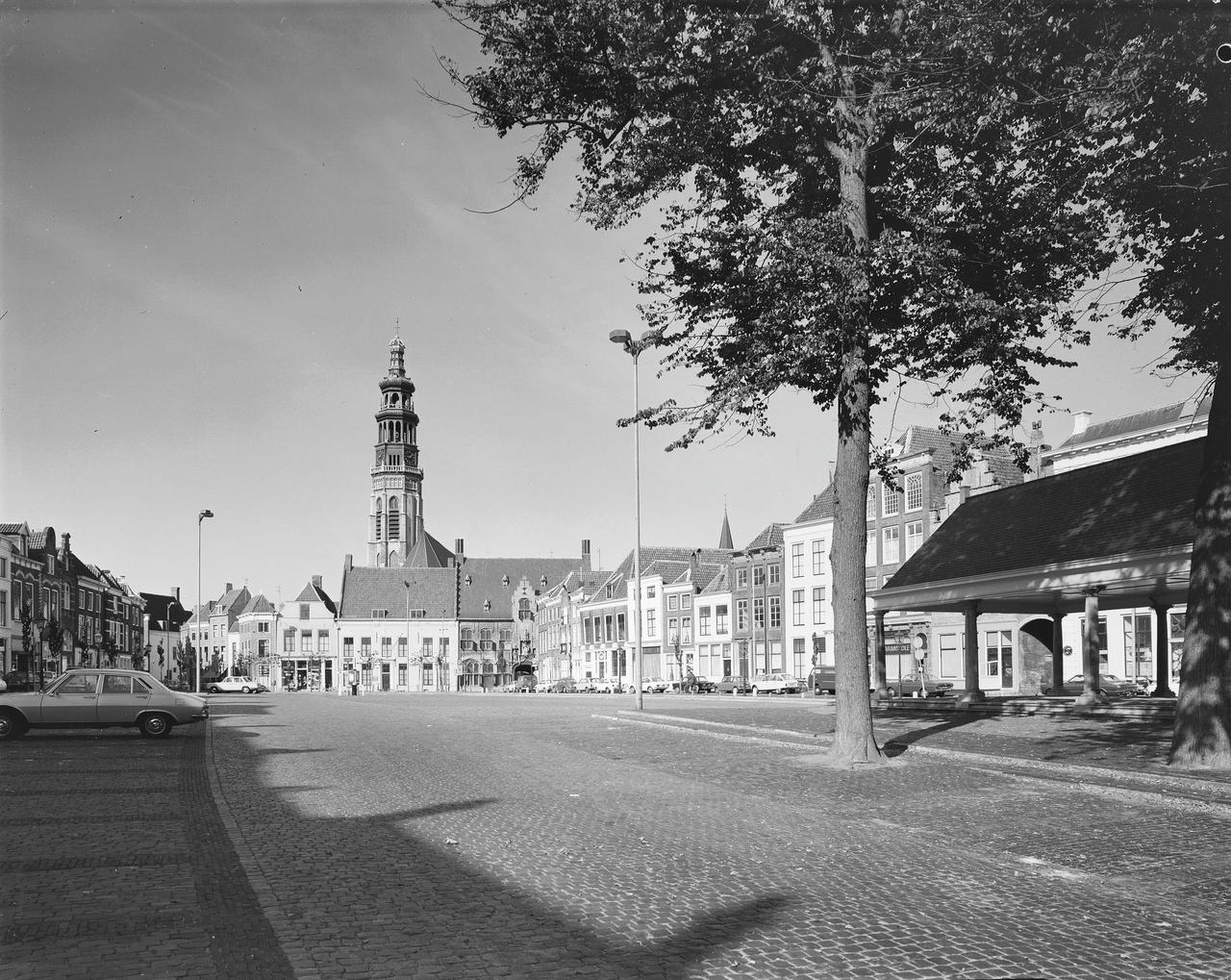
Around the Dam you'll see patrician houses, the homes of the wealthiest families in town. They stand here because anyone who traded wanted to live where the ships came in. A merchant could watch his own cargo arrive from his front room.
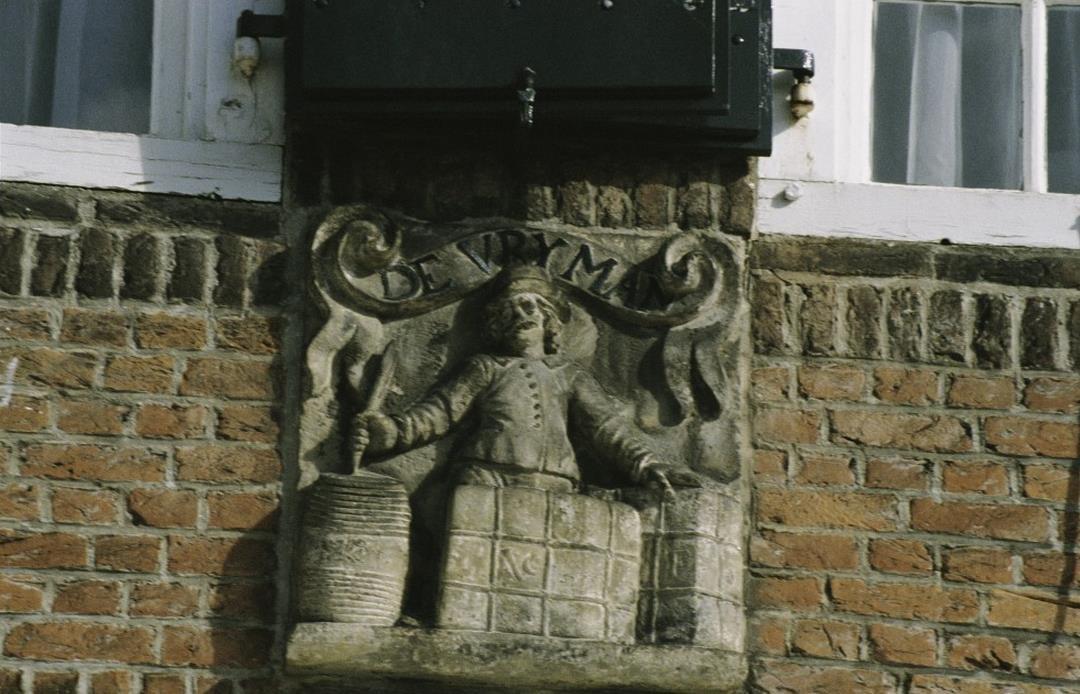
Many of these houses still carry a gable stone, a piece of natural stone set into the wall with an image or a name on it. At Damplein 9 there's a gable stone bearing the name De Vrijman, and that name tells you which trade belonged here. The vrijman, or free man, was the labourer who unloaded ships and so set them free for their next cargo. He was paid per ship and had no fixed boss. Guides in Middelburg sometimes call him the first freelancer because of that. The work lasted as long as this harbour was being loaded and unloaded.
There's nothing left of the harbour itself to see here now. The water has been filled in, and cars park on top of it.
We walk a hundred metres north and arrive at the Suikerpoort.
Any feedback for this story?