Fish Market
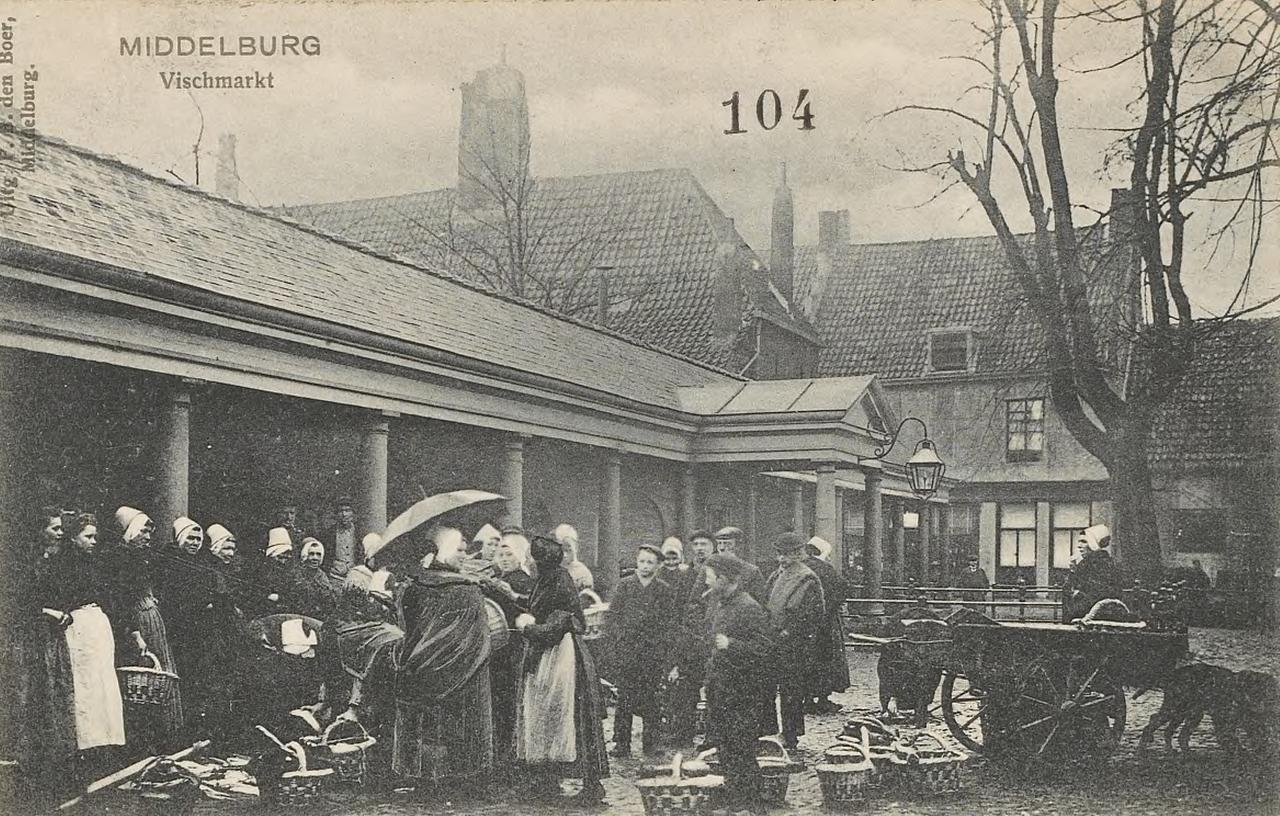
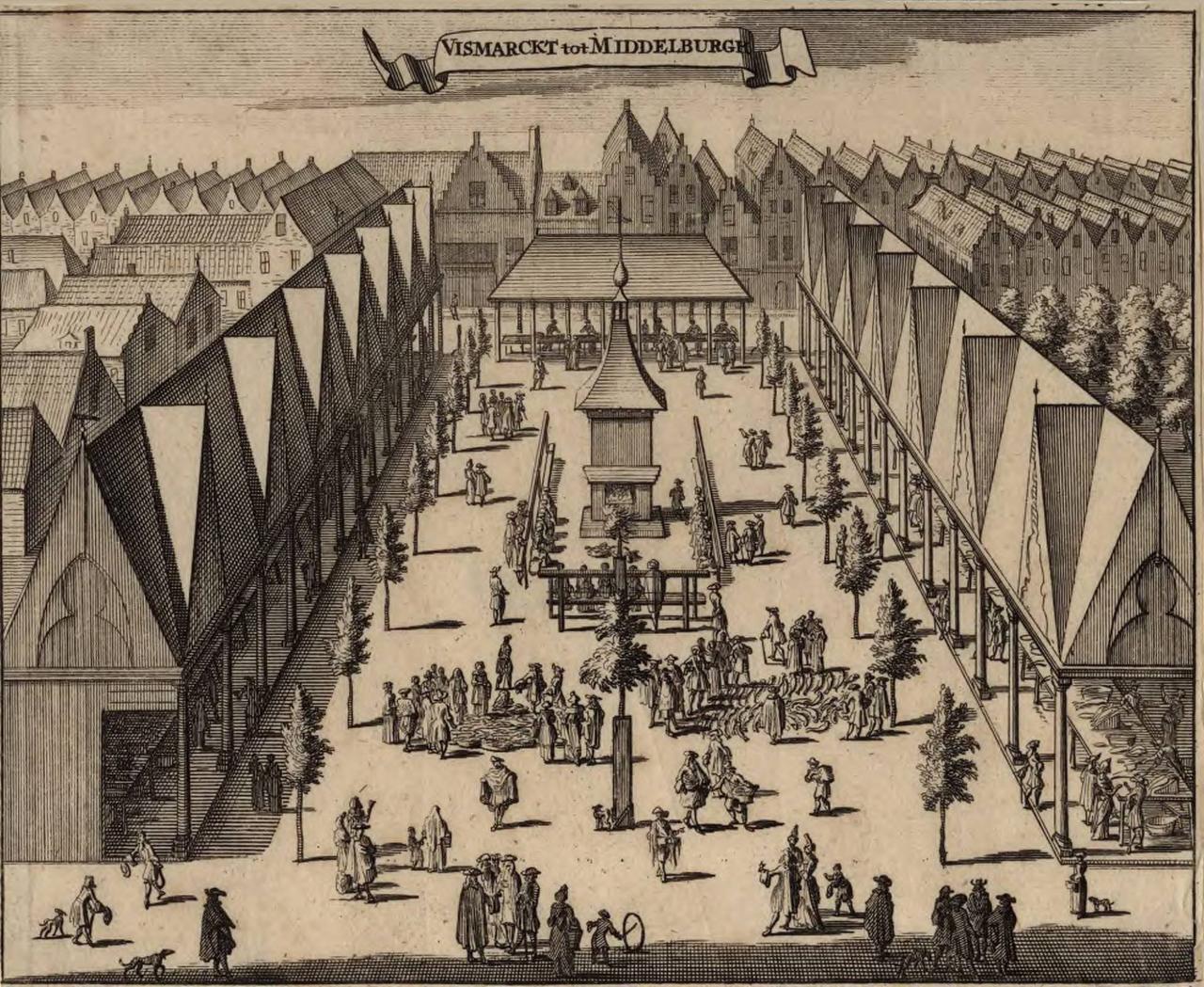
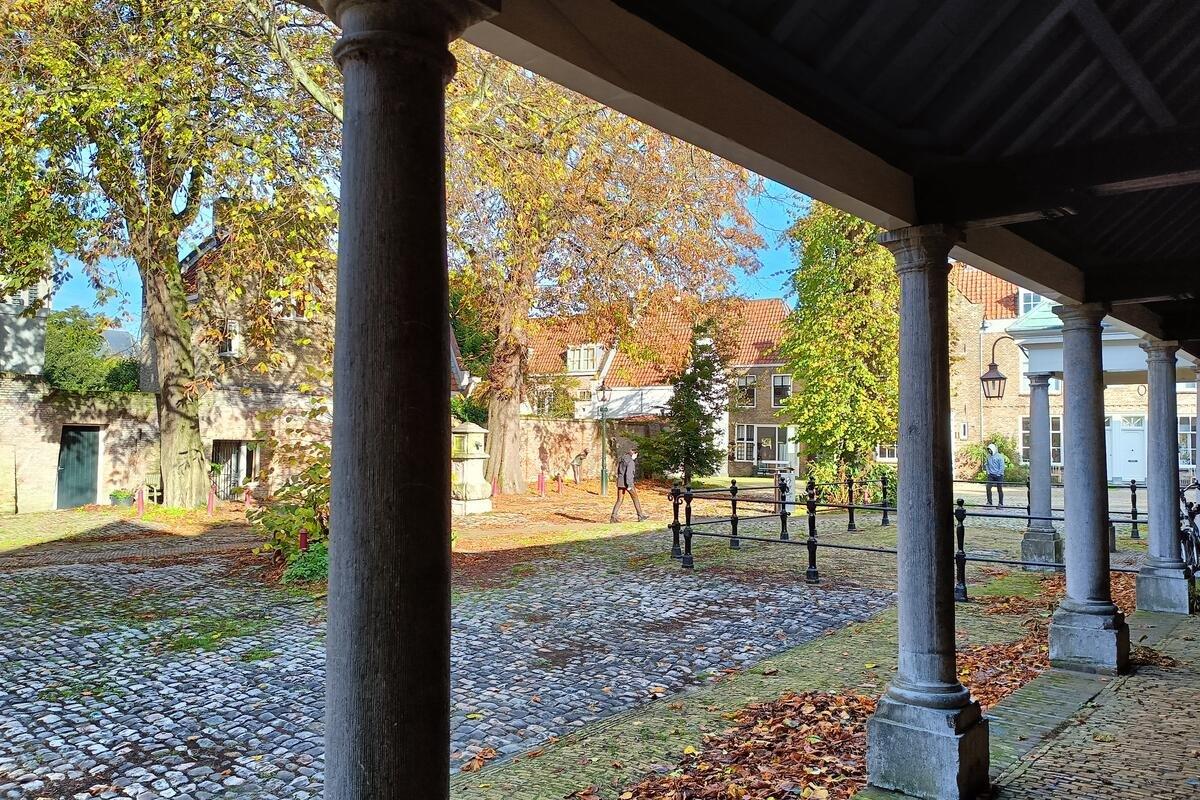
The canopy we're standing under dates from around 1830, but fish has been sold on this spot for a lot longer. To make room to expand the market, the city council bought up the beer brewery of Sint Janshuis in 1561, a monastery that belonged to the Order of Saint John.
Most of the fish came from Arnemuiden, a fishing town just outside Middelburg. Well into the twentieth century, the women of Arnemuiden carried their catch here to sell, first on foot and by cart, and later by train. They were known for their traditional dress and for the clever sales tricks they used to work the market.
Middelburg's first wealth didn't come from fish, though, but from wine. The city held the staple right on wine, a privilege meaning that passing ships carrying wine had to offer their cargo here first before they were allowed to sail on. The wine came from France and Germany, and at the end of the Middle Ages the nearby port of Arnemuiden was the most important destination in the Low Countries for ships from Bordeaux and La Rochelle. Between 1470 and 1520, those voyages are mentioned 392 times in notarial records.
Things went the other way too. In the fifteenth century Middelburg imported beans, peas, flax and onion seed as return cargo, and around 1550 the city was exporting onions and onion seed to England and Scotland. So alongside the wine, and later the spices, there was simply a ship full of seed.
We carry on in a south-easterly direction, about a hundred and thirty metres, until we reach the water at the Kousteensedijk.
Any feedback for this story?