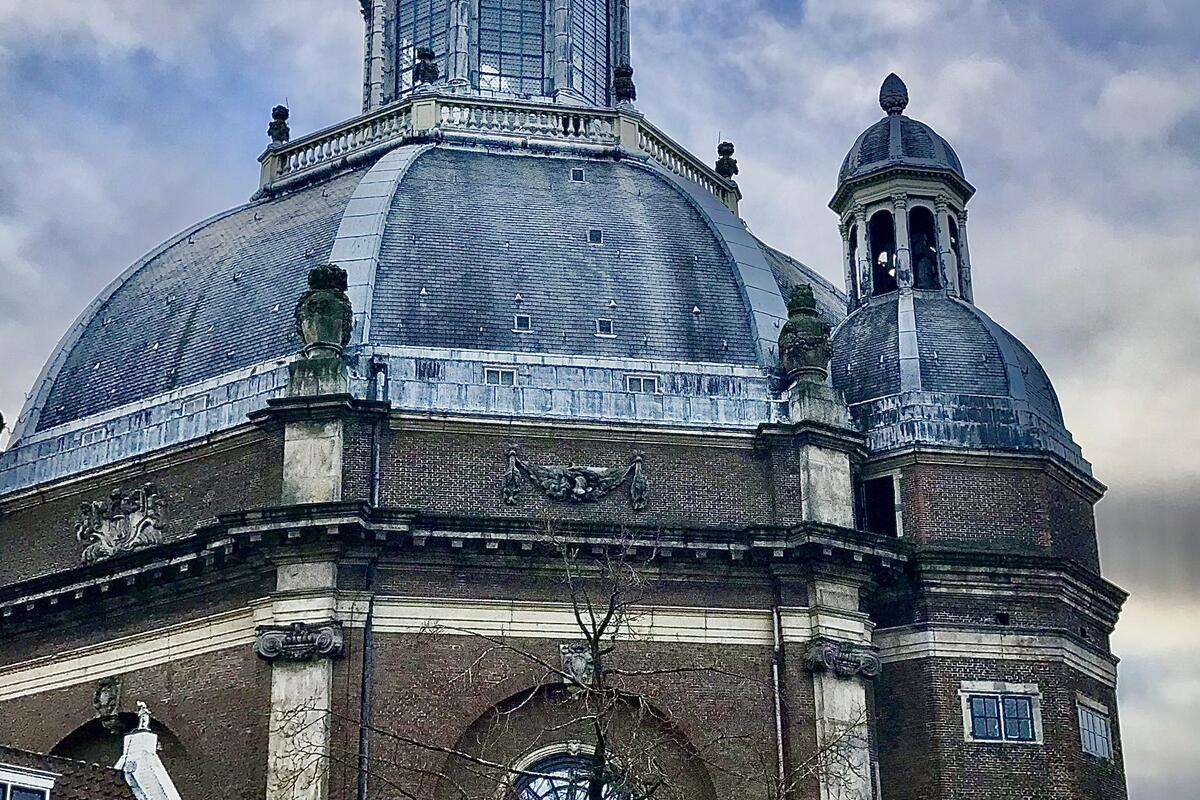
Oostkerk
This is the Oostkerk, and it's the easternmost stop on our walk. There's a reason for that, because this part of Middelburg gets skipped on most tours. Which is a shame, because it's home to one of the most striking churches in the Netherlands.
It was built between 1646 and 1667 on an octagonal floor plan, topped with a wooden dome. That was unusual for the time. Protestant congregations wanted a space where everyone could see and hear the preacher, and a rounded layout works far better for that than a long, narrow nave. The dome itself is a giveaway that you're in a port city, built from wood using the same techniques shipwrights used to construct a hull.
Twenty years of construction costs money, and money kept running out. Work stopped several times when the funds dried up. The city solved this by raising excise taxes on consumer goods, and the products they chose to tax were beer and wine. So this church was largely paid for by drinkers. These days, a beer called Jolijt is served inside, named after the city carpenter who finally got the building finished.
Above the entrance there's one more thing worth a look. A skeleton carved into the stonework. Officially it's a memento mori, a reminder of mortality, which you sometimes see on old churches. The story told in Middelburg, though, was that it represented the contractor, who didn't live to see the endless project completed.
We leave the church behind, pass alongside it and turn into the Schuitvlotstraat. A hundred metres on you reach the Pijpstraat, where we stop again.
Any feedback for this story?