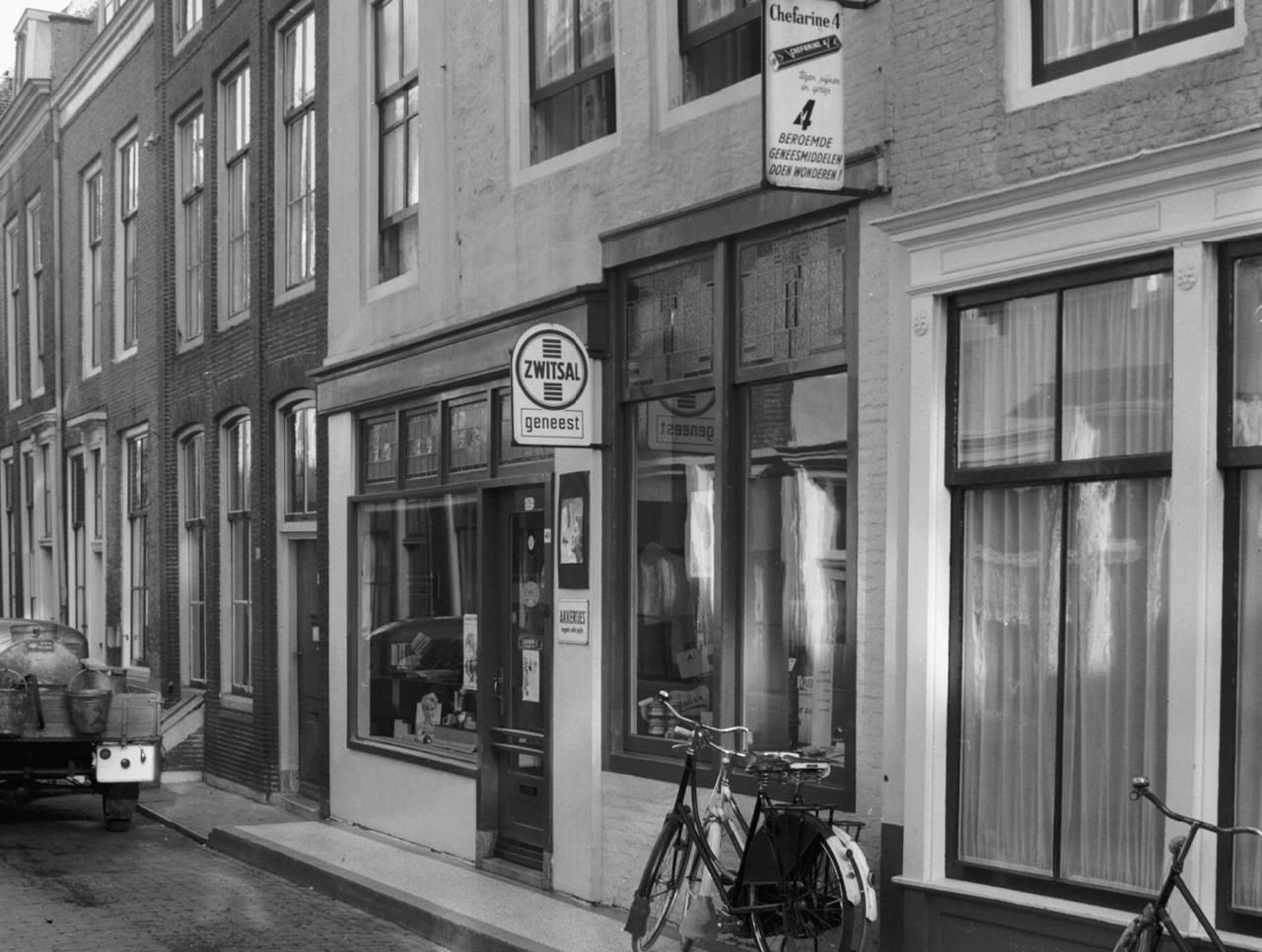
Spanjaardstraat
The name Spanjaardstraat shows up as early as 1381 in the city's financial records, back then written as Spaengen. It most likely comes from a house name that referenced Spanish merchants, since in the Middle Ages this street was home to traders from all over Europe: Spaniards, Italians, English, and Scots.
What happened in 1460 was a good deal less welcoming. That year, the city council ruled that any woman who allowed herself to be mynned or kissed for money, meaning paid for sex, had to take up residence here. It amounted to an address. The city accepted that prostitution existed and mainly wanted to control where it happened, so by official decree this street became the red-light district of Middelburg, the capital of the Zeeland province in the southwest of the Netherlands.
Halfway along the street stands 't Huis op de Spuibrug, built in 1720. The name points to a bridge, and the bridge is there, right under your feet. The sluice here let surplus water from the city canals run off towards the harbour, and the Spuibrug crossed over it. The water went, the bridge stayed, so you are crossing a bridge that has had nothing flowing beneath it for a very long time.
In the seventeenth and eighteenth centuries the street took on a different character, with wealthy families moving in. After that it fell into decline again, until a major restoration project got underway in 1969. The reason it looks so well-preserved today is that people once came very close to giving up on it entirely.
We follow the street all the way to the end until we reach the Koepoortstraat, where we turn right. The first street on our right is the Verwerijstraat, and that's where we head next.
Any feedback for this story?