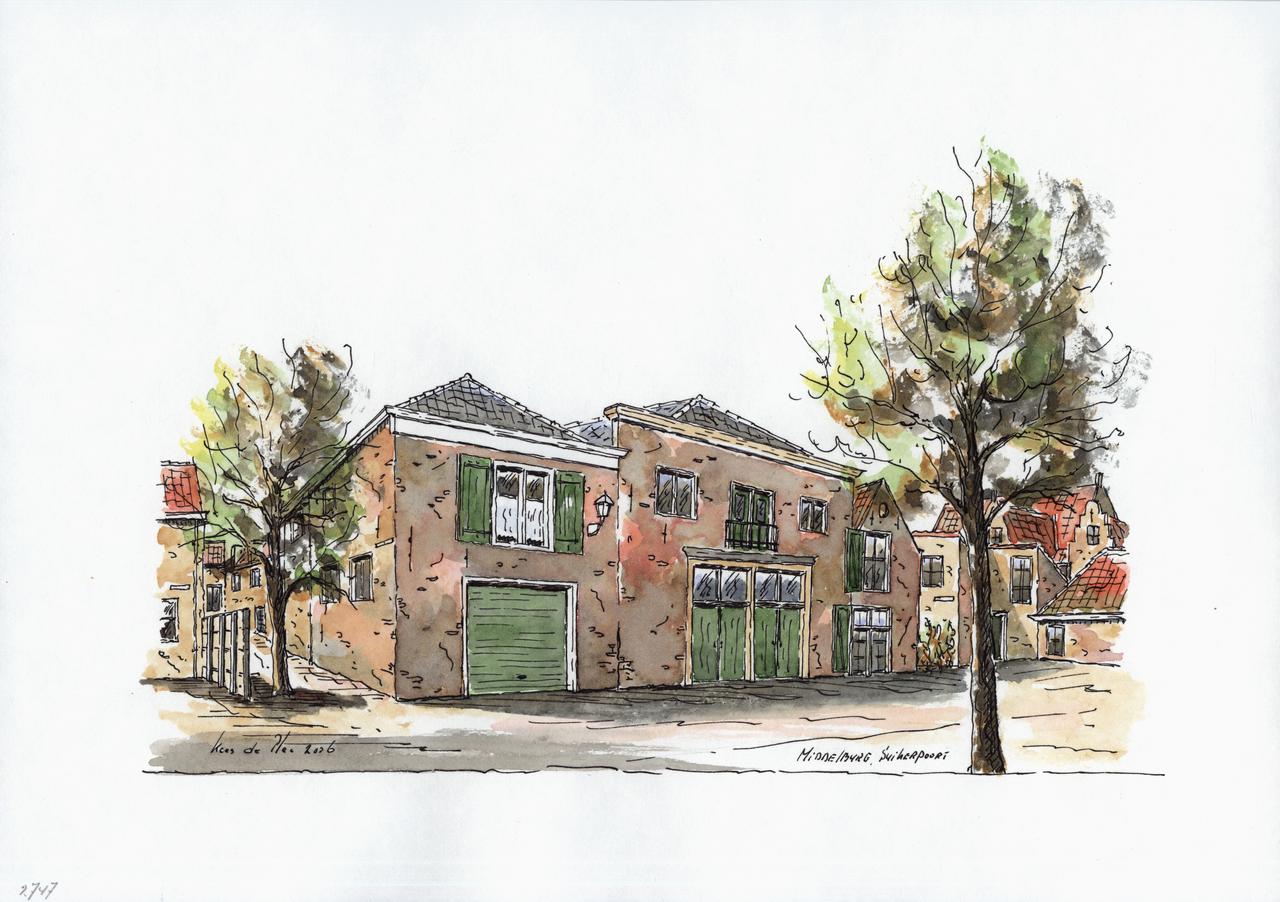
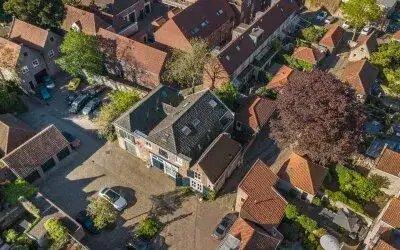
Suikerpoort
There's not much left to see here, but the street name tells you exactly what went on. This is where sugar was refined, and in the eighteenth century that was one of the biggest industries in town.
Sugar arrived as a raw mass from the West, from the plantations in the Caribbean and in Suriname. Here in Middelburg it was melted down, purified and poured into loaves. That work happened in refineries that ran day and night and needed enormous amounts of fuel to keep going.
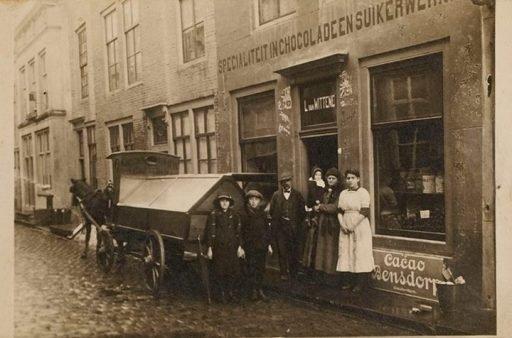
Alongside sugar there was cacao. In 1763 Middelburg counted twelve cacao mills. The beans were roasted in a drum, then cracked and ground by a millstone that a horse pulled round and round. The mass that came out of it was sweetened and spiced, then poured into moulds to set as tablets. People called this product Zeeuwsche chocolaad. It was fatty and bitter, and praised internationally for its purity, though it wasn't meant to be eaten as it was but to cook with.
That industry came to an abrupt end. In the nineteenth century Van Houten developed a steam-powered machine that pressed the fat out of the cacao, which made it possible to turn it into powder. By 1857 only three mills were left in Middelburg, with eight workers between them. The last one closed in 1893.
We walk two hundred and twenty metres to the southwest and come out onto the Balans.
Any feedback for this story?