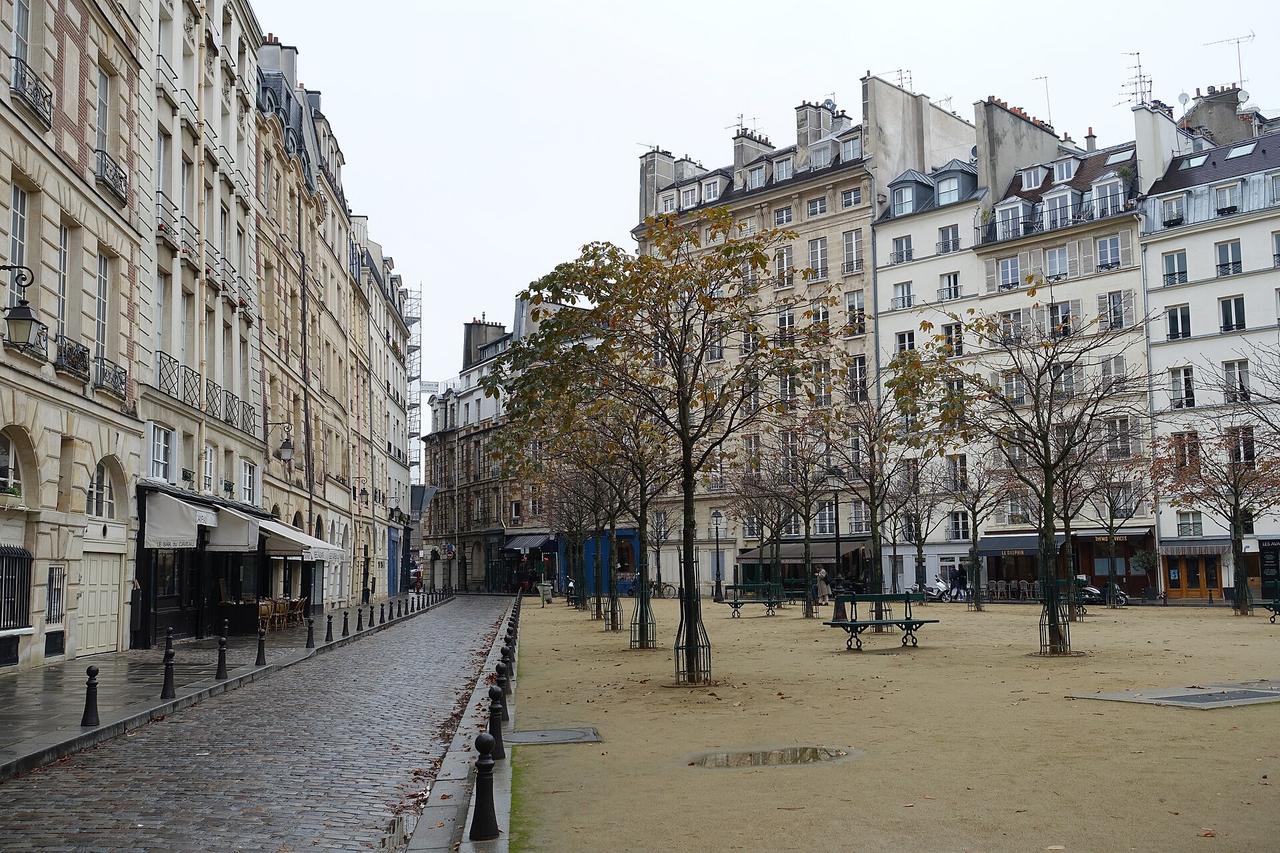
Place Dauphine
A triangular square is a rarity in Paris, and this one owes its shape to the ground it sits on. You're standing at the tip of the island, broad on the palace side and narrowing toward the bridge, and from 1607 Henri IV had that point built up with houses that all looked the same: red brick, white stone, slate roofs. He named the square after his son, the dauphin who would later reign as Louis XIII.
The king sold the plots to merchants and set out by contract exactly how their facades had to look, which makes this one of the earliest pieces of urban design in Europe. A few of those original houses are still standing, though most have been raised and rebuilt over three centuries. The entire east side disappeared in the nineteenth century to make way for the monumental staircase of the courthouse, which is why the triangle now lies open on one side.
The poet André Breton found the shape of this square so suggestive that he dubbed it le sexe de Paris, and the name stuck. The actors Simone Signoret and Yves Montand lived here for years, at number 15.
We walk out of the triangle at the broad end, where the square dead-ends against a staircase and a railing of gilded iron.
Any feedback for this story?