Two royal hearts and a painter
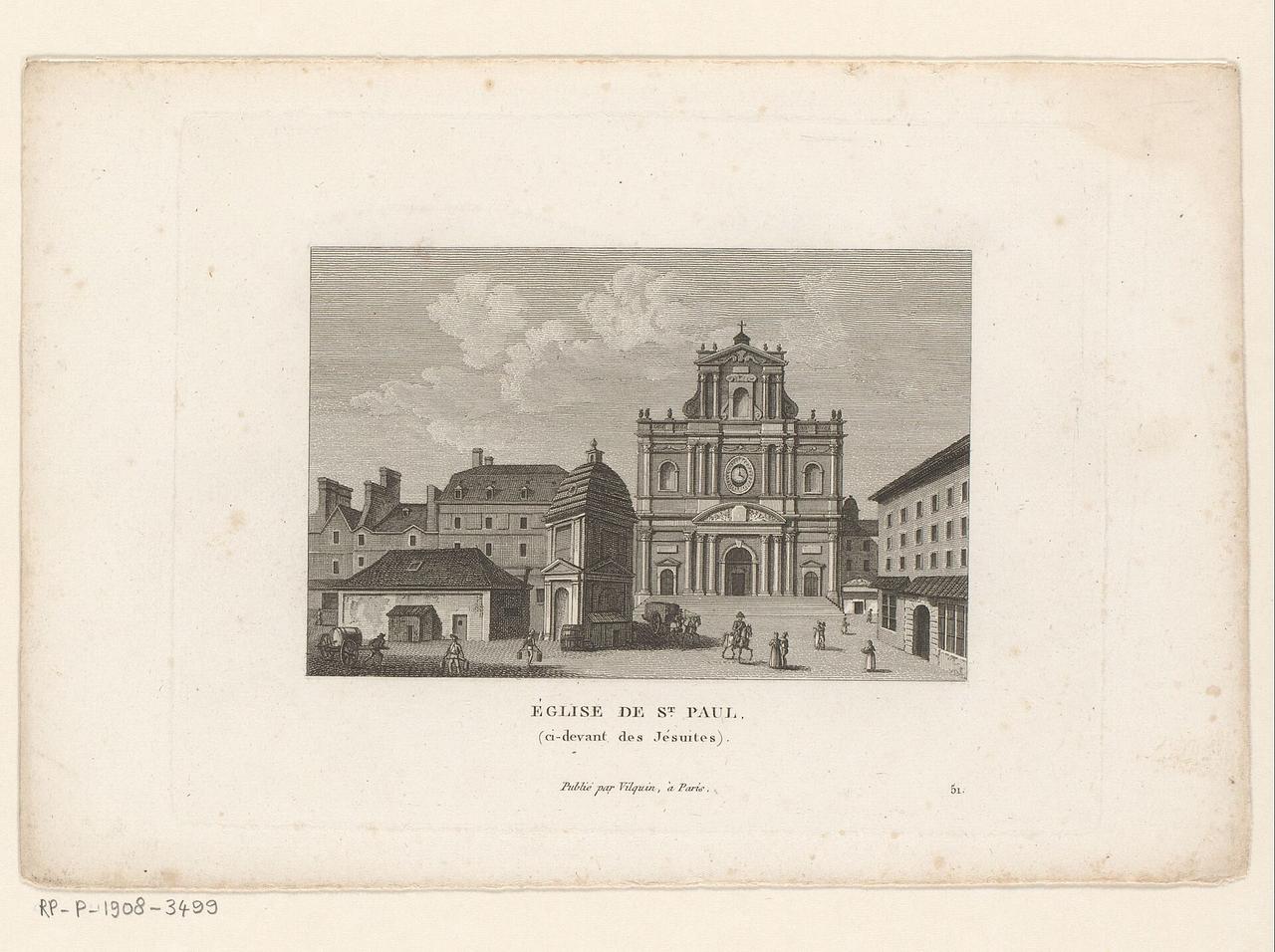
This church with its high dome was built by the Jesuits, and Louis XIII laid its first stone in 1627. That made it a royal church, which is why the embalmed hearts of Louis XIII and Louis XIV once rested here in silver urns, high on either side of the altar.
During the Revolution the church was closed and turned into a Temple of Reason. The urns were melted down for their silver, and the hearts themselves fell into the hands of painters. There was a pigment made from embalmed remains, a warm brown colour, and a king's heart was said to be especially good for it. One of those painters handed part of it back after the Restoration, in exchange for a gold snuffbox.
The facade is worth a look from the outside already, with the three tiers of columns that the Jesuits built all across Europe. Inside, free and open until noon and again from two o'clock, hangs a Christ on the Mount of Olives that Delacroix painted in 1827, and there are two holy water shells given by Victor Hugo, the writer of Les Misérables. He lived just around the corner on the Place des Vosges.
We follow the Rue Saint-Antoine to its end, where it becomes the Rue de Rivoli, until we come out on a large square in front of a city hall.
Any feedback for this story?