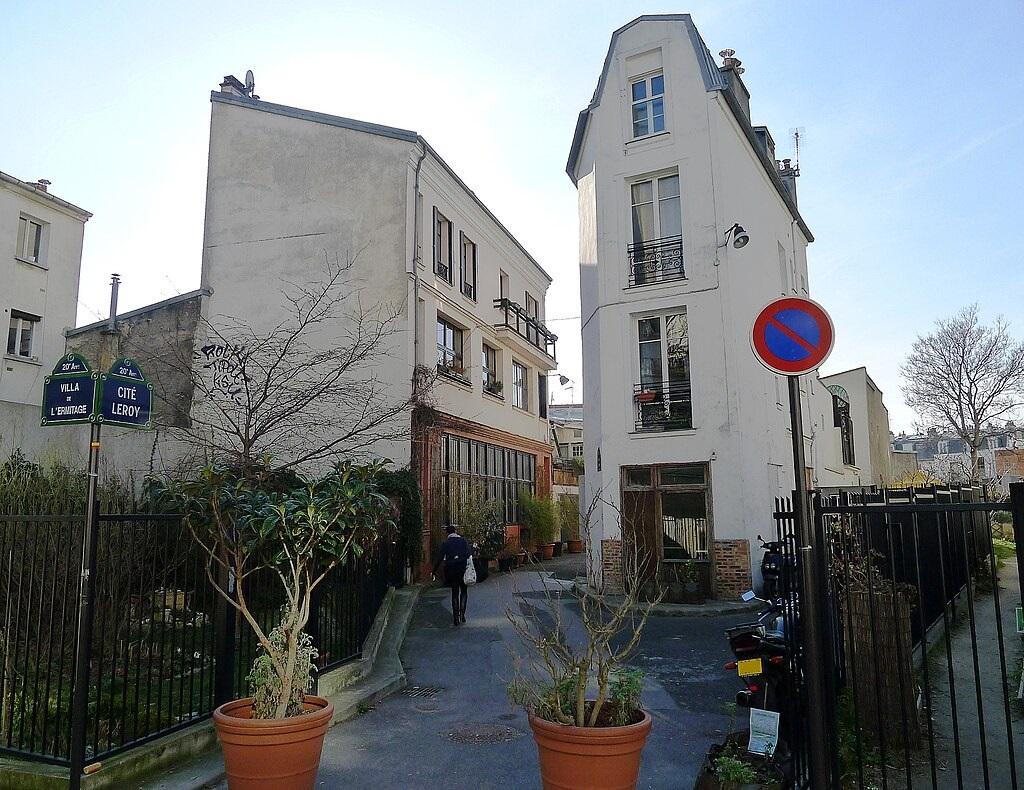
The Alley with the Little Gardens
A narrow path runs between the facades, lined with low houses and small front gardens, and it feels like stepping into a village. This is how much of Belleville looked in the nineteenth century: cottages people built themselves on cheap land, each with a vegetable patch to keep costs down. The residents were metalworkers, seamstresses, cobblers and day labourers, their wages swallowed up by a single room, and anyone looking for work stood in the street each morning, waiting for someone to point them out.
On 29 March 1871, two days after it took office, the Commune made its most popular decision right here. The revolutionary city government that briefly ran Paris that spring cancelled three full rent periods, those of October, January and April, covering the whole siege during which no one had been able to pay. The landlords were poised to demand it all at once, and in these little streets that touched every family. Opponents called it theft, while the residents called it the first time a government took their side.
Only a handful of these alleys are left, since most of them vanished under new construction in the twentieth century. The reason the Cité Leroy still stands is that residents fought the demolition plans for years, with the same stubbornness their great-grandparents once brought to building barricades here.
We walk out of the alley and follow the street downhill to the square where a church with two towers stands.
Any feedback for this story?