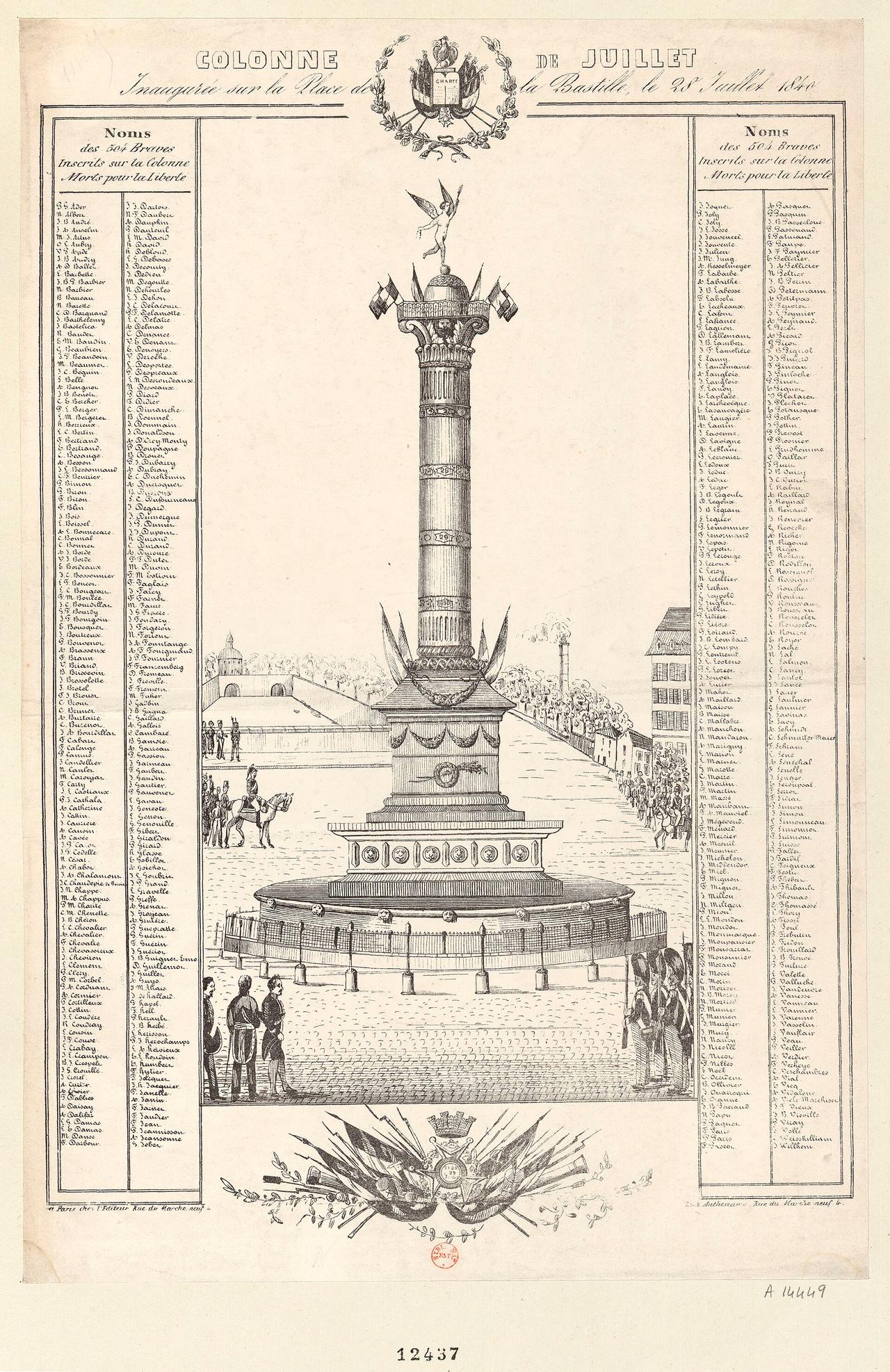
The column that's about a different revolution
People often mistake this bronze column with its gilded figure for a monument to 1789, when it actually commemorates the revolution of 1830. Over three days that July, Parisians drove King Charles X out of the country, and the five hundred and fifty-four people who died in those days lie in a crypt beneath your feet. Eighteen years later another revolution followed, and the dead of 1848 were laid to rest here too.
The figure on top is the Génie de la Liberté, a winged young man pushing off with one foot, broken chains in his hand and a torch raised to the sky. He stands on a ball, which means the whole statue balances on just a few square centimetres.
That same crypt also holds Egyptian mummies. They came from a museum storeroom in the nineteenth century and ended up here because there was nowhere else to put them, so beneath this square the fallen of two Parisian revolutions share their grave with a handful of Egyptians.
We now follow the Rue Saint-Antoine westward, the same street the crowd took to reach the Bastille in 1789.
Any feedback for this story?