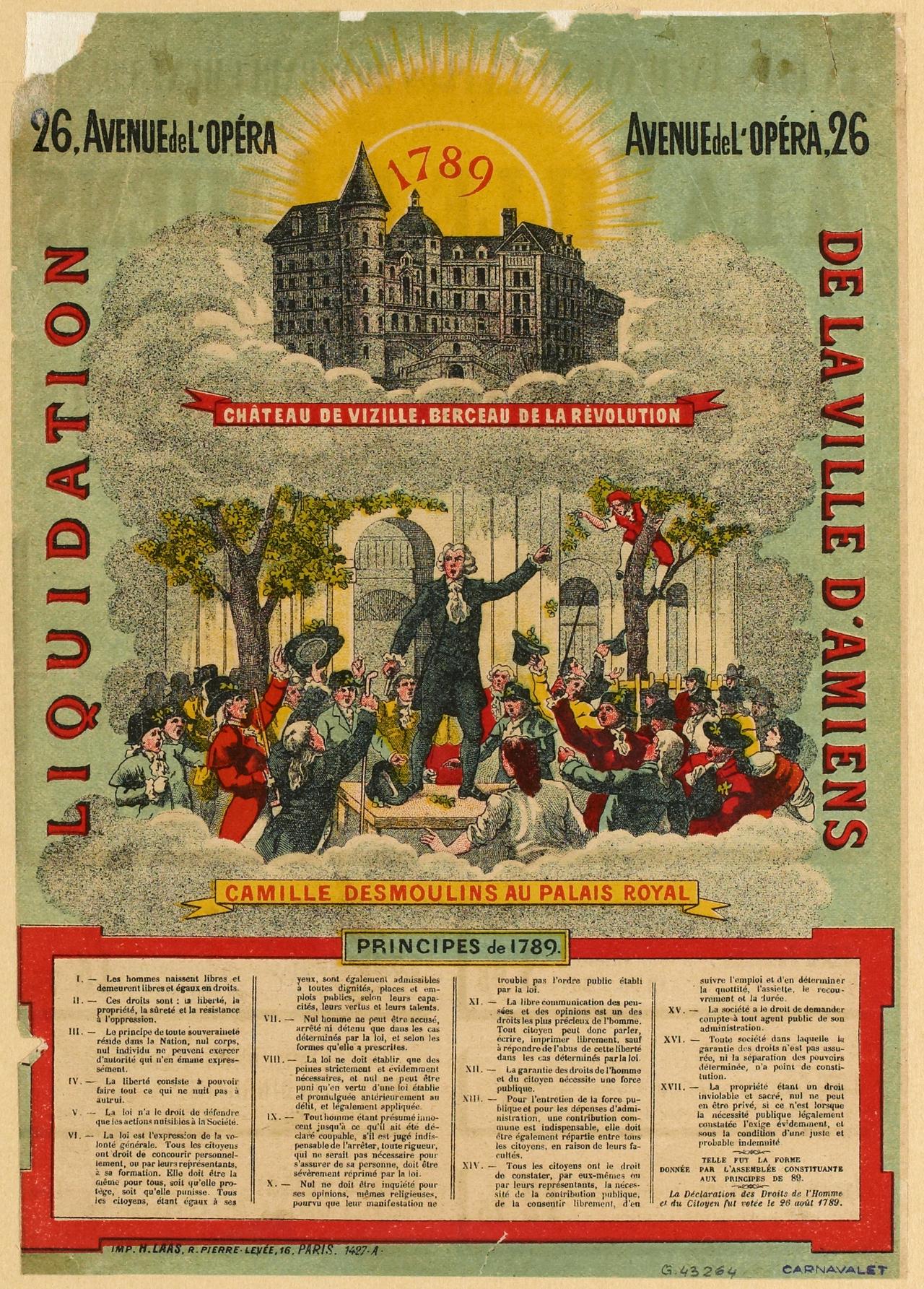
The garden where the police stayed away
This garden with its arcades was the private property of the Duke of Orléans, a cousin of the king, which meant the police had no authority here. That made the Palais-Royal the freest spot in Paris: this was where you found the cafés, the gambling houses, the bookshops selling banned pamphlets and the prostitutes, and where people said openly what would have landed you in trouble anywhere else.
On 12 July 1789 a young lawyer climbed onto a table in front of the Café de Foy. Camille Desmoulins stuttered all his life, but at that moment he spoke without a stumble. He told the crowd that the king had dismissed his reform-minded minister and that the troops would strike that evening, drew a pistol and called on everyone to take up arms. He plucked a leaf from a tree and pinned it to his hat as a badge, and within an hour the trees in this garden had been stripped bare.
Two days later the Bastille fell. Five years after that Desmoulins went to the guillotine himself, on the orders of Robespierre, who had been a witness at his wedding.
We leave the garden on the western side and cross over to the park that stretches out in front of the great palace.
Any feedback for this story?