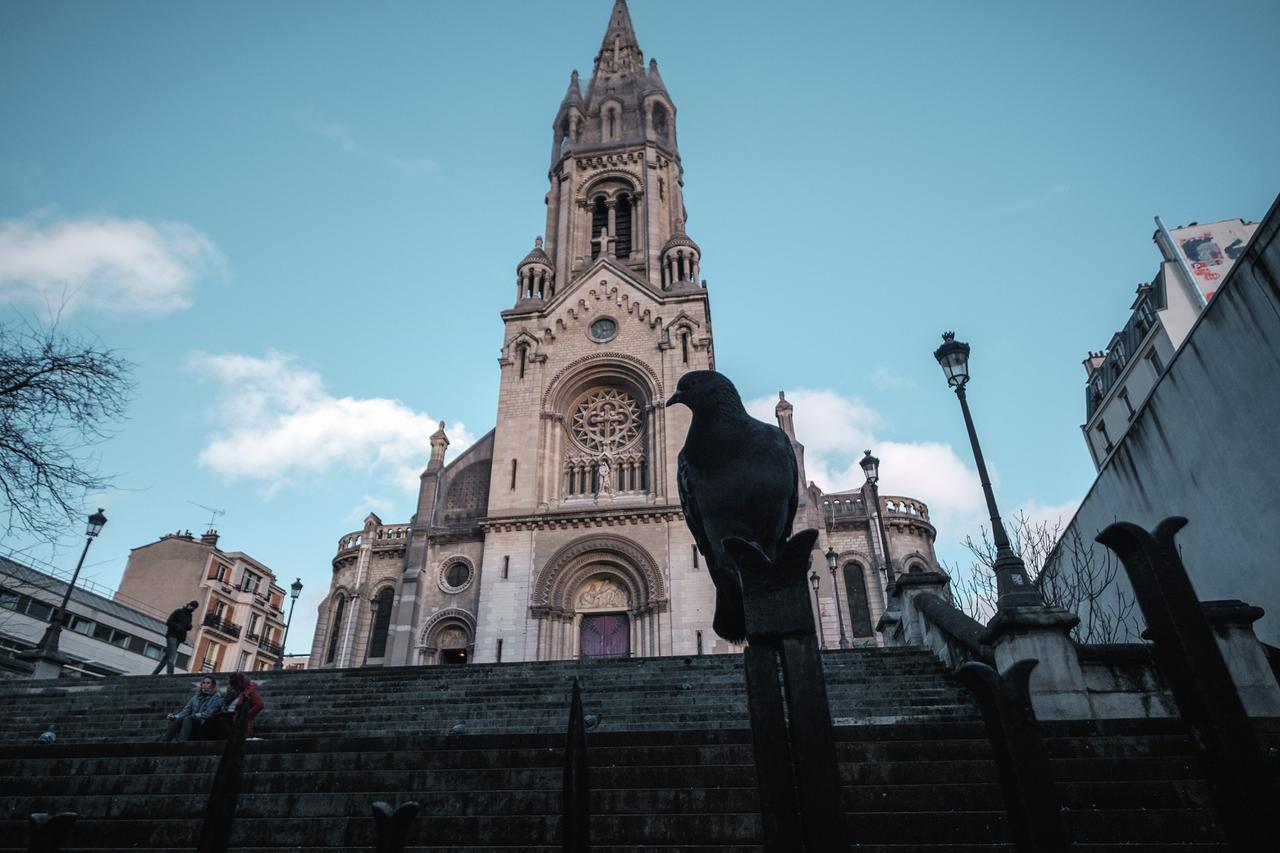
The church as a meeting hall
This church was finished in 1869, built with an iron frame hidden beneath the masonry, and it had been in use for barely two years when the Commune, the radical government that briefly ran Paris in the spring of 1871, took it over. Services stopped, and one of the people's clubs started gathering in the nave, where residents met in the evenings and voted on what should happen in their neighbourhood.
On those evenings women spoke too, something unthinkable in the churches of Paris until then. They argued about bread, about schooling, and about whether the Commune should march on Versailles.
The church is free to enter and it rewards a look upwards. That iron frame let the architect keep the columns slimmer than in a traditional church, which makes the nave feel wider than you would expect from outside.
Once we are back outside, we take the street that runs downhill from the square and turn into the Rue de Ménilmontant.
Any feedback for this story?