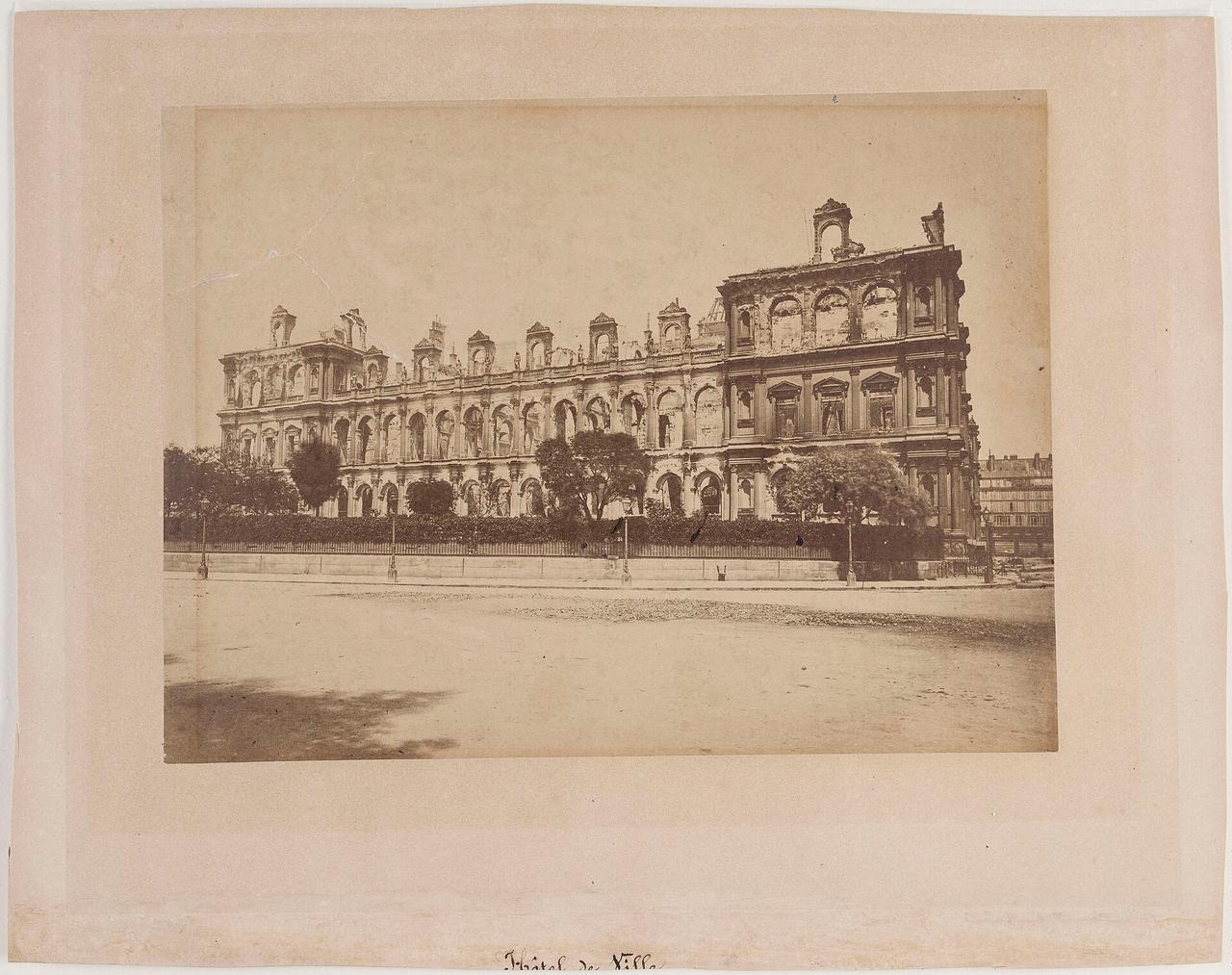
The square where it always began
For centuries this square was called the Place de Grève, after the riverbank where the boats unloaded their cargo, and anyone looking for work came here to wait. That is where the French expression for going on strike comes from, faire la grève, still in use today. The city scaffold stood here too, and the executions drew crowds who paid to rent a spot.
The city hall behind it was the first thing seized in every Parisian uprising, because whoever held the city hall held the city. On 14 July 1789 the city's highest official was shot dead on these steps by the very crowd he governed. Five years later Robespierre, the man who had sent so many to the guillotine during the Revolution, fled here when the Convention turned against him, and on the night of his downfall a bullet shattered his jaw. The next day he was wheeled to the guillotine with his face bound in bandages.
The building you see now is a copy. In May 1871 the last fighters of the Commune, the brief revolutionary government that ruled Paris that spring, set it on fire with the city archive inside, and centuries of Parisian baptism records were lost in a single night. That story belongs to our walk about the Commune, which starts in the east of the city.
From the square we keep the river on our right and cross over to the island, towards the towers on the quay.
Any feedback for this story?